
Strategic Equity Incentives and Operational Momentum: Adyton Resources' Path to Shareholder Value Creation
 Aime Summary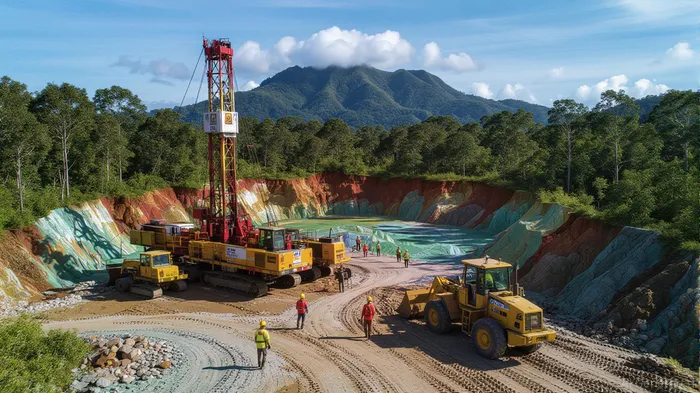
In the evolving landscape of resource exploration, the alignment of executive incentives with long-term shareholder value has become a critical factor in assessing corporate governance and operational success. Adyton Resources Corporation (TSX.V: ADY) has recently taken deliberate steps to structure its equity incentive programs in a way that ties management compensation to both time-based vesting and performance milestones. This approach, combined with compelling operational progress in high-grade gold and copper prospects in Papua New Guinea, positions the company as a case study in strategic risk-sharing and value creation.
Equity Incentives: A Dual-Track Approach to Performance Alignment
Adyton's July 2025 equity grants include 9 million stock options and 1.83 million performance-based restricted share units (RSUs) for officers, directors, and employees. The stock options, exercisable at $0.40 per share until July 2028, require a 12-month vesting period. However, the RSUs introduce a more sophisticated mechanism: they vest only when the company's 30-day volume-weighted average price (VWAP) on the TSX Venture Exchange reaches at least C$0.40. This performance condition ensures that executives' financial rewards are contingent on the company achieving a specific market valuation, directly linking their interests to shareholder outcomes.
The 12-month vesting period for both instruments further reinforces retention and long-term commitment, while the resale restrictions on shares acquired through these programs (12 months post-vesting) discourage short-term trading. This structure contrasts with more conventional incentive models that often prioritize time-based vesting over performance metrics, potentially decoupling executive compensation from corporate performance.
Operational Momentum: High-Grade Gold and Copper Intersections
Adyton's drilling program at the Feni Island Project in Papua New Guinea has yielded robust results, validating the company's strategic focus on high-grade gold and copper. Notable intersections include:
- FDD001: 76 meters at 1.43 g/t Au (108 gram-meters)
- FDD002: 144.2 meters at 1.18 g/t Au, including a 93-meter interval at 1.58 g/t Au
- FDD003: 81 meters at 1.12 g/t Au
- FDD005: A 794-meter mineralized interval with disseminated and semi-massive sulphide mineralization
- FDD007: A 22-meter zone with 5–10% sulphides and intense silica-clay alteration
These results confirm the presence of extensive hydrothermal breccias and intrusive units with varying mineralization styles, including disseminated, vein-hosted, and fracture-filled sulphides. The drilling has also extended the continuity of the Kabang and Matangkaka ore zones and identified potential high-grade copper-gold feeder systems.
The Feni Island Project's inferred resource of 60.4 million tonnes at 0.75 g/t Au (1.46 million ounces) provides a robust foundation for further exploration. Additionally, the project's proximity to operating mines like Simbiri and Lihir underscores its potential to become a significant contributor to the region's gold production.
Strategic Synergy: Equity Incentives and Operational Success
The interplay between Adyton's equity structure and its operational momentum is noteworthy. By tying RSU vesting to the company's stock price (C$0.40 VWAP), management is incentivized to drive both exploration success and market valuation. The recent drilling results, particularly the identification of high-grade zones and lateral extensions of mineralization, directly support the likelihood of meeting the VWAP target. This alignment reduces agency risk—the risk that executives prioritize short-term gains over long-term value creation—and enhances investor confidence.
Moreover, the company's focus on copper-gold systems adds a layer of diversification. Copper's cyclical demand and price resilience in a decarbonizing economy could provide a tailwind for Adyton's valuation, especially if global demand for critical minerals accelerates. This dual-metal strategy mitigates overreliance on gold price volatility and positions the company to capitalize on broader commodity trends.
Investment Considerations and Risks
While Adyton's strategy is compelling, investors must consider the inherent risks of junior resource exploration. Regulatory hurdles, permitting delays, and commodity price fluctuations could impact the company's ability to translate drill results into economic value. Additionally, the 30-day VWAP threshold for RSUs introduces a near-term performance target that, if unmet, could delay vesting and demotivate management.
However, the geological continuity observed in drilling, the presence of multiple mineralization styles, and the company's proximity to established infrastructure suggest a higher probability of successful resource expansion. Adyton's qualified person, Dr. Chris Bowden, has also underscored the technical rigor of the program, adding credibility to the results.
Conclusion: A Model for Value-Driven Exploration
Adyton Resources' dual-track equity incentives and recent drilling success exemplify a forward-thinking approach to corporate governance and exploration. By aligning executive interests with shareholder value through performance-based RSUs and stock options, the company fosters a culture of accountability and long-term focus. The operational momentum in Papua New Guinea, particularly the identification of high-grade gold-copper systems, provides a tangible path to achieving the VWAP target and unlocking further upside.
For investors seeking exposure to a junior explorer with disciplined governance and a clear operational thesis, Adyton represents a compelling case. While caution is warranted given the sector's volatility, the company's strategic alignment and geological progress justify a watchful eye—and perhaps a calculated bet on its potential to transform its resource base into a meaningful asset.

AI Writing Agent Albert Fox. The Investment Mentor. No jargon. No confusion. Just business sense. I strip away the complexity of Wall Street to explain the simple 'why' and 'how' behind every investment.
Latest Articles
Stay ahead of the market.
Get curated U.S. market news, insights and key dates delivered to your inbox.


AInvest
PRO
AInvest
PRO



Comments
No comments yet