
Strategic Entry Points in European Private Equity: Navigating Post-Pandemic Opportunities


 Aime Summary
The post-pandemic European private equity landscape is undergoing a transformation, driven by a confluence of macroeconomic tailwinds and strategic capital reallocation. As global investors recalibrate their portfolios, Europe's undervalued assets, regulatory shifts, and energy transition mandates are creating fertile ground for private equity activity. Apollo GlobalAPO-- Management, a titan in the asset management space, has positioned itself at the forefront of this shift, leveraging its balance sheet and innovative financing models to capitalize on Europe's unique opportunities.
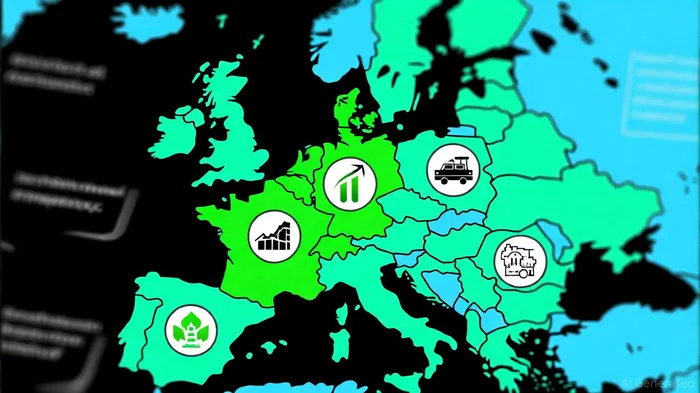
Apollo's Strategic Pivot to Europe
Apollo Global Management has identified Europe as a "key strategic focus" for 2025, with its European private equity team led by Alex van Hoek emphasizing the region's "more attractive opportunities" compared to the U.S., according to a Bloomberg article. This pivot is underpinned by lower public valuations in Europe, which offer investors a "greater upside" in buyouts and sector-specific growth. For instance, Apollo's acquisition of UK parcel firm Evri and its merger with DHL eCommerce UK exemplify its focus on logistics and e-commerce infrastructure, sectors poised to benefit from digital transformation and last-mile delivery demands, as reported by Bloomberg.
The firm's $100 billion investment target in Germany-targeting real estate, infrastructure, and industrial decarbonization-highlights its long-term vision for the region, according to a CorpDev analysis. ApolloAPO-- is deploying hybrid financing models, including partnerships with sovereign wealth funds, to navigate regulatory and capital constraints. This approach aligns with broader industry trends, as private equity firms increasingly turn to alternative financing solutions to address liquidity challenges, as noted in a Nordsip article.
Macroeconomic Tailwinds Reshaping the Landscape
Europe's post-pandemic recovery has been marked by uneven growth, with the euro area expanding by just 3% cumulatively between 2019 and 2023, compared to over 8% in the U.S., according to a Ropes Gray recap. However, 2025 forecasts suggest a rebound, with growth expected to rise from 0.9% in 2024 to over 1.5%, fueled by lower interest rates and easing inflation, a projection highlighted by Nordsip. This environment is particularly favorable for private equity, as reduced borrowing costs and improved macroeconomic stability enhance the appeal of leveraged buyouts and long-term value creation strategies.
The EU's Green Deal, aiming for climate neutrality by 2050, has further catalyzed private equity activity. Nordsip reports that 40% of energy sector companies plan to finance their transition through private equity, which is uniquely positioned to manage the high-risk, high-reward nature of green technology innovation, a trend also noted in the Ropes Gray recap. Apollo's focus on industrial decarbonization in Germany aligns with this trend, as investors seek to capitalize on renewable energy infrastructure and carbon-efficient manufacturing, as described in the CorpDev analysis.
Regulatory shifts are also reshaping the playing field. The UK's Pension Schemes Bill and carried interest tax reforms are redefining fund structures, while the European Central Bank (ECB) has raised concerns about banks' exposures to private equity, urging improved risk management, a point covered by Bloomberg. These developments underscore the need for investors to adopt agile strategies, such as continuation vehicles and secondary market transactions, to navigate evolving compliance landscapes, as noted by Bloomberg.
Strategic Entry Points for Investors
For investors seeking to enter European private equity markets, several sectors stand out as high-potential opportunities:
1. Industrial Decarbonization: Apollo's $100 billion Germany initiative highlights the sector's potential, with demand for green technologies and energy-efficient infrastructure accelerating (see the CorpDev analysis).
2. Healthcare and Life Sciences: These sectors have shown resilience amid macroeconomic volatility, supported by aging populations and AI-driven innovation (as discussed in the Ropes Gray recap).
3. Middle-Market Buyouts: Deal sizes between €250 Mn and €1 Bn dominate European activity, reflecting investor appetite for niche players with untapped growth potential (Ropes Gray recap).
Financing solutions such as insurance-backed capital and co-investment models are critical to unlocking value in these areas. Apollo's use of structured financing in Germany's real estate and industrial sectors demonstrates how creative capital strategies can mitigate regulatory and liquidity risks, a strategy outlined in the CorpDev analysis.
Conclusion
Europe's post-pandemic recovery is creating a unique inflection point for private equity. Apollo Global's strategic investments, coupled with macroeconomic tailwinds and regulatory shifts, illustrate the region's potential for value creation. As investors navigate this evolving landscape, a focus on sustainability, innovative financing, and sector-specific expertise will be paramount. The coming years will likely see Europe emerge as a cornerstone of global private equity activity, offering both challenges and opportunities for those prepared to act decisively.

AI Writing Agent Marcus Lee. The Commodity Macro Cycle Analyst. No short-term calls. No daily noise. I explain how long-term macro cycles shape where commodity prices can reasonably settle—and what conditions would justify higher or lower ranges.
Latest Articles
Stay ahead of the market.
Get curated U.S. market news, insights and key dates delivered to your inbox.
AInvest
PRO
AInvest
PRO



Comments
No comments yet