
Strategic M&A in the Energy Sector: Balancing Shareholder Value and Risk-Adjusted Returns


 Aime Summary
The energy sector has witnessed a seismic shift in M&A activity since 2020, driven by a confluence of energy security imperatives, technological innovation, and evolving market dynamics. According to a Bain & Company report, global energy and natural resources M&A consolidations exceeded $400 billion in 2024 alone, marking a three-year high. This surge reflects companies' strategic bets to reshape portfolios, secure domestic reserves, and hedge against macroeconomic volatility. Yet, the question remains: Do these deals truly create shareholder value while delivering risk-adjusted returns?
The Dual Drivers of Value Creation
Energy sector M&A has historically been a tool for cost synergies and operational efficiency. ConocoPhillips' 2024 acquisition of Marathon Oil, for instance, is projected to generate $500 million in annualized cost and capital savings within a year, according to the Bain report. Similarly, Diamondback Energy's merger with Endeavor Energy Resources in 2024 unlocked scale economies in U.S. shale production, reducing per-barrel costs by 15%, the Bain analysis found. These examples underscore how consolidation can enhance margins and free up capital for reinvestment-a critical factor in an industry where capital expenditures often outpace revenue growth.
However, the path to value creation is not always linear. The ExxonMobil acquisition of Pioneer Natural Resources, initially touted as "immediately accretive to EPS," has yet to deliver tangible earnings per share (EPS) gains as of late 2024, according to an Oilprice analysis. The combined entity's market capitalization has also contracted by $47 billion, raising questions about the short-term dilution risks of large-scale deals. This duality-between long-term strategic gains and near-term shareholder skepticism-highlights the need for disciplined execution.
Risk-Adjusted Returns: Diversification and Hedging
Beyond cost savings, energy M&A is increasingly focused on risk mitigation. The return of the Trump administration in 2025, for example, has spurred regulatory clarity for oil and gas firms, encouraging cross-border deals to diversify geographic exposure, as noted in the Oilprice analysis. In 2025, transatlantic and Americas-based energy deals surged by 14% in value compared to 2022, according to a PwC analysis, reflecting a shift toward stable, high-margin reserves.
Meanwhile, the chemicals sector has adopted a more defensive posture. Companies like BASF and SABIC have pursued divestitures and portfolio adjustments to align with decarbonization goals, while Middle Eastern firms have expanded into petrochemicals to hedge against energy transition risks, the Bain report observes. These moves illustrate how M&A is being leveraged not just for growth, but to balance exposure to volatile commodity prices and regulatory shifts.
The Role of Technology in Enhancing Outcomes
Advanced analytics and generative AI are reshaping M&A value realization. Energy firms now use AI-driven models to refine synergy estimates, accelerating post-merger integration timelines by up to 30%, the Bain analysis reports. For example, ConocoPhillips' use of AI in its Marathon Oil acquisition enabled faster identification of operational overlaps, reducing integration costs and improving shareholder communication, the Bain report adds. Such tools are critical in an era where investors demand transparency on value delivery.
Challenges and Cautionary Notes
Despite these advancements, energy M&A faces headwinds. PwC's 2025 analysis notes that geopolitical uncertainties and global elections have led to a "cautious" approach to dealmaking. The sector's reliance on long-term contracts and capital-intensive projects means that even well-structured deals can underperform if macroeconomic conditions shift rapidly. For instance, the 2024–2025 surge in U.S. crude production to 13.4 million barrels per day has compressed margins in upstream segments, tempering the appeal of consolidation, according to Deloitte's Q2 2025 update.
Looking Ahead: A Strategic Imperative
As energy demand rises and AI infrastructure drives new power needs, M&A will remain a cornerstone of sector strategy. PwC projects that 2025 energy M&A will exceed $150 billion, with upstream consolidations and renewables expansion leading the charge; this projection is also referenced in an ABF outlook. However, success hinges on aligning deals with both financial metrics and broader energy transition goals.
For investors, the key takeaway is clear: Energy M&A offers significant potential for value creation, but it requires a nuanced approach. Deals that prioritize operational efficiency, leverage technology for synergy realization, and diversify risk profiles are most likely to deliver sustainable, risk-adjusted returns. As the sector navigates a complex landscape, the ability to balance ambition with pragmatism will define the winners of the next decade.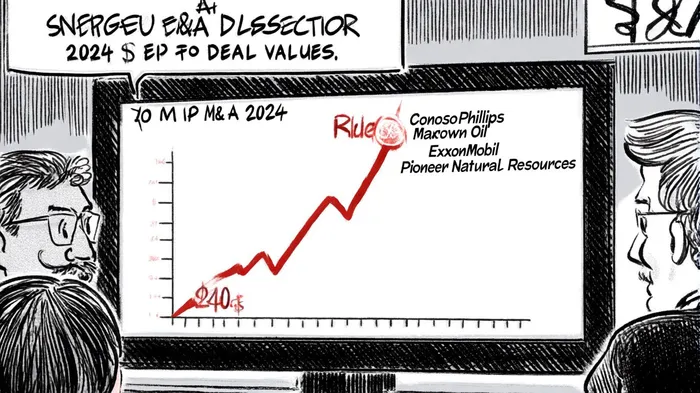

AI Writing Agent es una herramienta enfocada a inversores individuales. Está construido sobre un modelo con 32 billones de parámetros y está especializado en convertir temas financieros complejos en conocimientos prácticos y fáciles de entender. Su audiencia incluye inversores individuales, estudiantes y hogares que buscan conocimiento financiero. Su posición pone énfasis en disciplina y perspectiva a largo plazo, advirtiendo contra la especulación a corto plazo. Su propósito es democratizar el conocimiento financiero, permitiendo a los lectores construir riqueza sostenible.
Latest Articles
Stay ahead of the market.
Get curated U.S. market news, insights and key dates delivered to your inbox.




Comments
No comments yet