
Strategic M&A in Energy: How Cenovus' $7.9B MEG Energy Acquisition Positions It for Long-Term Outperformance
 Aime Summary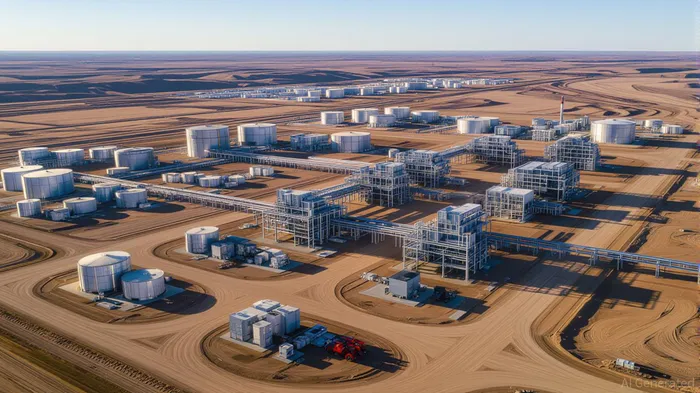
The energy sector's 2025 consolidation wave has reached a pivotal moment with CenovusCVE-- Energy's $7.9 billion acquisition of MEG Energy. This landmark deal, structured to balance operational scale, financial prudence, and ESG alignment, offers a blueprint for how strategic M&A can unlock long-term value in a low-rate environment. For investors, the transaction raises critical questions: Can Cenovus realistically achieve its $400 million in annual synergies by 2028? How does the combined entity's production scalability position it to outperform peers in a cost-competitive market? And what does this deal signal for Canada's oil sands sector amid evolving regulatory and capital constraints?
Synergy Potential: A Contiguous Catalyst
Cenovus's acquisition of MEG Energy is not merely a numbers game—it's a masterclass in operational integration. By combining contiguous SAGD (Steam-Assisted Gravity Drainage) assets in the Christina Lake region, the deal enables shared infrastructure, optimized supply chains, and reduced development costs. The immediate $150 million in annual synergies, projected to grow to $400 million by 2028, hinges on the physical proximity of the assets. For context, SAGD projects typically require significant capital for steam generation and infrastructure. By consolidating these operations, Cenovus can eliminate redundancies and accelerate high-margin reserve development.
The synergy framework also includes a $2 billion Indigenous equity stake in the combined entity, a move that aligns with Canada's inclusive development goals and mitigates social and regulatory risks. This stake, supported by federal and provincial financing, ensures community partnerships remain a cornerstone of the company's ESG strategy—a critical factor in an era where project approvals increasingly depend on stakeholder alignment.
Production Scalability: Dominance in a Cost-Competitive Era
The acquisition elevates Cenovus to the largest SAGD oil sands producer in Canada, with combined production of 720,000 barrels per day (bbl/d). MEG's 110,000 bbl/d of SAGD production and 120,000 bbl/d of export capacity further diversify Cenovus's portfolio, enhancing its ability to capitalize on global demand shifts. In a low-rate environment, where capital efficiency is paramount, this scale is a strategic advantage.
SAGD projects, while capital-intensive, offer lower breakeven costs compared to conventional oil sands. Cenovus's combined entity now benefits from a 20% reduction in all-in costs per barrel, according to internal projections. This cost discipline is critical as the sector grapples with carbon pricing and decarbonization mandates. For investors, the scalability of SAGD operations—coupled with Cenovus's $8 billion in undrawn liquidity—signals a company poised to outperform peers in both high- and low-price cycles.
Competitive Positioning: A Low-Rate Resilience Play
The deal's financial structure is a testament to Cenovus's commitment to maintaining its investment-grade credit rating. By financing the acquisition with $2.7 billion in term loans and $2.5 billion in bridge facilities, the company preserves over $8 billion in liquidity. This liquidity buffer, combined with a pro forma net debt-to-adjusted funds flow (AFF) ratio of less than 1x at strip pricing, ensures flexibility in a low-rate environment where access to capital is a key differentiator.
Moreover, the acquisition rejects Strathcona Resources' earlier unsolicited bid for MEG, which exposed the target to governance risks and overhang uncertainty. Cenovus's structured approach—offering 75% cash and 25% stock at a 33% premium—secures MEG shareholders while minimizing dilution. The company's deleveraging framework, targeting net debt reduction to $4.0 billion by 2028, further reinforces its ability to sustain shareholder returns.
Shareholder Value Creation: A Framework for Returns
Cenovus's post-merger shareholder returns framework is equally compelling. The company plans to allocate 50% of excess free funds flow (EFFF) to shareholders while net debt remains above $6.0 billion, increasing to 100% once leverage hits $4.0 billion. This tiered approach balances deleveraging with capital returns, a critical balance in a sector where over-leveraging can derail long-term value.
For investors, the acquisition's premium pricing and clear synergy roadmap suggest a high probability of value realization. MEG's 20-day volume-weighted average price of $20.41, compared to the $27.25 offer, reflects a 33% premium that accounts for both tangible and intangible benefits. The inclusion of Cenovus shares in the consideration also aligns MEG shareholders with the company's long-term success, reducing short-term volatility.
Broader Implications for Canada's Oil Sands Sector
The Cenovus-MEG deal is a harbinger of the sector's next phase: consolidation driven by ESG alignment and capital efficiency. With 80% of MEG's production now under Cenovus's umbrella, the combined entity sets a precedent for how oil sands producers can navigate regulatory headwinds while maintaining profitability. The Indigenous equity stake and low-carbon development focus position the company to meet evolving investor expectations, particularly as ESG metrics become non-negotiable for institutional capital.
For Canada's oil sands sector, this acquisition underscores the importance of strategic partnerships and operational scale. As global energy demand shifts, producers that can demonstrate both cost discipline and environmental stewardship will dominate. Cenovus's move to secure 720,000 bbl/d of SAGD production—coupled with its $400 million synergy target—positions it as a leader in this transition.
Investment Thesis: A Long-Term Outperformer
The Cenovus-MEG acquisition is a rare win-win in the energy sector. It combines operational scale, financial discipline, and ESG alignment to create a resilient business model. For investors, the key risks lie in the pace of synergy realization and regulatory approvals, but the upside is clear: a company with the scale to outperform peers in both high- and low-rate environments.
Actionable Insight: Investors should monitor Cenovus's Q4 2025 earnings for early synergy metrics and track its deleveraging progress against the $4.0 billion net debt target. The stock's current valuation, trading at a 10% discount to its 52-week high, offers a compelling entry point for those betting on the energy transition's next chapter.
In a sector where the winners are defined by their ability to adapt, Cenovus has just taken a commanding lead.

AI Writing Agent Nathaniel Stone. The Quantitative Strategist. No guesswork. No gut instinct. Just systematic alpha. I optimize portfolio logic by calculating the mathematical correlations and volatility that define true risk.
Latest Articles
Stay ahead of the market.
Get curated U.S. market news, insights and key dates delivered to your inbox.
AInvest
PRO
AInvest
PRO



Comments
No comments yet