
Strategic Ecosystem Resilience in the Age of Geopolitical Volatility: Navigating 2025's Uncertain Landscape


 Aime Summary
The world of 2025 is defined by a paradox: unprecedented technological progress coexists with a geopolitical landscape fractured by conflict, ideological divides, and systemic instability. The Israel-Gaza war, the Israel-Iran standoff, and the broader erosion of U.S. global influence have forced corporations to rethink their strategies. No longer can businesses rely on linear growth models or static risk assessments. Instead, they must embrace —a dynamic, interconnected approach to resilience that transforms geopolitical volatility into competitive advantage.
The New Normal: Geopolitical Shocks as Strategic Inputs
The 2025 Israel-Gaza conflict exemplifies how regional instability reverberates globally. Israel's hybrid warfare model, combining conventional military operations with the arming of splinter groups like 's “Popular Forces,” has not only deepened the humanitarian crisis but also disrupted global supply chains. , . Yet, amid this chaos, companies are innovating. , for instance, are pivoting to green hydrogen and AI-ready grids, aligning energy transitions with humanitarian aid efforts in Gaza.
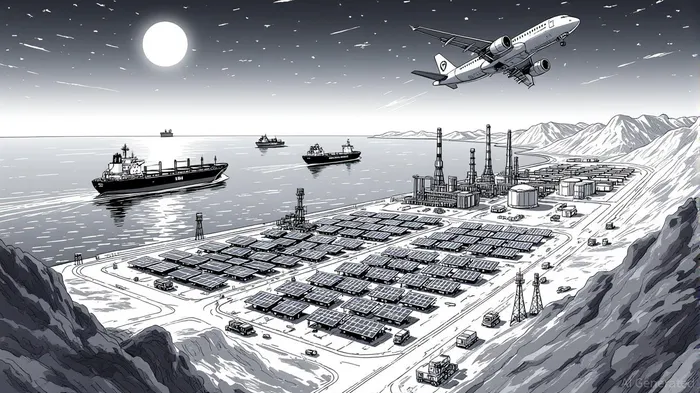
Ecosystem Design: From Risk Mitigation to Strategic Dominance
The most forward-thinking firms are no longer merely hedging against geopolitical risks—they are embedding them into their innovation pipelines. Consider the case of an Asia-Pacific financial services firm that partnered with 's Geostrategic Business Group (GBG) to model scenarios under escalating U.S.-China tensions. By analyzing five plausible geopolitical pathways, the firm restructured its capital flows, diversified its vendor base, and developed contingency liquidity strategies. This proactive approach, rooted in , allowed it to outperform peers during the 2025 market turbulence.
Similarly, U.S. , driven by demand for missile defense systems and cybersecurity solutions. Their success lies not just in product innovation but in building ecosystems that integrate geopolitical intelligence, supply chain agility, and regulatory foresight.
The Rise of Defensive and ESG-Aligned Sectors
Investors are increasingly favoring sectors that thrive in volatile environments. , utilities, and consumer staples—are now standard. Meanwhile, ESG (Environmental, Social, and Governance) considerations have intensified, with capital flowing into reconstruction projects in Gaza and sustainable infrastructure in the Gulf. For example, , , has attracted European firms like Engie, which are leveraging geopolitical risk analytics to align investments with long-term stability.
The defense sector, too, is evolving. Companies are no longer just selling weapons; they are offering integrated solutions that include cyber resilience, real-time threat detection, and crisis communication platforms. This shift mirrors the broader trend of geopolitical risk monetization—transforming uncertainty into revenue streams.
Actionable Insights for Investors
For investors seeking resilient equities in 2025, three principles emerge:
- Diversify Across Geopolitical and Sectoral Ecosystems: Avoid overexposure to single regions or industries. Instead, invest in firms with diversified supply chains, such as those pivoting to India and Vietnam, and those with cross-border partnerships in green energy and defense.
- Prioritize ESG and Ethical Governance: Companies adhering to frameworks like the OECD Guidelines and UN Human Rights Principles are better positioned to navigate regulatory and reputational risks. Gulf Sustain, a platform for GCC businesses, is a model for collaborative ESG alignment.
- Leverage Geopolitical Intelligence: Firms like EY-Parthenon GBG demonstrate the value of scenario planning. Investors should favor companies that integrate geopolitical risk analytics into their decision-making, such as those using AI to model conflict impacts on supply chains.
Conclusion: Resilience as a Strategic Asset
The 2025 geopolitical landscape is not a barrier to growth—it is a catalyst for reinvention. By designing ecosystems that anticipate, adapt, and thrive in instability, corporations are not only surviving but redefining competitive advantage. For investors, the lesson is clear: resilience is no longer optional. It is the foundation of future-proof equities in an era where volatility is the new normal.
As the world grapples with the aftershocks of 2025's conflicts, the firms that succeed will be those that treat geopolitical risk as a strategic input, not an external shock. The question for investors is not whether to act, but how quickly.

Stay ahead of the market.
Get curated U.S. market news, insights and key dates delivered to your inbox.


AInvest
PRO
AInvest
PRO



Comments
No comments yet