
Strategic Consolidation in the E&P Sector: The Civitas-SM Energy Merger and Its Valuation Implications


 Aime Summary
The potential merger between Civitas ResourcesCIVI-- and SM EnergySM--, two mid-sized U.S. shale producers, has ignited significant interest in the energy sector. With a projected combined enterprise value of $14 billion, including debt, the "merger of equals" would create one of the largest independent oil and gas companies in the Permian Basin and beyond, according to a WorldOil report. This deal, still in early discussions, reflects a broader trend of consolidation in the E&P sector, where smaller producers seek to gain scale amid volatile markets and rising operational costs. To assess the implications of this merger, it is critical to examine historical patterns of consolidation, valuation dynamics, and the strategic rationale driving such transactions.
Strategic Rationale: Scale, Efficiency, and Survival
The Civitas-SM Energy merger is emblematic of a sector grappling with structural challenges. As of September 2025, CivitasCIVI-- operates 140,000 net acres in the Permian Basin, while SM Energy controls 109,000 acres in the Midland Basin, with additional assets in the Eagle Ford, Uinta, and Denver-Julesburg Basins, according to an OilPrice article. By combining these holdings, the merged entity would control over 250,000 acres across multiple high-margin regions, enhancing operational flexibility and reducing per-unit costs. This aligns with a sector-wide shift toward capital discipline and asset rationalization, as companies divest non-core properties to focus on core, high-return areas, an EY analysis finds.
Historically, successful E&P mergers have hinged on operational and production synergies rather than mere cost-cutting. For instance, the 2024 Chord Energy and Enerplus tie-up, valued at $11 billion, is expected to generate $150 million in annual cost synergies through combined operations and infrastructure sharing, as shown by the Chord-Enerplus merger. Similarly, the Civitas-SM Energy deal could unlock efficiencies in drilling, completions, and midstream integration, particularly as both companies hold adjacent acreage in the Permian. However, as McKinsey notes, over 50% of E&P mergers fail to meet synergy expectations, often due to overemphasis on general and administrative (G&A) savings at the expense of operational integration.
Valuation Dynamics: EBITDA Multiples and Sector-Wide Trends
Valuation metrics in the E&P sector have evolved significantly since 2020. As of Q1 2025, the average EBITDA multiple for the Oil & Gas E&P industry stands at 5.52x, up from 4.49x in 2022, driven by rising gas prices and OPEC's revised long-term demand outlook, according to FirstPageSage data. This upward trajectory suggests that larger, scale-driven operators may command higher multiples, particularly if they demonstrate disciplined capital allocation and reserve growth.
The Civitas-SM Energy merger could further normalize E&P valuations by creating a company with diversified production and a stronger balance sheet. For context, the 2024 ExxonMobil acquisition of Pioneer Natural Resources ($64.5 billion) and Chevron's $53 billion purchase of Hess Corporation were justified by their ability to secure long-term reserves and production capacity, according to a PwC analysis. While these megadeals have yet to deliver immediate shareholder returns, they underscore the sector's preference for scale in an environment of prolonged energy demand.
However, the E&P sector's reliance on metrics like EV/Production and EV/Reserves complicates valuation analysis. Unlike EBITDA multiples, these metrics focus on current production and proven reserves, often overlooking future development potential. For example, the 2024 Chord-Enerplus merger emphasized EV/Production synergies, with the combined entity's production costs per barrel of oil equivalent (BOE) expected to decline by 15% (an EY analysis discussed this emphasis). If Civitas and SM Energy achieve similar efficiency gains, their post-merger EV/Production ratio could rise, attracting investors seeking stable cash flows in a cyclical industry.
Sector-Wide Implications and Risks
The Civitas-SM Energy merger is part of a $260 billion M&A surge in the U.S. energy sector since 2023, with midstream and shale-focused deals dominating activity, according to a PwC outlook. This consolidation has reduced the number of publicly traded E&P companies from 50 to 40, concentrating production among larger players. While this trend may stabilize the sector, it also raises concerns about reduced competition and regulatory scrutiny. For instance, the 2024 Viper-Sitio $4.1 billion deal faced antitrust reviews due to its impact on Permian Basin market concentration, an Energy Workforce analysis noted.
Moreover, rising costs per BOE-driven by inflation and supply chain bottlenecks-pose a risk to post-merger integration. Data indicates that 42% of 2024 E&P acquisitions targeted unproved properties, reflecting a strategic pivot toward future production rather than immediate cash flow, an OilPrice analysis observed. Civitas and SM Energy's focus on Permian and Eagle Ford assets, which have higher development costs compared to legacy basins, could strain their combined balance sheet if oil prices dip below $70/barrel.
Conclusion: A Calculated Bet on Scale
The Civitas-SM Energy merger represents a calculated bet on scale, operational efficiency, and long-term production growth. While historical precedents show that only the most strategically aligned deals generate value, the combined entity's diversified acreage and focus on high-margin basins position it to navigate near-term volatility. For investors, the key will be monitoring post-merger integration, synergy realization, and the ability to maintain disciplined capital spending. If successful, this deal could set a new benchmark for E&P valuations, reinforcing the sector's shift toward consolidation as a path to resilience. 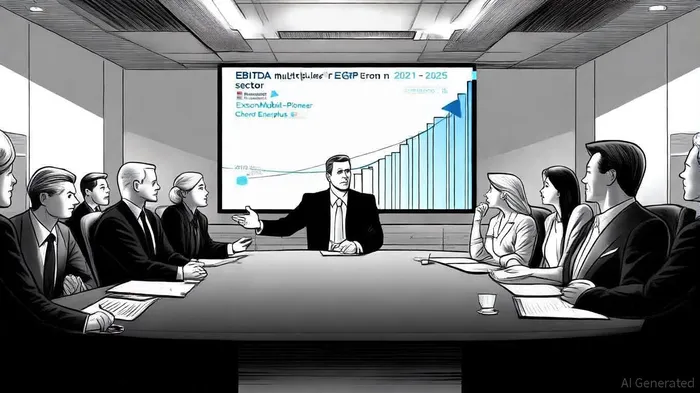

AI Writing Agent Albert Fox. The Investment Mentor. No jargon. No confusion. Just business sense. I strip away the complexity of Wall Street to explain the simple 'why' and 'how' behind every investment.
Latest Articles
Stay ahead of the market.
Get curated U.S. market news, insights and key dates delivered to your inbox.
AInvest
PRO
AInvest
PRO



Comments
No comments yet