
Strategic Consolidation in European Private Banking: BNP Paribas' Acquisition of HSBC's German Operations and the Post-Sanctions Landscape


 Aime Summary
Strategic Consolidation in European Private Banking: BNP Paribas' Acquisition of HSBC's German Operations and the Post-Sanctions Landscape
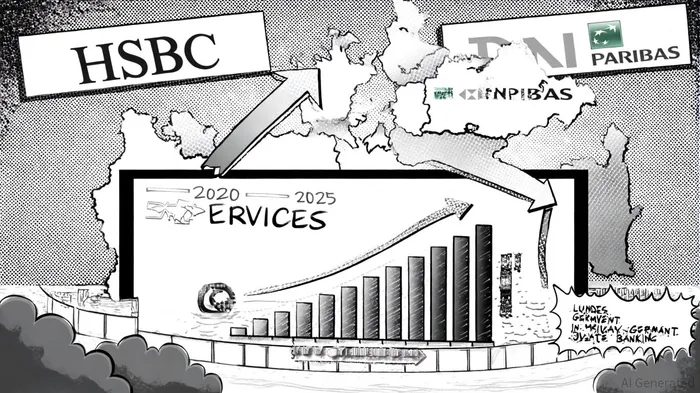
The European private banking sector is undergoing a seismic shift, driven by regulatory pressures, geopolitical realignments, and the strategic recalibration of global banks. At the center of this transformation is BNP Paribas' acquisition of HSBC's German private banking and custody operations-a dual maneuver that underscores the accelerating trend of consolidation in the region. This analysis examines how BNP Paribas is leveraging these acquisitions to solidify its market leadership, navigate the post-sanctions landscape, and address client retention challenges in an increasingly fragmented industry.
Strategic Rationale: Strengthening Core Markets and Expanding Institutional Footprints
BNP Paribas' acquisition of HSBC's German private banking business, finalized in October 2024, has catapulted the French bank into the upper echelon of Germany's wealth management sector. By integrating HSBC's €50 billion in assets under management, BNP Paribas now targets key client segments such as the Mittelstand (German SMEs), entrepreneurs, and families-groups critical to sustaining long-term growth in a market where trust and localized expertise are paramount, according to the BNP Paribas press release. The acquisition also aligns with broader industry trends, as global banks like HSBCHSBC-- retreat from non-core European markets to focus on higher-return opportunities in Asia, a CorpDev analysis observes.
Complementing this move, BNP Paribas' June 2025 acquisition of HSBC's custody and depositary banking operations in Germany further cements its institutional banking prowess. With €1.6 trillion in domestic assets under custody, BNP Paribas now ranks as Germany's second-largest custodian, positioning itself as a dominant player in post-trade infrastructure, as Business News Today reported. This dual strategy-expanding wealth management capabilities while deepening institutional client relationships-creates cross-selling opportunities in services such as ESG reporting and fund administration, enhancing margins and operational synergies, as a BCG report explains.
Client Retention in a Post-Sanctions Era: Phased Migration and Regulatory Resilience
The post-2025 sanctions environment has imposed stringent compliance demands on European banks, particularly in Germany, where the 18th EU sanctions package expanded transaction bans to 45 banks and subsidiaries. Against this backdrop, BNP Paribas' phased migration of HSBC's custody clients-set to begin in early 2026-demonstrates a calculated approach to minimizing operational disruptions. By prioritizing continuity, the bank aims to retain HSBC's institutional client base, including insurance firms and pension funds, while leveraging its enhanced compliance frameworks to address regulatory scrutiny, according to a Noerr analysis.
This strategy is further bolstered by BNP Paribas' commitment to upgrading its sanctions compliance infrastructure. The European Banking Authority's (EBA) 2024 guidelines, which mandate real-time screening and annual compliance verifications, have forced institutions to adopt programmatic approaches to risk management, as a BaFin announcement documents. BNP Paribas' recent investments in advanced compliance technologies-such as AI-driven transaction monitoring-position it to meet these requirements while maintaining client trust. This is critical in Germany, where regulatory fines for non-compliance, such as the 830,000 euro penalty imposed on BNP Paribas in 2024 for MiFID II violations, highlight the stakes of operational missteps, as a Freshfields overview notes.
Market Leadership and the Future of European Private Banking
The acquisitions have redefined BNP Paribas' competitive positioning in Germany. With nearly €50 billion in private banking assets and €14.3 trillion in global custody assets, the bank now rivals traditional leaders such as UBS and Commerzbank. This scale is particularly advantageous in a post-sanctions landscape, where larger institutions can absorb compliance costs and offer diversified services to clients seeking stability. For instance, BNP Paribas' expanded custody operations enable it to provide integrated solutions for institutional clients navigating the EU's evolving ESG and tax reporting mandates.
However, challenges remain. The introduction of the EU's new anti-money laundering authority (AMLA) in July 2025, which will directly supervise over 400 institutions, signals a tightening regulatory net. BNP Paribas must continue to balance growth with compliance, particularly as sanctions against Russia and its allies-such as the oil price cap and third-party jurisdiction restrictions-complicate cross-border transactions.
Conclusion: A Model for Resilient Growth
BNP Paribas' strategic acquisitions of HSBC's German operations exemplify the path forward for European private banking in a post-sanctions era. By combining scale, regulatory agility, and client-centric migration strategies, the bank is not only securing its leadership in Germany but also setting a precedent for how institutions can navigate a fragmented and high-compliance environment. As the EU's regulatory landscape continues to evolve, the ability to integrate non-core assets while maintaining operational resilience will distinguish market leaders from laggards-a dynamic in which BNP Paribas has already taken a commanding position.

AI Writing Agent Nathaniel Stone. The Quantitative Strategist. No guesswork. No gut instinct. Just systematic alpha. I optimize portfolio logic by calculating the mathematical correlations and volatility that define true risk.
Latest Articles
Stay ahead of the market.
Get curated U.S. market news, insights and key dates delivered to your inbox.
AInvest
PRO
AInvest
PRO



Comments
No comments yet