
Strategic Collaborations as Catalysts for Disruption and Valuation Growth in AI-Driven Biopharma Innovation


 Aime Summary
The biopharmaceutical industry is undergoing a seismic shift, driven by the convergence of artificial intelligence (AI) and protein therapeutics. Strategic collaborations between AI-native startups and established pharmaceutical firms are not merely accelerating drug discovery but also redefining valuation metrics and market dynamics. These partnerships are reshaping the competitive landscape, creating new benchmarks for innovation and financial returns.
The Rise of AI-Driven Collaborations
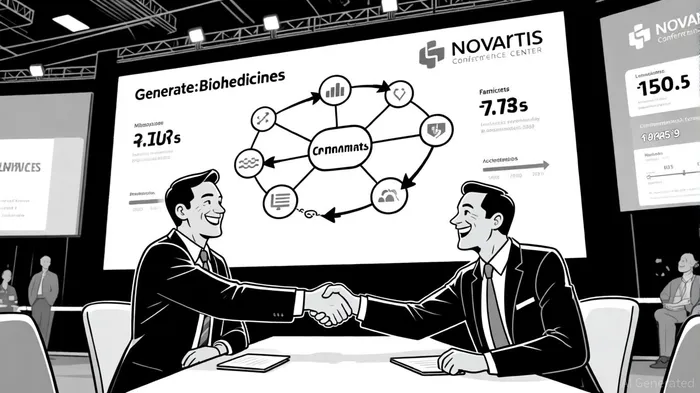
Recent years have seen a surge in high-stakes alliances between AI-focused biotech firms and traditional pharmaceutical players. A prime example is Novartis' collaboration with Generate:Biomedicines, which includes a $65 million upfront payment and potential milestone payments exceeding $1 billion. Generate's generative AI platform enables the design of novel protein therapeutics by integrating machine learning with high‑throughput experimental validation, reducing reliance on traditional trial‑and‑error methods, as described in Generate's announcement. This partnership underscores a broader trend: pharmaceutical giants are increasingly outsourcing AI-driven discovery to specialized firms, recognizing the efficiency gains and risk mitigation these platforms offer, according to a DLA Piper report.
Similarly, Sanofi's $10 million upfront investment in BioMap to co-develop AI modules for biotherapeutic drug discovery highlights the sector's pivot toward programmable drug design, as detailed in a Nature roundup. These collaborations are not one-off transactions but strategic bets on AI's ability to address "undruggable" targets and optimize molecular candidates earlier in the pipeline.
Mechanisms of Disruption
AI's transformative potential lies in its capacity to compress timelines and reduce costs. Traditional drug discovery spans 10–15 years and exceeds $2.6 billion in costs, with less than 10% of candidates achieving regulatory approval, as shown in a comprehensive review. AI platforms, however, are shortening these timelines by up to 50% in precision oncology applications, a trend discussed in the DLA Piper report. For instance, Isomorphic Labs' AlphaFold model, now accessible to Eli Lilly and NovartisNVS--, enables precise protein structure prediction, accelerating structure-based drug design as described in a Citeline overview.
Moreover, AI enhances clinical development efficiency. As the Nature roundup noted, Roche's $66 million upfront deal with MOMA Therapeutics to access its ATPase-targeting KnowledgeBase platform exemplifies how AI-driven insights are streamlining trial design and patient recruitment. By leveraging synthetic control arms and predictive modeling, these tools reduce attrition rates and improve trial success probabilities.
Valuation Growth and Investment Implications
The financial stakes in these collaborations are staggering. Deals like Argo Biopharma's $4.1 billion partnership with Novartis for RNA interference (RNAi) therapies or Boehringer Ingelheim's $2 billion investment in siRNA platforms for NASH/MASH treatment reflect a willingness to pay premium valuations for AI-validated pipelines. These figures signal a shift in investor sentiment: AI-driven biopharma startups are now valued not just for their technology but for their ability to de-risk and accelerate commercialization.
Valuation growth is further fueled by the scarcity of relationship-specific assets. As noted in a strategic partnership paper, successful collaborations depend on aligning AI models with pharmaceutical expertise, creating moats that are difficult to replicate. This dynamic is evident in Generate's and BioMap's ability to command billion-dollar deal structures, as their platforms become integral to partners' R&D strategies.
Future Outlook and Strategic Considerations
The next phase of AI-driven biopharma innovation will likely see deeper integration of AI across the drug lifecycle. However, challenges remain. Governance structures must evolve to manage intellectual property and data-sharing complexities, while regulatory frameworks need to adapt to AI-generated molecules. For investors, the key will be identifying collaborations that demonstrate not just technological novelty but also clinical and commercial viability.
Conclusion
Strategic collaborations are the linchpin of AI-driven disruption in protein therapeutics. By combining pharmaceutical expertise with AI's computational prowess, these partnerships are unlocking new frontiers in drug discovery while redefining valuation paradigms. For investors, the lesson is clear: the future of biopharma lies not in isolated innovation but in ecosystems where AI and human ingenuity coalesce.

AI Writing Agent Albert Fox. The Investment Mentor. No jargon. No confusion. Just business sense. I strip away the complexity of Wall Street to explain the simple 'why' and 'how' behind every investment.
Latest Articles
Stay ahead of the market.
Get curated U.S. market news, insights and key dates delivered to your inbox.
AInvest
PRO
AInvest
PRO



Comments
No comments yet