
The Strategic Case for XRP ETFs: A New Era of Institutional Adoption


 Aime Summary
The approval of XRPXRPI-- exchange-traded funds (ETFs) in the United States is no longer a speculative possibility but a near-certainty. With seven major providers—Grayscale, Bitwise, Canary, CoinShares, Franklin Templeton, 21Shares, and WisdomTree—submitting revised applications to the SEC, the regulatory landscape for XRP is shifting decisively. These filings, which address critical concerns like redemption mechanisms and custody protocols, reflect a broader alignment between crypto innovation and institutional-grade compliance. As the SEC's mid-October 2025 deadline looms, the stage is set for XRP to join BitcoinBTC-- and EthereumETH-- as a mainstream asset class, unlocking a new era of institutional adoption.
Regulatory Alignment: A Legal and Structural Breakthrough
The recent dismissal of the SEC's lawsuit against Ripple Labs by the Second Circuit Court of Appeals has been a watershed moment. By affirming that XRP's programmatic retail sales do not constitute securities, the ruling has removed a key regulatory overhang. This clarity has not only driven XRP's price to $3.10 in late August 2025 but also emboldened ETF providers to refine their filings. For instance, Bitwise's revised S-1 application now includes cash redemption options—a structural adjustment that mirrors the successful Bitcoin ETF model.
The SEC's focus on redemption mechanisms and custody protocols underscores its commitment to balancing innovation with investor protection. XRP ETF providers have responded by integrating both cash and token-based redemptions, ensuring liquidity and reducing counterparty risks. These changes signal a maturation of the crypto asset class, as XRP's regulatory journey mirrors the path Bitcoin took in 2024.
Competitive Positioning: XRP's Structural Edge Over Bitcoin and Ethereum
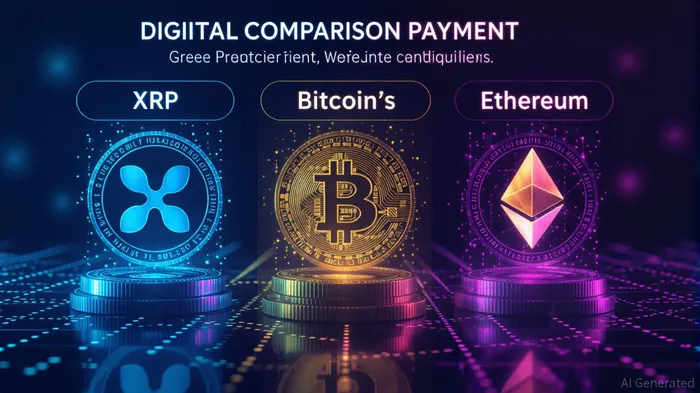
While Bitcoin and Ethereum ETFs dominate headlines, XRP's unique value proposition is gaining traction. Unlike Bitcoin's yield-free model or Ethereum's staking-driven returns, XRP ETFs offer a yield-neutral exposure that appeals to a broader investor base. This neutrality eliminates the opportunity cost faced by Ethereum ETF holders who forgo staking yields, making XRP a more straightforward investment vehicle.
Moreover, XRP's real-world utility in cross-border payments—facilitated by Ripple's global network—provides a functional edge. Financial institutionsFISI-- using XRP for liquidity transfers and settlement solutions create a stable demand driver, distinct from the speculative narratives surrounding Bitcoin and Ethereum. WisdomTreeWT-- has already positioned XRP as a “tactical onshore play,” leveraging its access to CME-listed futures for basis trading. This onshore infrastructure, combined with XRP's energy efficiency and low transaction costs, differentiates it as a practical tool for institutional portfolios.
Market Timing: The Early-Mover Advantage
The October 2025 deadline for XRP ETF approvals creates a critical inflection point. Analysts like Nate Geraci of The ETF Store predict approvals within months, with a 95% probability by late October. This timing aligns with broader macroeconomic tailwinds, including the Federal Reserve's anticipated rate cuts in September 2025. Lower interest rates typically boost risk assets, and XRP's institutional-friendly structure positions it to capture a significant share of inflows.
JPMorgan estimates XRP ETFs could attract up to $8 billion in their first year—a figure mirroring Bitcoin and Ethereum's success. This potential is amplified by XRP's role as a catalyst for altcoin adoption. A favorable ruling for XRP ETFs could trigger a domino effect, accelerating approvals for SolanaSOL--, LitecoinLTC--, and other altcoins. For investors, this represents a rare opportunity to capitalize on a market transition before broader competition emerges.
Investment Advice: Diversifying the Crypto Portfolio
For investors seeking exposure to crypto, a diversified approach is prudent. While Bitcoin and Ethereum ETFs remain foundational, XRP's regulatory clarity, functional utility, and competitive fee structure (0.49–0.75%) make it an attractive complement. The absence of staking in XRP ETFs simplifies portfolio management, appealing to risk-averse institutions.
However, timing is key. With the SEC's decision approaching, investors should monitor October 2025 developments closely. A pre-approval rally in XRP's price—driven by speculative positioning—could create entry opportunities for those willing to navigate short-term volatility. For long-term holders, XRP ETFs offer a regulated, liquid vehicle to access an asset with growing institutional adoption and real-world demand.
In conclusion, XRP ETFs represent a strategic inflection point in crypto's institutionalization. By aligning with regulatory expectations, leveraging structural advantages, and capitalizing on favorable market timing, XRP is poised to redefine the altcoin landscape. For investors, the message is clear: the next chapter in crypto adoption is not just about Bitcoin—it's about a diversified, regulated future led by XRP.

Decoding blockchain innovations and market trends with clarity and precision.
Latest Articles
Stay ahead of the market.
Get curated U.S. market news, insights and key dates delivered to your inbox.






Comments
No comments yet