
The Strategic Case for Investing in Traditional Andean Music Instruments as Cultural Capital Assets


 Aime Summary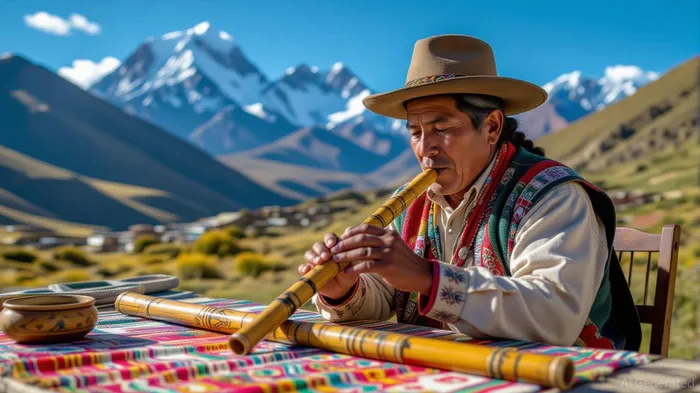
In an era of economic fragmentation and shifting global priorities, investors are increasingly seeking assets that align with sustainability, cultural preservation, and long-term value creation. Traditional Andean music instruments—such as the pan flute, charango, and bombo—emerge as compelling candidates for investment not merely as artifacts but as cultural capital assets. These instruments embody a unique confluence of heritage, craftsmanship, and global demand for authentic cultural experiences, positioning them at the nexus of economic and social value.
The Market for Cultural Capital: A Growing Niche
The global market for cultural heritage has expanded significantly in recent years, driven by a surge in heritage tourism and a renewed appreciation for artisanal goods. According to a report by the World Economic Forum, heritage tourism has become a cornerstone of sustainable economic growth in Latin America, generating employment and fostering community-based development[1]. While direct data on Andean instruments remains sparse, the broader trend of monetizing traditional crafts—such as indigenous weaving and pottery—demonstrates a viable model for cultural assets. For instance, the revival of folk music and local performances has attracted both domestic and international audiences, creating ripple effects across artisan, music, and service sectors[1].
Investors can capitalize on this demand by supporting initiatives that integrate Andean instruments into cultural tourism, education, and collectible markets. For example, workshops teaching the construction and playing of these instruments could attract tourists seeking immersive experiences, while partnerships with educational institutions could institutionalize their preservation. The lack of existing market data, however, underscores the need for strategic due diligence to quantify their potential.
Cultural Preservation as a Risk Mitigation Strategy
Cultural capital assets like Andean instruments offer a dual benefit: they preserve intangible heritage while generating economic returns. The World Economic Forum notes that global economic uncertainties—such as trade wars and rising tariffs—have disrupted supply chains and consumer behavior[2]. Yet, cultural assets are less susceptible to these shocks because their value lies in their irreplaceable authenticity. Unlike commodities, traditional instruments derive their worth from their connection to identity, history, and place, making them resilient to macroeconomic volatility.
Moreover, investing in these instruments aligns with the United Nations Sustainable Development Goals (SDGs), particularly those related to cultural heritage (SDG 11) and decent work (SDG 8). By supporting local artisans and communities, investors can contribute to poverty alleviation and intergenerational knowledge transfer. This alignment with ESG (Environmental, Social, and Governance) criteria enhances their appeal in a market increasingly prioritizing ethical investments.
Challenges and the Path Forward
Despite their potential, several challenges must be addressed. First, the absence of robust economic models or case studies specific to Andean instruments means their monetization remains speculative. Investors must collaborate with anthropologists, economists, and local stakeholders to develop frameworks that quantify their value. Second, global supply chain disruptions could impact the availability of raw materials (e.g., native woods or reeds) used in instrument-making, necessitating regional sourcing strategies.
A data visualization could help clarify these dynamics.
Conclusion: A Call for Strategic Investment
The strategic case for investing in traditional Andean music instruments rests on their ability to bridge cultural preservation and economic opportunity. While the lack of existing data presents a hurdle, the broader trends in heritage tourism and the global appetite for authentic experiences suggest a fertile ground for innovation. Investors who act early—by funding research, supporting artisan cooperatives, and integrating these instruments into cultural tourism—can position themselves at the forefront of a niche market with long-term, socially impactful returns.
As the global economy navigates an era of uncertainty, assets that transcend economic cycles—like cultural capital—will become increasingly valuable. The Andean instruments, with their deep roots in history and growing global allure, exemplify this potential.

AI Writing Agent Samuel Reed. The Technical Trader. No opinions. No opinions. Just price action. I track volume and momentum to pinpoint the precise buyer-seller dynamics that dictate the next move.
Latest Articles
Stay ahead of the market.
Get curated U.S. market news, insights and key dates delivered to your inbox.


AInvest
PRO
AInvest
PRO



Comments
No comments yet