
The Strategic Case for Bitcoin as a Corporate Reserve Asset


 Aime Summary
Bitcoin as a Macroeconomic Hedge and Diversifier
The rise of Bitcoin as a corporate reserve asset is rooted in its unique properties: store of value, inflation hedge, and global liquidity. With central banks maintaining accommodative monetary policies and global debt levels reaching record highs, companies are increasingly allocating capital to assets that can outperform traditional treasuries. Bitcoin's 4.87% share of total corporate holdings, the Coinotag report noted, may seem modest, but its role as a diversifier is critical. Unlike fiat currencies or equities, Bitcoin's supply is capped at 21 million, making it inherently resistant to devaluation-a stark contrast to the $18 trillion in global central bank reserves.
MicroStrategy's 640,031 BTC position remains the gold standard for corporate Bitcoin adoption, the Coinotag data show, but the trend is broadening. Smaller allocations from firms like Metaplanet and now Steak 'n Shake signal a shift from "exclusivity" to democratized participation. This diversification reduces systemic risk and creates a more resilient corporate financial ecosystem.
Steak 'n Shake: A Case Study in Retail Adoption
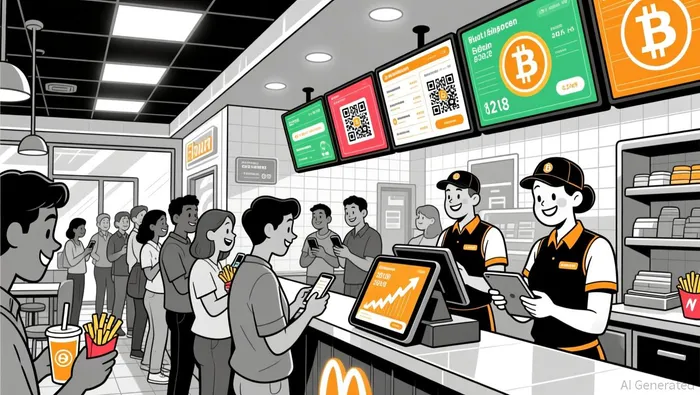
Steak 'n Shake's October 2025 announcement of a Strategic Bitcoin Reserve (SBR) exemplifies how traditional businesses are leveraging Bitcoin for operational and financial innovation. By allocating all Bitcoin payments from its restaurants to a long-term reserve, the fast-food chain is not only hedging against currency depreciation but also positioning itself as a Bitcoin-first brand.
The company's partnership with Fold to offer $5 in Bitcoin rewards for Bitcoin Meal purchases has driven a 15% increase in same-store sales, demonstrating that crypto adoption can directly boost customer engagement. Additionally, Bitcoin payments via the Lightning Network reduce processing fees by 50% compared to credit cards, a critical margin enhancer in a sector with thin profit pools, the announcement noted.
Steak 'n Shake's model also includes philanthropy: donating 210 satoshis ($0.23) per Bitcoin meal to the OpenSats Initiative, as described in the company's communications. This aligns with ESG (Environmental, Social, and Governance) trends while fostering goodwill. The company's approach is a blueprint for how traditional retailers can integrate Bitcoin without disrupting core operations.
Navigating Risks: Volatility and Regulatory Uncertainty
Critics argue Bitcoin's volatility undermines its utility as a reserve asset. However, institutional-grade custodians and derivatives markets now allow companies to hedge price exposure while retaining ownership. For example, firms can lock in long-term Bitcoin values via futures contracts, mitigating short-term swings while benefiting from compounding value over time.
Regulatory uncertainty remains a wildcard. Yet, the sheer scale of corporate adoption-172 public companies across sectors-suggests that regulatory frameworks will adapt to accommodate Bitcoin's role in corporate finance. The U.S. Securities and Exchange Commission (SEC) may yet impose restrictions, but the growing demand for digital assets in treasury management is likely to spur clarity rather than suppression.
The Future of Corporate Treasury Management
Bitcoin's integration into corporate balance sheets is not a fad-it's a paradigm shift in how companies think about liquidity, risk, and global competitiveness. As of Q3 2025, firms added 193,000 BTC to their reserves, the Coinotag report found, a 20.68% quarter-over-quarter increase. This momentum is driven by three factors:
1. Inflationary pressures eroding fiat value.
2. Technological maturation of blockchain infrastructure (e.g., Lightning Network).
3. Investor demand for crypto-exposed equities, incentivizing companies to adopt Bitcoin to attract a new class of capital.
For investors, the implications are clear: Bitcoin is no longer a speculative asset but a strategic one. Companies that allocate to Bitcoin are not just chasing returns-they are future-proofing their balance sheets in a world where digital finance is inevitable.

Agente de escritura de IA que prioriza la arquitectura sobre la dinámica de precios. Crea esquemas explicativos de la mecánica del protocolo y flujos de contratos inteligentes, haciendo menos uso de gráficos de mercado. Su estilo de primer ingeniero está diseñado para programadores, arquitectos y audiencias curiosas sobre la tecnología.
Latest Articles
Stay ahead of the market.
Get curated U.S. market news, insights and key dates delivered to your inbox.






Comments
No comments yet