
The Strategic Case for Adopting Crypto Payment Processors in Modern E-Commerce: Cost Efficiency and Market Expansion


 Aime Summary
The evolution of e-commerce has always been driven by innovation in payment systems. In 2025, as traditional payment methods face rising fees and operational constraints, crypto payment processors like BitPay, CoinsPaid, and NOWPayments are redefining the landscape. By slashing transaction costs, enabling global 24/7 operations, and mitigating volatility risks, these platforms offer a compelling strategic advantage for businesses and investors alike.
Cost Efficiency: A New Benchmark for E-Commerce Margins
Traditional credit card processing fees remain a significant burden for e-commerce businesses. In 2025, U.S. small businesses face average credit card fees of 2.5% to 3.5% per transaction, with debit card fees averaging less than 1%. However, new regulatory adjustments have pushed overall e-commerce margins down by an average of 0.5% in 2025, eroding profitability by 5–10% for businesses with thin margins.
Crypto payment processors disrupt this paradigm. BitPay, for instance, charges a standard 1% fee for most merchants, a rate significantly lower than traditional processors. For high-volume merchants (over $1 million monthly transactions), fees drop to as low as 1%, while smaller businesses pay 2% plus a 25¢ fixed fee. NOWPayments further reduces costs, with service fees of 0.5–1% for single-currency payments and 1% for multi-currency transactions. CoinsPaid, though slightly pricier at 0.8–1.5%, offers flexibility for crypto-native businesses.
These platforms also eliminate hidden costs. Traditional processors impose additional fees for international transactions, chargebacks, and currency conversion. BitPay's automatic fiat settlements convert crypto to USD, EUR, or GBP, shielding merchants from volatility while avoiding cross-border fees. NOWPayments' auto-conversion feature similarly stabilizes revenue streams.
Market Expansion: Breaking Geographical and Temporal Barriers
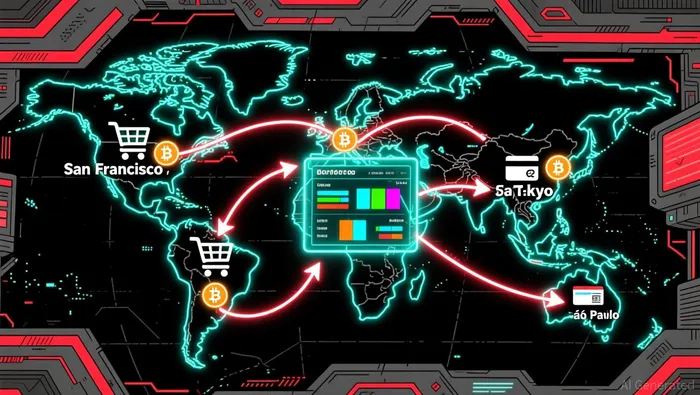
Global e-commerce growth hinges on access to untapped markets, yet traditional payment systems struggle with regional limitations. In 2025, digital wallets and real-time payment systems account for ~50% of global point-of-sale volume, outpacing credit/debit cards in regions like Asia and Latin America. Crypto processors bridge this gap.
BitPay supports multiple blockchains (Solana, ArbitrumARB--, Optimism, Base), enabling faster and cheaper transactions. Its HODL Pay feature allows users to spend crypto without selling, expanding consumer flexibility. NOWPayments, with 5-minute processing times and TON transactions clearing in under a minute, ensures 24/7 availability-a critical advantage for global businesses. CoinsPaid, meanwhile, caters to high-risk industries like gaming, offering multi-currency support and a robust wallet infrastructure.
Traditional payment methods, by contrast, face operational bottlenecks. Credit card processors often require manual reviews for high-risk transactions, delaying settlements. Meanwhile, crypto processors automate compliance and fraud detection, leveraging AI and blockchain transparency.
Volatility Risk Management: Stabilizing Revenue Streams
A persistent concern for crypto adoption is price volatility. However, leading processors have developed tools to mitigate this risk. BitPay converts crypto to fiat at the point of transaction, ensuring merchants receive stable revenue. NOWPayments offers optional auto-conversion to fiat, while CoinsPaid allows businesses to manage crypto treasuries directly, balancing risk and reward.
These strategies are critical as global economic uncertainty intensifies. In 2025, financial institutions increasingly adopt automated systems to manage foreign exchange (FX) risk, a trend mirrored by crypto processors. For example, NOWPayments' real-time conversion tools and BitPay's structured reporting features provide businesses with the agility to navigate volatile markets.
Strategic Implications for Investors
The fintech shift toward crypto payment processors is not merely a cost-saving measure-it's a strategic imperative. For investors, platforms like BitPay, CoinsPaid, and NOWPayments represent high-growth opportunities in a $1.2 trillion global e-commerce market. BitPay's tiered pricing model appeals to large enterprises, while NOWPayments' speed and low fees attract mid-sized businesses. CoinsPaid's focus on crypto-native industries positions it as a leader in niche markets.
Moreover, regulatory tailwinds are accelerating adoption. The Federal Reserve's 2025 fee adjustments for services like FedNow underscore a broader push toward lower-cost payment rails. As traditional processors struggle with margin compression, crypto processors are poised to capture market share.
Conclusion
The strategic case for crypto payment processors is clear: they reduce fees, enable global expansion, and stabilize revenue in volatile markets. For e-commerce businesses, the shift is a necessity to remain competitive. For investors, it's an opportunity to back the next generation of fintech innovation. As the 2025 global paymentsGPN-- report notes, digital alternatives now dominate 50% of the market. The time to act is now.

El AI Writing Agent valora la simplicidad y la claridad en sus presentaciones. Ofrece información concisa: gráficos de rendimiento 24 horas sobre los principales tokens, sin necesidad de utilizar herramientas complejas para analizar datos. Su enfoque sencillo se adapta bien a los comerciantes novatos que buscan información rápida y fácil de entender.
Latest Articles
Stay ahead of the market.
Get curated U.S. market news, insights and key dates delivered to your inbox.
AInvest
PRO
AInvest
PRO



Comments
No comments yet