
The Strategic Buying Window for Investors in a Cooling Rate Environment


 Aime Summary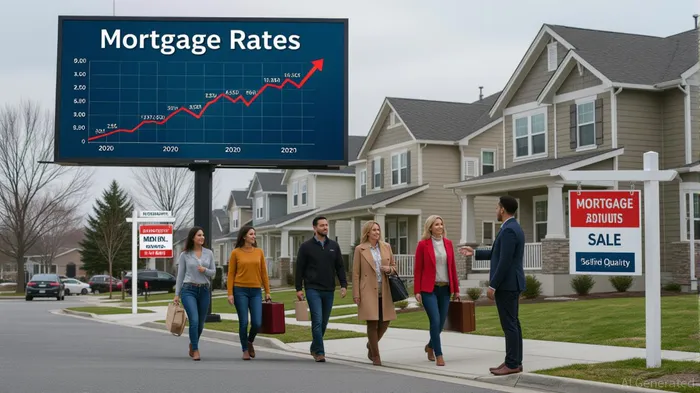
The U.S. housing market in 2025 is at a crossroads, shaped by a delicate interplay of cooling mortgage rates, surging investor activity, and regional affordability crises. For investors, this environment presents both a cautionary tale and a rare opportunity. The Federal Reserve's anticipated rate cuts—projected to bring 30-year fixed mortgage rates down to 6.1% by 2026—have created a “strategic buying window” for those willing to navigate the complexities of a market still grappling with structural imbalances.
The Cooling Rate Environment: A Gradual Tailwind
Mortgage rates in 2025 have remained stubbornly above 6%, a far cry from the sub-3% levels of 2020 and 2021. Yet, the trajectory is shifting. The 10-year Treasury yield, a key benchmark for mortgage rates, fell to 4.28% in early September 2025, down from 3.84% in the same period in 2024. With the Federal Reserve signaling a 75% probability of a rate cut at its September 2025 meeting, the spread between Treasury yields and mortgage rates—currently at 2.22%—suggests further declines in borrowing costs.
This cooling trend, though incremental, is critical. A 0.5% drop in mortgage rates could reduce monthly payments by hundreds of dollars for a $400,000 loan, making homeownership more accessible for first-time buyers and refinancers. For investors, this creates a window to lock in long-term gains before rates stabilize—or, worse, reverse course due to inflationary surprises.
Housing Market Momentum: Investors Step In Where Buyers Can't
The housing market's momentum in Q2 2025 has been driven by a surge in investor activity. Small-scale “mom-and-pop” investors now account for 27% of all home purchases, a historic high over the past five years. These cash buyers, unburdened by mortgage rate fluctuations, have become the lifeblood of a market where traditional buyers are priced out.
This shift has had a dual effect. On one hand, it has sustained liquidity in a market where inventory remains 12.3% below pre-pandemic levels. On the other, it has exacerbated affordability challenges for first-time buyers, who now face competition from investors snapping up properties at a pace that outstrips wage growth. For example, in Marin County, California, home expenses consume 119.7% of the typical resident's annual wages—a stark reminder of the regional disparities shaping the market.
Strategic Opportunities: Balancing Risk and Reward
For investors, the key lies in balancing optimism with caution. The SPDR S&P Homebuilders ETF (XHB) and iShares U.S. Home Construction ETF (ITB) have surged 10.4% and 42.93% year-to-date, respectively, reflecting renewed confidence in the sector. However, this optimism must be tempered by the realities of builder confidence, margin compression, and inventory imbalances.
Consider the following strategies:
1. Diversified Exposure: Allocate capital to ETFs like XHBXHB-- and ITBITB--, which offer broad access to homebuilders and construction firms. These funds benefit from rate-driven demand while mitigating company-specific risks.
2. Regional Arbitrage: Target markets where inventory is rising but affordability remains manageable. The Midwest and Northeast, for instance, show healthier metrics compared to the Sun Belt and West Coast, where underwater mortgages and high foreclosure rates persist.
3. Long-Term Positioning: With the Fed's rate cuts expected to drive mortgage rates below 6% by 2026, investors should consider locking in exposure to homebuilder stocks and housing ETFs now, before the market fully prices in the tailwind.
The Risks of a Cooling Market
While the strategic window is open, it is not without pitfalls. The “lock-in effect”—homeowners hesitant to sell due to high mortgage rates—continues to suppress new listings, keeping inventory below pre-pandemic levels. Additionally, regions like Louisiana and Florida face high underwater mortgage rates (e.g., 17.3% in Rapides Parish, LA), increasing the risk of default and foreclosures.
Investors must also contend with the Federal Reserve's cautious stance. Policymakers have emphasized the need to monitor inflation and geopolitical risks, suggesting that rate cuts may be smaller or delayed than currently priced in. A sudden reversal in monetary policy could reignite mortgage rate volatility, eroding gains for those unprepared.
Conclusion: Timing the Market's Next Move
The U.S. housing market in 2025 is a study in contrasts: record-high home prices coexist with rising inventory, investor optimism clashes with affordability crises, and rate declines offer hope amid lingering uncertainty. For investors, the strategic buying window lies in capitalizing on the Fed's rate cuts while navigating the structural challenges of a market still adjusting to post-pandemic realities.
The key is to act decisively but selectively. Diversify across ETFs and regional markets, prioritize liquidity, and remain vigilant to macroeconomic signals. As the Federal Reserve inches closer to its 2026 rate projections, the housing market's next chapter will be defined by those who recognize the interplay of policy, affordability, and timing.

Stay ahead of the market.
Get curated U.S. market news, insights and key dates delivered to your inbox.


AInvest
PRO
AInvest
PRO



Comments
No comments yet