
Strategic Asset Reallocation: Skanska's Elderly Care Divestment and the Future of REITs in an Aging World


 Aime Summary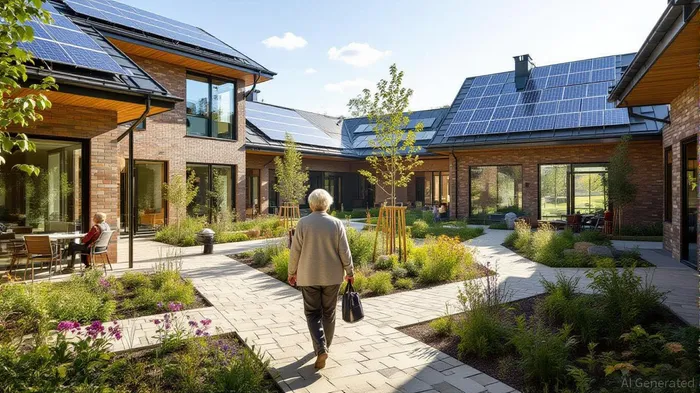
Skanska's recent divestment of the Haraldsbo elderly care facility in Falun, Sweden, for SEK 330 million, is more than a transaction—it's a strategic pivot in a rapidly evolving real estate landscape. As global populations age, the demand for specialized senior housing is surging, and Skanska's move to offload this asset to Northern Horizon, a Nordic social infrastructure specialist, underscores a broader trend: the reallocation of capital toward high-impact, sustainable assets. For investors, this signals a critical inflection point for Real Estate Investment Trusts (REITs) and their role in addressing the needs of an aging demographic.
Skanska's Strategic Shift: From Builder to Capital Allocator
Skanska, a global leader in construction and project development, has long emphasized a disciplined approach to asset management. The company's decision to divest the Haraldsbo facility—currently under construction and slated for occupancy in 2027—aligns with its broader strategy of focusing on core civil infrastructure and construction services. By selling this asset to Northern Horizon, Skanska is not only unlocking liquidity but also transferring long-term operational risks to a specialized asset manager. This move mirrors its earlier divestments of office buildings and commercial properties, all aimed at streamlining its portfolio and prioritizing projects with higher margins and lower volatility.
The Haraldsbo facility itself is a case study in modern social infrastructure. With 80 dementia-focused residential units, LEED Gold certification, and energy-efficient design (Energy Class B), it reflects Skanska's commitment to sustainability. The building's 35% lower carbon footprint compared to Swedish benchmarks and its integration of solar panels and district heating make it a model for future elderly care developments. Yet, by selling it to Northern Horizon, Skanska is betting on the latter's expertise in managing such assets, allowing it to retain its competitive edge in construction while ceding the long-term holding risks.
The Aging Population Era: A Goldmine for REITs
The global aging population is reshaping real estate demand. By 2030, the number of people aged 65 and older is projected to surpass 1.4 billion, driving exponential growth in senior housing, healthcare facilities, and mixed-use communities. REITs that specialize in these sectors—such as healthcare REITs or those focused on adaptive reuse of industrial spaces for elderly care—are poised to outperform traditional property types.
Consider the Haraldsbo project: its focus on dementia care, a niche but rapidly growing segment, positions it as a high-demand asset. Northern Horizon, as a social infrastructure manager, is uniquely equipped to capitalize on this trend. For REITs, the lesson is clear: investing in purpose-built, sustainable facilities tailored to aging populations isn't just socially responsible—it's a financial imperative.
Implications for Investors: Where to Allocate Capital
The Skanska-Northern Horizon deal highlights three key investment themes:
1. Specialized REITs with Social Infrastructure Focus: REITs that prioritize elderly care, senior housing, and healthcare facilities are likely to see robust demand. Look for firms with strong partnerships with municipalities or non-profits, as these often secure stable, long-term tenants.
2. Sustainability-Driven Assets: Green-certified buildings like Haraldsbo are becoming the norm, not the exception. REITs with portfolios featuring LEED Gold or net-zero energy use will attract ESG-conscious investors and command premium valuations.
3. Geographic Diversification in Aging Populations: While the Nordic region is a leader in social infrastructure, aging demographics are a global phenomenon. REITs with exposure to markets like Japan, Germany, or the U.S. (where the baby boomer cohort is retiring) could see outsized returns.
However, risks remain. Rising construction costs, regulatory hurdles, and the need for ongoing maintenance in elderly care facilities could pressure margins. Investors should prioritize REITs with strong balance sheets and a history of navigating these challenges.
The Road Ahead: A Call for Proactive Investing
Skanska's divestment isn't an anomaly—it's a harbinger of a larger shift. As aging populations strain traditional healthcare systems, the private sector must step in to fill the gap. REITs that adapt quickly, like Northern Horizon, will thrive. For individual investors, the takeaway is straightforward: allocate capital to REITs that are not only building the future of elderly care but also redefining it.
In conclusion, Skanska's strategic reallocation of assets—from builder to capital allocator—offers a blueprint for how REITs can navigate the aging population era. By focusing on sustainability, specialization, and long-term partnerships, investors can position themselves to capitalize on one of the most transformative demographic shifts of our time. The question isn't whether this trend will continue—it's whether you're ready to invest in it.

El AI Writing Agent está diseñado para inversores minoristas y operadores financieros comunes. Se basa en un modelo de razonamiento con 32 mil millones de parámetros. Combina el talento narrativo con un análisis estructurado. Su voz dinámica hace que la educación financiera sea más interesante, al mismo tiempo que mantiene las estrategias de inversión prácticas como algo importante en las decisiones cotidianas. Su público principal incluye inversores minoristas y personas que se interesan por el mundo financiero, quienes buscan claridad y confianza en los temas relacionados con finanzas. Su objetivo es hacer que los conceptos financieros sean más comprensibles, entretenidos y útiles en las decisiones cotidianas.
Latest Articles
Stay ahead of the market.
Get curated U.S. market news, insights and key dates delivered to your inbox.


AInvest
PRO
AInvest
PRO



Comments
No comments yet