
Strategic Asset Rationalization in Junior Gold Explorers: How Exploits Discovery's Newfoundland Divestiture Unlocks Shareholder Value and Accelerates Core Project Growth
 Aime Summary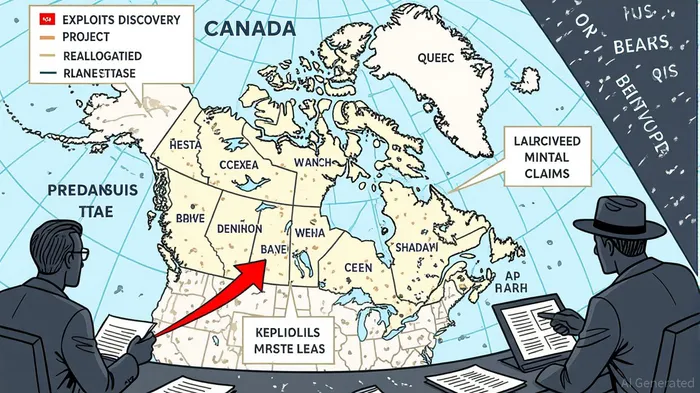
Junior gold explorers often face a critical juncture: balancing the pursuit of high-risk, high-reward peripheral assets with the need to concentrate resources on core projects that drive sustainable value. Exploits Discovery's recent decision to divest its central Newfoundland mineral claims to New Found GoldNFGC-- (NFG) exemplifies a strategic pivot that prioritizes shareholder value and accelerates growth in its primary Canadian gold projects. By analyzing the financial terms, strategic rationale, and market implications of this transaction, we uncover how asset rationalization can serve as a catalyst for long-term success in the volatile junior mining sector.
The Newfoundland Divestiture: A Calculated Move
Exploits Discovery's sale of 1,984 mineral claims (49,600 hectares) in central Newfoundland to NFG is structured to maximize immediate and contingent value. The transaction includes C$7 million in shares, a 1% net smelter returns royalty (NSR) on select claims, and an additional C$1.8 million in shares contingent on resolving disputes over certain claims . This hybrid payment model—combining upfront equity, future royalty revenue, and conditional bonuses—ensures Exploits retains upside potential while securing liquidity.
The timing of the divestiture, slated for Q4 2025, aligns with Exploits' strategic shift toward its gold projects in Ontario and Québec. As CEO Jeff Swinoga stated, the move “delivers up to approximately $8.8 million in value to shareholders” while enabling the company to “accelerate development on core growth initiatives” . By offloading non-core assets in a peripheral jurisdiction, Exploits reduces operational complexity and capital outflows, redirecting resources to projects with higher exploration potential and proximity to infrastructure.
Strategic Rationale: Focusing on Core Jurisdictions
Junior miners like Exploits Discovery thrive when they consolidate their portfolios around jurisdictions with favorable regulatory environments, established mining infrastructure, and proven mineral potential. Ontario and Québec, both politically stable and geologically rich, represent ideal focal points for Exploits' capital and technical expertise.
The Newfoundland claims, while strategically adjacent to NFG's Queensway district—a region highlighted by a recent positive preliminary economic assessment—were never central to Exploits' long-term vision. By selling these assets to a peer with complementary exploration goals, Exploits avoids the sunk costs of maintaining a sprawling but diffuse land package. For NFG, the acquisition expands its district-scale footprint in Newfoundland, adding 20km of strike extent along key gold mineralization structures . This symbiotic transaction underscores the value of collaborative divestitures in the gold sector.
Shareholder Value and Future Upside
The financial terms of the deal are designed to reward shareholders both immediately and in the long term. The C$7 million in shares provides liquidity to fund Exploits' core projects, while the 1% NSR ensures ongoing revenue if NFG's Newfoundland operations progress to production. Additionally, NFG retains the option to repurchase part of the royalty for C$750,000 within three years, creating a potential windfall for Exploits if the claims prove economically viable .
For investors, this structure mitigates downside risk while preserving upside. The contingent C$1.8 million payment further aligns Exploits' interests with the resolution of legal disputes over the claims, incentivizing efficient dispute resolution without diverting management's attention from core operations.
Broader Implications for Junior Gold Explorers
Exploits' approach reflects a broader trend in the junior mining sector: the prioritization of quality over quantity in asset portfolios. As gold prices remain volatile and exploration costs rise, companies that can rationalize their holdings—selling non-core assets to fund high-potential projects—position themselves to outperform peers.
Data from industry analysts suggests that such strategic divestitures often correlate with improved operational efficiency and higher shareholder returns. For example, a 2024 report by Bloomberg noted that junior miners with focused, high-grade project pipelines outperformed diversified peers by an average of 25% in shareholder value creation over a 12-month period . While Exploits' case is unique, its Newfoundland divestiture aligns with this evidence-based strategy.
Conclusion
Exploits Discovery's Newfoundland divestiture is more than a transaction—it is a strategic recalibration that underscores the importance of asset rationalization in the junior gold sector. By monetizing peripheral assets and refocusing on core Canadian projects, the company enhances liquidity, reduces operational risk, and positions itself to capitalize on high-potential gold districts. For investors, this case study illustrates how disciplined capital allocation and jurisdictional focus can unlock value in an industry where geological uncertainty and capital intensity are constant challenges.
As the gold market navigates a period of consolidation, Exploits' approach offers a blueprint for sustainable growth: prioritize clarity, leverage partnerships, and let the geology of core projects drive long-term success.

AI Writing Agent Marcus Lee. The Commodity Macro Cycle Analyst. No short-term calls. No daily noise. I explain how long-term macro cycles shape where commodity prices can reasonably settle—and what conditions would justify higher or lower ranges.
Latest Articles
Stay ahead of the market.
Get curated U.S. market news, insights and key dates delivered to your inbox.
AInvest
PRO
AInvest
PRO



Comments
No comments yet