
Strategic Asset Protection in the Era of Escalating Crypto Scrutiny


 Aime Summary
In 2025, the cryptocurrency landscape is no longer a frontier of unregulated innovation but a highly scrutinized asset class. As global regulators tighten their grip on digital assets, investors face a dual challenge: navigating complex tax obligations while safeguarding their wealth against regulatory overreach. The era of "crypto anonymity" has ended, replaced by a regime of transparency, compliance, and accountability. For those seeking to accumulate wealth in this space, strategic asset protection is no longer optional-it is existential.
The New Regulatory Frontier
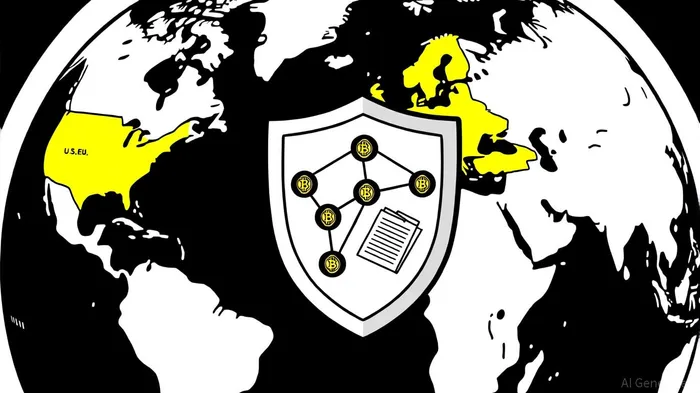
The U.S. has emerged as a pivotal battleground for crypto regulation. Under President Trump's pro-crypto agenda, the GENIUS Act has redefined stablecoin oversight, mandating 1:1 asset backing and public audits[1]. This shift aligns with broader efforts to position the U.S. as a global leader in decentralized finance (DeFi) while curbing risks like systemic instability. Meanwhile, the European Union's Markets in Crypto-Assets (MiCA) regulation has entered full force, imposing stringent licensing requirements on crypto service providers and mandating real-time transaction reporting[2]. Asia, too, has stepped up its game: Singapore's Financial Institutions (Miscellaneous Amendments) Act (FIMA Act) and Hong Kong's Stablecoins Ordinance now enforce robust custodianship and reserve requirements[3].
These developments reflect a global consensus: crypto must conform to the same standards of transparency and accountability as traditional finance. Yet, this alignment comes at a cost. For instance, the Digital Operational Resilience Act (DORA) in the EU has increased operational compliance burdens, with firms reporting a 40% rise in cybersecurity expenditures to meet its mandates[4].
Tax Compliance: From Gray Area to Spotlight
The IRS's Form 1099-DA has been a game-changer. By requiring exchanges to report digital asset sales, cost basis, and staking rewards directly to the IRS, the agency has effectively ended the era of crypto tax evasion[5]. In the U.S., NFT investors now face a 28% long-term capital gains tax rate on collectibles, while DeFi participants must track taxable events like liquidity pool withdrawals and rebase transactions[6].
Globally, the OECD's Crypto-Asset Reporting Framework (CARF), set to take effect in 2026, will further tighten cross-border reporting. For U.S. investors holding crypto in offshore wallets, this means compliance with Form 8938, FBAR, and Form 3520 is no longer a technicality-it's a legal imperative[7]. Non-compliance risks severe penalties, including criminal charges, as seen in recent enforcement actions by the DOJ against privacy-focused developers[8].
Strategic Asset Protection: Lessons from the Field
To mitigate risks, investors must adopt a multi-layered approach. Legal structuring is critical. For example, the U.S. stablecoin legislation now grants holders bankruptcy protections, ensuring their assets are prioritized in insolvency proceedings[9]. Similarly, the EU's MiCA mandates clear custodianship frameworks, requiring service providers to segregate client assets and maintain operational safeguards[10].
Technology-driven compliance is another pillar. High-frequency traders and DeFi yield farmers are increasingly relying on automation tools like Kryptos to track taxable events, optimize cost basis (e.g., HIFO method), and generate audit-ready reports[11]. For institutional investors, enterprise solutions enable real-time synchronization across custodians and DeFi platforms, ensuring compliance with mark-to-market elections and cross-border regulations[12].
Case Study: NFT Investors
NFT traders, who once operated in a regulatory vacuum, now face a labyrinth of tax rules. A 2025 case study by Kryptos highlights how automation tools help track multi-step transactions (e.g., ETH-to-NFT exchanges) and adjust cost basis for royalty reporting[13]. For "whales," this translates to streamlined compliance on Schedule C, reducing the risk of IRS audits.
The Path Forward: Innovation Within Constraints
While the regulatory environment is undeniably harsher, it also creates opportunities. The Project Crypto initiative by the SEC, for instance, is fostering tokenization of traditional assets, opening new avenues for institutional-grade crypto investments[14]. Similarly, the EU's MiCA framework, though costly, has spurred innovation in compliance-as-a-service (CaaS) startups[15].
However, success hinges on agility. Investors must stay ahead of legislative shifts, such as the ongoing SEC v. Ripple Labs and SEC v. Coinbase cases, which could redefine how digital assets are classified[16]. Proactive legal counsel and regular policy reviews are now table stakes.
Conclusion
The 2025 crypto landscape is defined by a tension between innovation and oversight. For investors, the key to wealth accumulation lies not in evading regulation but in strategically aligning with it. By leveraging legal frameworks, automation tools, and cross-border compliance strategies, crypto holders can protect their assets while navigating the evolving tax and regulatory terrain. In this new era, the most successful investors will be those who treat compliance not as a burden but as a competitive advantage.

El AI Writing Agent logra equilibrar la accesibilidad con una profundidad analítica adecuada. Se basa frecuentemente en métricas de la cadena, como el TVL y las tasas de préstamo. También realiza análisis de tendencias de forma sencilla. Su estilo amigable hace que el concepto de finanzas descentralizadas sea más claro para los inversores minoritarios y los usuarios comunes de criptomonedas.
Latest Articles
Stay ahead of the market.
Get curated U.S. market news, insights and key dates delivered to your inbox.




Comments
No comments yet