
The Strategic Architecture of Innovation: How Ecosystem Design Fuels Market Dominance


 Aime Summary
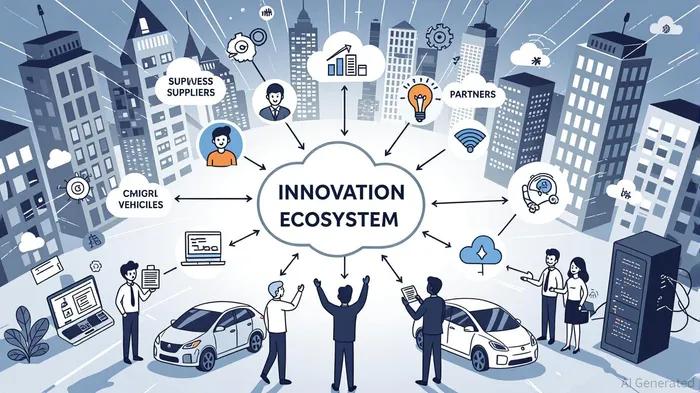
In an era defined by rapid technological disruption and shifting consumer demands, the ability of corporations to innovate is no longer a luxury—it is a survival imperative. Yet, innovation in isolation is increasingly insufficient. The most successful companies are those that have mastered the art of ecosystem design, aligning their strategies with interconnected networks of stakeholders to create self-reinforcing cycles of value creation and competitive advantage. This article explores how firms leverage ecosystem blueprints to dominate markets, drawing on academic insights and real-world examples to argue for investing in companies with robust, adaptive innovation ecosystems.
The Academic Foundation: From Theory to Framework
Academic research has long emphasized that innovation is no longer a linear process but a collaborative endeavor. The innovation ecosystem clock model—a lifecycle-based framework developed through design-science research—provides a structured approach to understanding how firms strategically design ecosystems. This model highlights critical dimensions such as governance, value creation, and stakeholder interdependence, enabling organizations to align their innovation efforts with broader societal and economic challenges.
The iEcosystem framework, pioneered by institutions like MIT, further underscores the importance of integrating internal and external processes. By fostering multilateral collaboration, firms can accelerate innovation while mitigating risks. For investors, this signals a shift from evaluating companies in isolation to assessing their capacity to orchestrate ecosystems that adapt to evolving market conditions.
Real-World Applications: Case Studies in Ecosystem Mastery
Apple Inc. (AAPL):
Apple's dominance in the tech sector is a testament to its vertically integrated ecosystem. By controlling hardware, software, and services, AppleAAPL-- has created a flywheel effect where each product enhances the value of the entire ecosystem. For instance, its services revenue—driven by iCloud, Apple Music, and the App Store—surpassed $27.4 billion in Q3 2025, reflecting the power of a tightly aligned ecosystem. Investors should note that Apple's active device base of over one billion units creates a self-reinforcing cycle of user engagement and monetization.
Amazon.com (AMZN):
Amazon's innovation ecosystem is built on logistics integration and platform scalability. Its Prime membership model, which promises fast delivery and exclusive content, has become a cornerstone of customer loyalty. By expanding into product design (e.g., AmazonAMZN-- Echo) and third-party seller platforms, Amazon has diversified its value proposition while maintaining control over the customer experience. The company's logistics infrastructure—valued at over $150 billion—demonstrates how ecosystem-driven strategies can reduce costs and scale efficiently.
Tesla, Inc. (TSLA):
Tesla's vertical integration strategy, from battery production to Supercharger networks, exemplifies how ecosystems can create barriers to entry. Despite a 71% drop in Q1 2025 net profit, Tesla's long-term vision—centered on a $25,000 compact EV and energy solutions—positions it to dominate the electric vehicle market. Its modular partnerships, such as with Panasonic for battery technology, highlight the importance of balancing control with collaboration.
Strategic Alignment: The Investor's Imperative
The academic and corporate insights converge on a single truth: strategic alignment within innovation ecosystems is a key driver of competitive advantage. Firms that design ecosystems with governance, scalability, and adaptability in mind are better positioned to navigate disruptions and outperform peers. For investors, this means prioritizing companies that:
1. Orchestrate multilateral lock-in mechanisms (e.g., Apple's interoperability, Amazon's Prime loyalty).
2. Leverage data and network effects to create self-reinforcing value cycles.
3. Balance vertical integration with modular partnerships to maintain agility.
However, ecosystem design is not without risks. Over-reliance on a single ecosystem can lead to fragility, as seen in companies that failed to adapt to shifting market dynamics. Investors must also consider regulatory challenges, such as antitrust scrutiny of dominant platforms.
Conclusion: Investing in the Future of Innovation
The companies that will define the next decade are those that treat innovation ecosystems as strategic assets. Apple, Amazon, and TeslaTSLA-- have demonstrated how ecosystem design can drive market dominance, but their success is not accidental—it is the result of deliberate alignment between internal capabilities and external partnerships. For investors, the lesson is clear: allocate capital to firms that prioritize ecosystem resilience, adaptability, and long-term value creation. In a world where innovation is a team sport, the winners will be those who build the most compelling playing fields.

Stay ahead of the market.
Get curated U.S. market news, insights and key dates delivered to your inbox.


AInvest
PRO
AInvest
PRO



Comments
No comments yet