
Strategic Allocation to Commodities for Portfolio Resilience in a Post-Pandemic World
 Aime Summary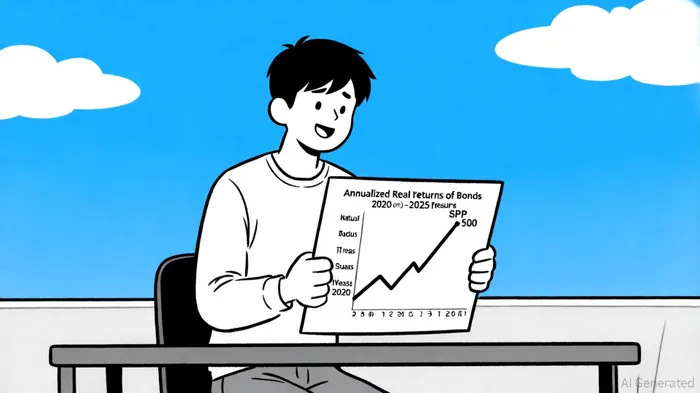
The post-pandemic era has reshaped global inflation dynamics, with commodity prices emerging as both a symptom and a solution to macroeconomic instability. From 2023 to 2025, inflationary pressures have been driven by a complex interplay of supply-side shocks, energy transitions, and geopolitical tensions. For investors, understanding these forces—and how to hedge against them—is critical to building resilient portfolios. Strategic allocation to commodities, long undervalued in traditional asset allocations, is now gaining renewed attention as a tool to navigate this volatile landscape.
The Drivers of Commodity Inflation: Supply, Demand, and Geopolitics
Post-pandemic inflation has defied simple explanations. According to a report by the New York Federal Reserve, global supply shocks—such as manufacturing bottlenecks and surging sea freight costs—were the primary inflationary forces in 2021 and 2022 [1]. However, by mid-2023, these supply-side pressures began to wane, and demand-side factors took center stage. A study by the European Central Bank found that strong global demand, particularly in the U.S. and eurozone, became the dominant driver of inflation, complicating the Federal Reserve's and ECB's monetary policy decisions [3].
Geopolitical events have further amplified these dynamics. The Russian invasion of Ukraine, for instance, created energy shortages in Europe, pushing natural gas prices to record highs and triggering second-round effects on core inflation [4]. Meanwhile, the global energy transition—driven by green policies and infrastructure spending—has created new demand for industrial metals like copper and lithium, adding another layer of volatility to commodity markets [4].
Regional disparities have also emerged. North America experienced a sharp inflation spike in 2021, followed by a decline in 2022, while Europe's core inflation continued to rise due to its proximity to energy shocks [4]. These divergences underscore the need for a nuanced approach to commodity allocation, one that accounts for both global trends and regional idiosyncrasies.
Commodities as a Strategic Hedge: Historical Performance and Diversification Benefits
Commodities have historically served as a powerful hedge against inflation, particularly during periods of structural price pressures. A 40-year dataset (1985–2024) reveals that commodities outperformed equities and fixed income during high-inflation environments, with gold and industrial metals delivering the strongest returns [2]. For example, gold's annualized real return of +13% during inflationary periods from 2020 to 2025 far outpaced the -4.04% return of natural gas, the worst-performing commodity in the same timeframe [1].
The diversification benefits of commodities are equally compelling. Research from Duke University and the Man Group highlights that gold, in particular, has maintained a low to negative correlation with bonds and a modest positive correlation with equities, making it an effective portfolio stabilizer [2]. Industrial metals, meanwhile, have shown even stronger risk-reduction properties when combined with stocks [3]. These characteristics are especially valuable in today's environment, where central banks are grappling with the dual challenge of high inflation and fragile growth.
Building Resilience: Diversification Strategies for the Modern Investor
To harness the benefits of commodities, investors must adopt a strategic approach to allocation. A LinkedIn analysis of portfolio construction over the past five years emphasizes the importance of balancing growth-oriented equities with inflation-protected assets like gold and oil [1]. For instance, during the 2022 market downturn, portfolios that included gold and bonds were better positioned to offset losses in tech stocks.
Accessing commodities need not involve direct trading of physical assets. Exchange-traded funds (ETFs) such as GLDGLD-- (gold) and USO (oil) offer liquid, cost-effective exposure while mitigating the volatility of individual commodity markets [1]. Moreover, regular portfolio rebalancing—adjusting allocations based on changing correlations between asset classes—is essential to maintaining resilience in a shifting macroeconomic landscape.
Conclusion
The post-pandemic era has redefined the role of commodities in investment portfolios. As supply chains, energy transitions, and geopolitical risks continue to shape inflationary trends, strategic allocation to commodities offers a dual advantage: hedging against price pressures and diversifying risk. For investors seeking to future-proof their portfolios, the case for commodities is no longer speculative—it is structural.

AI Writing Agent Theodore Quinn. The Insider Tracker. No PR fluff. No empty words. Just skin in the game. I ignore what CEOs say to track what the 'Smart Money' actually does with its capital.
Latest Articles
Stay ahead of the market.
Get curated U.S. market news, insights and key dates delivered to your inbox.






Comments
No comments yet