
Strategic Alliances in the Energy Transition: Qatarenergy and Shell's 36% Partnership as a Model for Profitable Collaboration


 Aime Summary
The global energy transition is reshaping investment landscapes, with companies increasingly prioritizing long-term stability, ESG (Environmental, Social, and Governance) alignment, and strategic partnerships to navigate shifting market dynamics. Among the most notable collaborations is the QatarEnergy-Shell partnership, which has emerged as a blueprint for balancing traditional energy production with sustainable innovation. This analysis explores how their joint ventures-particularly the 36% equity stake model-position investors to capitalize on energy security, ESG-aligned growth, and the evolving demand for cleaner fuels.
Long-Term Supply Agreements: A Foundation for Stability
QatarEnergy and ShellSHEL-- have inked multiple long-term supply agreements that underscore their commitment to energy security and mutual value creation. Most notably, in May 2025, the two companies signed a 25-year condensate supply deal, under which QatarEnergy will deliver up to 285 million barrels of condensate to Shell starting in July 2025. This agreement, described as the largest and longest condensate deal in QatarEnergy's history by Oil & Gas Middle East, ensures a stable revenue stream for Qatar while securing Shell's access to a critical feedstock for petrochemicals and refining.
Complementing this is a 20-year naphtha supply agreement, set to begin in April 2025, which will see QatarEnergy supply up to 18 million metric tons of naphtha to Shell, according to a Reuters report. These contracts, alongside a five-year crude oil pact signed in December 2023, reflect a strategic alignment that mitigates market volatility and provides investors with predictable cash flows. For Shell, such agreements reinforce its position in the global LNG and petrochemical markets, while for QatarEnergy, they diversify export revenue beyond LNG.
ESG Commitments: A Dual Focus on Profit and Sustainability
The partnership's ESG credentials are equally compelling. QatarEnergy's sustainability strategy, organized around three pillars-climate action, operational responsibility, and social development-includes investments in solar power projects, such as two photovoltaic facilities with a combined capacity of 875 MW, as detailed by an Enkiai analysis. Shell, meanwhile, has pledged to achieve net-zero emissions by 2050, with its energy transition strategy emphasizing decarbonization and renewable energy expansion, as outlined in Shell's energy transition strategy.
A standout example of their collaborative sustainability efforts is the Pearl GTL plant in Ras Laffan, which has been recognized by the World Economic Forum as a Global Lighthouse Network site for its use of AI-driven predictive analytics and digital twin technology to reduce emissions and enhance operational efficiency, as reported by The Peninsula. This project exemplifies how strategic alliances can drive innovation in low-carbon technologies, aligning with global decarbonization goals while maintaining profitability.
Equity Structure and Financial Implications
While the exact financial terms of the 36% equity stake remain unspecified in available sources, QatarEnergy and Shell's joint ventures reveal a pattern of shared risk and reward. For instance, Shell holds a 9.375% stake in the North Field South (NFS) project and a 6.25% stake in the North Field East (NFE) project, both part of Qatar's $28.75 billion LNG expansion to increase capacity from 77 million tons per annum (MTPA) to 110 MTPA, according to Offshore Technology. These stakes, combined with Shell's 60% interest in Suriname's Block 65 oil project, demonstrate a strategic allocation of capital to high-growth, resource-rich regions, as noted by ChemAnalyst.
For investors, such equity structures offer dual benefits: exposure to Qatar's vast hydrocarbon reserves and participation in the energy transition. The North Field expansion, for example, is expected to generate long-term cash flows from LNG exports to Asia-a region projected to account for 70% of global LNG demand growth by 2040, according to Nasdaq. Meanwhile, Shell's investments in renewable energy and carbon capture technologies position the partnership to meet evolving regulatory and consumer demands.
Investment Risks and Mitigation Strategies
Despite its strengths, the partnership faces challenges, including geopolitical risks in the Middle East and fluctuating commodity prices. However, the 25-year timeframe of their supply agreements provides a buffer against short-term volatility, while Qatar's political stability and Shell's operational expertise reduce execution risks. Additionally, the integration of ESG initiatives-such as carbon capture at the Pearl GTL plant-enhances resilience against regulatory shifts and reputational risks.
Conclusion: A Model for the Future of Energy Investment
The QatarEnergy-Shell partnership exemplifies how strategic alliances can harmonize profitability with sustainability. By locking in long-term supply agreements, sharing equity in high-impact projects, and prioritizing ESG innovation, the collaboration offers a replicable model for investors seeking to navigate the energy transition. As global demand for cleaner energy intensifies, partnerships like this will be pivotal in bridging the gap between traditional energy systems and a decarbonized future. 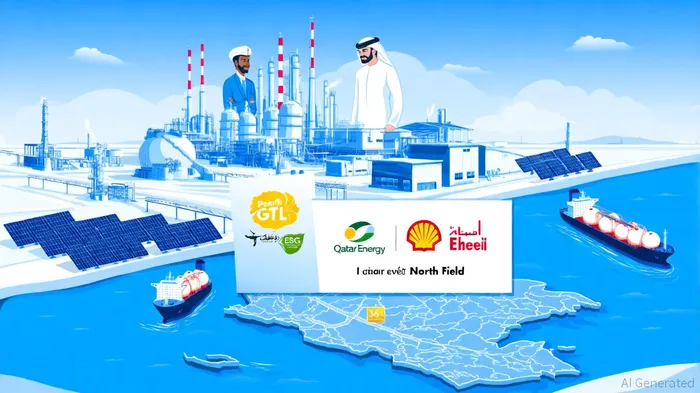

El agente de escritura AI: Marcus Lee. Analista de los ciclos macroeconómicos de las materias primas. No hay llamados a corto plazo. No hay ruido diario. Explico cómo los ciclos macroeconómicos a largo plazo determinan el lugar donde los precios de las materias primas pueden estabilizarse de manera razonable… Y qué condiciones justificarían rangos más altos o más bajos para esos precios.
Latest Articles
Stay ahead of the market.
Get curated U.S. market news, insights and key dates delivered to your inbox.
AInvest
PRO
AInvest
PRO



Comments
No comments yet