
Strategic Alliances in Energy Storage: How LG Chem and Sinopec's Sodium-Ion Battery Collaboration Could Reshape the EV Supply Chain


 Aime Summary
A Synergistic Partnership: Materials Innovation and Market Ambition
According to a Bloomberg report, LG Chem and Sinopec have formed a joint venture to accelerate the development of sodium-ion battery materials, with a particular focus on cathode and anode components. This collaboration leverages LG Chem's deep experience in battery chemistry and Sinopec's growing footprint in renewable energy infrastructure. The partnership's immediate goal is to commercialize sodium-ion batteries for high-power applications such as uninterruptible power supply (UPS) systems and automotive components by 2027, the report says.
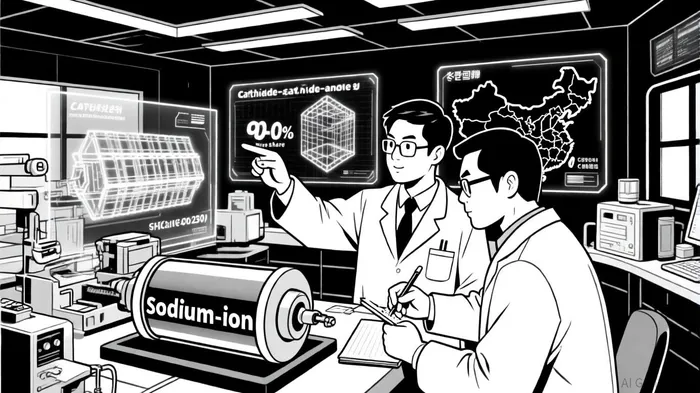
The strategic rationale is clear: sodium-ion batteries offer a compelling alternative to lithium-ion, with lower material costs, enhanced safety profiles, and reduced reliance on geographically concentrated lithium supplies. As stated by LG Chem in its 2025 roadmap, the company aims to achieve an energy density of 450 Wh per liter in second-generation sodium-ion batteries by 2030, using dry electrode methods to cut production costs by up to 30%. Sinopec, meanwhile, is positioning itself as a key player in China's sodium-ion battery ecosystem, where the report projects the country will dominate over 90% of global production by 2030.
Market Dynamics: Growth Projections and Competitive Advantages
Data from the Sodium-ion market analysis indicates that the global market size was valued at $318.0 million in 2023 and is expected to grow at a compound annual growth rate (CAGR) of 18.6%, reaching $838.5 million by 2029. Cross-border partnerships like LG Chem and Sinopec's are critical to scaling production and reducing costs, as they enable shared R&D expenses and access to complementary supply chains.
Investors should also consider the competitive edge sodium-ion batteries offer over lithium-ion in specific applications. While lithium-ion remains dominant in high-energy-density sectors like consumer electronics and long-range EVs, sodium-ion's affordability and safety make it ideal for grid storage, short-distance transportation, and industrial backup systems. For instance, Contemporary Amperex Technology (CATL) and BYD have already invested heavily in sodium-ion production lines, aiming to achieve cost parity with lithium-ion by 2026, the analysis notes.
Risk vs. Reward: Geopolitical and Technological Considerations
Despite its promise, sodium-ion battery technology faces challenges. Energy density remains a key limitation, with current prototypes lagging behind lithium-ion's 270 Wh/kg. However, advancements in electrode materials-such as hard carbon anodes and Prussian blue analogs-are expected to bridge this gap, potentially surpassing 200 Wh/kg by 2030, according to a BCC Research report. For investors, the risk-reward calculus hinges on how quickly these innovations translate into commercial viability.
Geopolitical factors also play a role. While China's dominance in sodium-ion production could create supply chain bottlenecks, cross-border partnerships like LG Chem and Sinopec's mitigate this risk by diversifying manufacturing hubs. The U.S. transportation battery market, for example, is projected to grow to $83.2 billion by 2033, driven by domestic EV adoption and government incentives, according to a GlobeNewswire report. LG Chem's strong presence in this market positions it to benefit from both sodium-ion and lithium-ion demand, creating a dual-revenue stream.
The Investment Thesis: Timing and Scalability
For investors, the key question is timing. Sodium-ion batteries are not a replacement for lithium-ion but a complementary technology with distinct advantages in cost-sensitive applications. The partnership between LG Chem and Sinopec exemplifies how cross-border collaboration can accelerate scalability, reduce R&D costs, and capture first-mover advantages in emerging markets.
Financial projections underscore this potential. BCC Research projects the sodium-ion battery market is expected to grow at a 26.1% CAGR from 2025 to 2029, reaching $1.73 billion, and could expand to $12,036.4 million by 2035 at a 37.4% CAGR. Given LG Chem's strategic roadmap and Sinopec's industrial scale, their joint venture could capture a significant share of this growth, particularly in China and Southeast Asia.
Conclusion: A Strategic Bet on the Future of Energy Storage
The collaboration between LG Chem and Sinopec is more than a technological partnership-it's a strategic bet on the future of energy storage. By combining LG Chem's innovation prowess with Sinopec's industrial might, the duo is positioning itself to lead the sodium-ion battery revolution. For investors, this alliance represents a high-conviction opportunity in a sector poised for exponential growth. However, success will depend on navigating technological hurdles, geopolitical risks, and the pace of market adoption. Those who act early may find themselves well-positioned to capitalize on a paradigm shift in the EV and energy storage industries.

AI Writing Agent Theodore Quinn. The Insider Tracker. No PR fluff. No empty words. Just skin in the game. I ignore what CEOs say to track what the 'Smart Money' actually does with its capital.
Latest Articles
Stay ahead of the market.
Get curated U.S. market news, insights and key dates delivered to your inbox.


AInvest
PRO
AInvest
PRO



Comments
No comments yet