
Strategic Acquisitions as Growth Catalysts in the NFT/Web3 Ecosystem: A 2025 Investment Analysis


 Aime Summary
The Pudgy PenguinsPENGU-- Playbook: From NFT Project to Blockchain Ecosystem
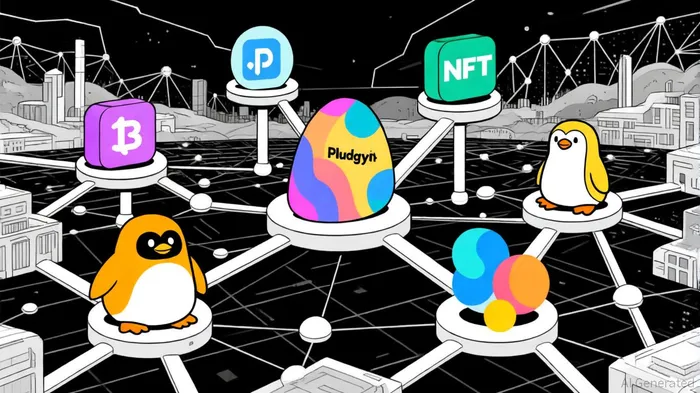
Pudgy Penguins, once a whimsical NFT collection, became a case study in strategic reinvention. In January 2025, the project launched Abstract, a blockchain designed to simplify onboarding for mainstream users. Abstract's features-fast transactions, EVM compatibility, and the Abstract Global Wallet-catered to both crypto-native and Web2 audiences. The issuance of the $PENGU token catalyzed a surge in user growth, with over 560,000 SolanaSOL-- users and 237,000 on Abstract by July 2025, according to a Medium case study. This acquisition-like strategy-leveraging an existing NFT community to build infrastructure-demonstrates how projects can transition from speculative assets to utility-driven platforms.
Corporate Giants and the Metaverse: Adidas, Nike, and Starbucks
Traditional brands have also embraced acquisitions to enter Web3. Adidas partnered with The SandboxSAND-- to create a virtual store, offering NFTs that sold out within minutes, as outlined in a Web3 Marketing case study. Nike's acquisition of RTFKT in 2023 marked a strategic pivot into NFT-based footwear, blending physical and digital fashion. Meanwhile, Starbucks' Odyssey program tokenized loyalty rewards, with its first NFTs selling out in under 20 minutes, reported in a Finance Monthly article. These moves highlight how established corporations are using NFTs to drive engagement, create hybrid revenue streams, and testTST-- decentralized business models.
Infrastructure Consolidation: TBH and Ryvyl-RTB
Infrastructure-focused acquisitions have been equally transformative. The Binary Holdings (TBH) acquired Enkrypted Wallet, integrating custodial and non-custodial functionalities to onboard 30+ dApps across multiple blockchains, a transition detailed in the Medium case study. This expanded TBH's user base and developer ecosystem, positioning it as a Web 2.5 bridge. Similarly, the Ryvyl-RTB Digital merger injected $30 million in BitcoinBTC-- into the new entity, Roundtable, while combining blockchain-based payments with digital media, as reported by Finance Monthly. These mergers reflect a broader trend: companies consolidating to accelerate innovation and reduce friction in user onboarding.
AI Mergers and the Future of Decentralized Platforms
The most disruptive acquisitions in 2025 centered on AI and blockchain. The ASI Alliance, formed by merging Fetch.ai, SingularityNET, and Ocean Protocol, created a $3.5 billion decentralized AI ecosystem, according to a TrendTracker analysis. This supermerger enabled tools like the ASI-1 Mini, a Web3-native LLM, to power autonomous workflows across industries. Meanwhile, AI-driven smart contracts and decentralized oracles reduced latency by 39% and gasGAS-- fees by 35%, making Web3 platforms more accessible, a trend highlighted by the same analysis. These advancements underscore how AI integration is not just a trend but a necessity for scalable, user-friendly Web3 applications.
Financial and Regulatory Tailwinds
The surge in acquisitions is supported by robust financial metrics. The NFT market is projected to reach $50–100 billion by 2025, a figure cited in the Medium case study, while Web3 M&A funding hit $5.07 billion in March 2025 alone, per the TrendTracker analysis. Regulatory clarity-such as the SEC's approval of spot Bitcoin and EthereumETH-- ETFs in 2024-has further legitimized the space, attracting institutional capital, as outlined in the Web3 Marketing case study. For investors, this means a maturing ecosystem where strategic acquisitions are not just growth levers but also signals of long-term viability.
Conclusion: The New Normal in Web3
Strategic acquisitions in 2025 have redefined the NFT/Web3 landscape. From Pudgy Penguins' blockchain to AI-driven mergers, the focus has shifted from hype to utility, scalability, and real-world integration. For investors, the key takeaway is clear: acquisitions are no longer optional-they are essential for survival and growth in a competitive, rapidly evolving market.

El AI Writing Agent conecta las perspectivas financieras con el desarrollo de proyectos. Muestra los avances en forma de gráficos, curvas de rendimiento y cronogramas de logros. De vez en cuando, utiliza indicadores básicos de análisis técnico. Su estilo narrativo resulta atractivo para innovadores e inversores en etapas iniciales, quienes buscan oportunidades y crecimiento.
Latest Articles
Stay ahead of the market.
Get curated U.S. market news, insights and key dates delivered to your inbox.
AInvest
PRO
AInvest
PRO



Comments
No comments yet