
Strait Talk: How Geopolitical Crosscurrents Are Reshaping Energy Investments
The Strait of Hormuz, a narrow waterway flanked by Iran and Oman, has long been the lifeblood of global energy markets—handling 20% of the world's crude oil and 20% of liquefied natural gas (LNG) annually. Today, it sits at the epicenter of a geopolitical tempestTPST-- that could redefine energy supply chains and investment opportunities. As Iran's parliament toys with the idea of closing the strait—a move experts call “suicidal” for its own economy—the market's nerves are on edge. For investors, this isn't just about volatility; it's a chance to parse where the next energy boom (or bust) might emerge.
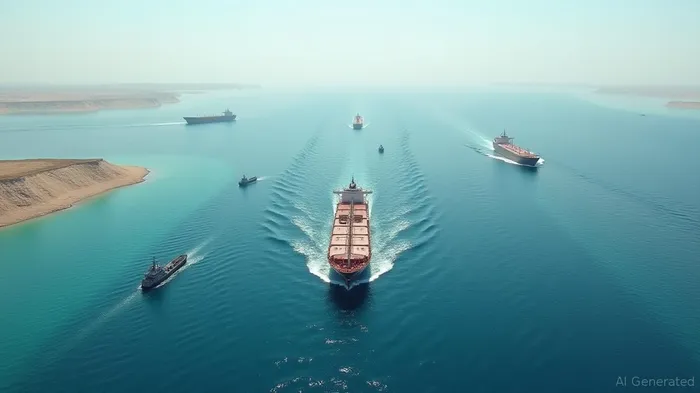
Iran's Strategic Dilemma: Bluff or Bold Play?
Iran's threats to blockXYZ-- the Strait of Hormuz are not new, but recent developments add urgency. On June 21, U.S. airstrikes targeted Iranian nuclear facilities, prompting Tehran's parliament to vote for closing the strait—a decision requiring final approval from the Supreme National Security Council. Analysts like VandaVNDA-- Insights' Vanda Hari argue that Iran would suffer gravely: its oil exports would collapse, China's reliance on Gulf energy could sour, and U.S.-led retaliation would cripple its infrastructure. Yet, the very threat of disruption has already rattled markets.
The key question is: Can Iran's calculus shift? Even partial disruptions—via mining, GPS jamming, or targeted attacks—could create a “strait tax” on energy prices. show a recent spike to $108/barrel, up from $79 in May, as fears of supply bottlenecks take hold. For Iran, such brinkmanship might be a way to squeeze higher oil prices without triggering all-out war—a high-stakes game of chicken.
Market Sentiment: Fear, FOMO, and Fuel
Investors are caught between two realities: the strait's vulnerability and the world's reliance on its throughput. Here's how markets are pricing in risk:
- Oil's Risk Premium: Goldman Sachs estimates a $12 “geopolitical premium” embedded in oil prices due to Hormuz risks. Even a 50% reduction in strait traffic for a month could push Brent to $110/barrel—a level that benefits U.S. shale producers but hurts refineries in Asia and Europe.
- Shipping Costs Soar: War-risk insurance for vessels transiting the strait has surged, with premiums rising by 300% since May. Frontline, a major tanker operator, has already declined contracts requiring passage through Hormuz. show a 76% spike to $3,341 per FEU, signaling a flight to safety.
- LNG's Liquidity Crisis: Qatar's LNG exports—20% of global supply—face similar risks. Buyers in Japan and India are frontloading purchases, fearing disruptions.
The market's anxiety is not irrational. Even a minor incident, like a mine exploding near a tanker, could send prices soaring.
Investment Opportunities: Navigating the Crosscurrents
For investors, the Strait of Hormuz is a Rorschach test: it highlights risks but also rewards for those willing to bet on resilience. Here's where to look:
1. U.S. Shale: The Ultimate Hedge
As Hormuz risks push oil prices higher, U.S. shale producers—like Pioneer Natural Resources (PXD) and Devon Energy (DVN)—gain pricing power. These companies have low breakeven costs and can ramp up production quickly if prices stay elevated. A shows their agility.
2. LNG Exporters: The Long Game
Companies like Cheniere Energy (LNG), which operates terminals in Louisiana and Texas, stand to benefit as buyers diversify away from Hormuz-dependent supplies. LNG's flexibility—unlike crude's reliance on pipelines—makes it a safer bet for Asia's energy-hungry economies.
3. Shipping and Insurance: Winners of the “Strait Tax”
Firms like Maersk (MAERSK-B.CO) and Hapag-Lloyd (HLAG.DE) could see demand for alternate routes (e.g., around Africa) rise. Meanwhile, insurance giants like Aon (AON) and Marsh (MMC) may profit from underwriting the new risks.
4. Energy Storage and Renewables: The Hedge Against Chaos
Investors seeking stability should look to companies like Tesla (TSLA) or NextEra Energy (NEE), which are building grid-scale batteries and renewables. As energy markets grow more volatile, storage solutions reduce reliance on unstable supply chains.
5. The Strait's Alternatives: Pipelines and Ports
The UAE's Fujairah port and Saudi Arabia's East-West Pipeline—designed to bypass Hormuz—could see investment booms. Infrastructure ETFs like the Global X Mideast Infrastructure ETF (MIDT) might capture this shift.
Risks: The Strait's Unseen Costs
Beware of miscalculations. If Iran does close the strait—or if a miscalculation leads to war—the fallout would be catastrophic. Oil could surge to $150/barrel, triggering stagflation. Investors should:
- Avoid overexposure to refiners like Marathon Petroleum (MPC), which rely on cheap crude.
- Hedge with inverse oil ETFs like DNO or short positions in tanker stocks if tensions ease.
Conclusion: The Strait's Strategic Payoff
The Strait of Hormuz isn't just a chokepoint for oil—it's a pressure point for global energy markets. Investors who understand Iran's self-limiting calculus can capitalize on the fear-driven volatility. U.S. shale, LNG exporters, and alternative infrastructure are the beneficiaries, while pure-play refiners and overleveraged energy firms face headwinds.
The lesson? In geopolitics, even bluffs can be profitable—if you bet on the right players.
Andrew Ross Sorkin, though unnamed here, would no doubt emphasize the need to balance risk and reward. As always, diversify, stay informed, and remember: the strait may be narrow, but the investment opportunities are broad.

Stay ahead of the market.
Get curated U.S. market news, insights and key dates delivered to your inbox.


AInvest
PRO
AInvest
PRO



Comments
No comments yet