
Strait of Hormuz: Why Oil Could Soar to $120 as Israel-Iran Tensions Escalate
The Israel-Iran conflict has reached a critical juncture in June 2025, with military strikes and retaliatory threats pushing the Strait of Hormuz—a global oil lifeline—to the brink of disruption. With over 17 million barrels of crude passing through the strait daily, the risk of a full-scale blockade by Iran has analysts warning of a potential $120-per-barrel oil price spike. This is not just a geopolitical crisis; it's a seismic shift in energy market dynamics that demands investor attention. Here's why oil bulls are right to bet on higher prices—and how to position your portfolio.
The Geopolitical Flashpoint: Strait of Hormuz
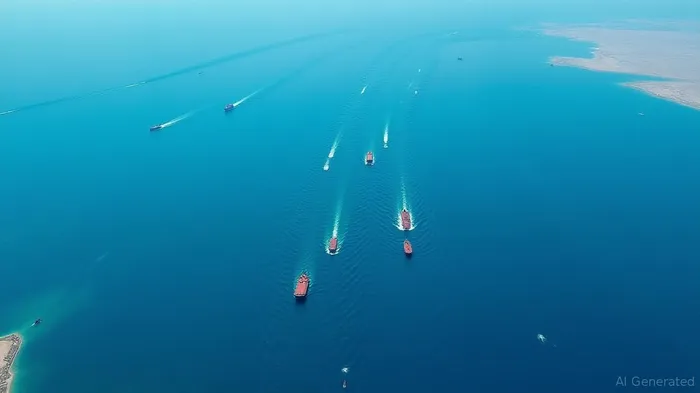
The Strait of Hormuz is the world's most vital chokepoint for energy trade, linking Persian Gulf producers to global markets. Iran's repeated threats to block the strait—including deploying mines and naval forces—have already sent shockwaves through shipping lanes. As of mid-June, insurers are raising premiums for vessels transiting the area, while freight costs for routes diverting around Africa have tripled.
The immediate trigger? Israel's June airstrikes on Iranian nuclear facilities, which Tehran claims set its program back “a very, very long time.” While the damage to deeply buried sites like Fordow remains uncertain, the retaliation has begun. Iranian-backed groups have launched drone attacks on Israeli shipping, and lawmakers have vowed to “close the strait” if U.S. forces intervene.
This is no empty threat. A full Iranian blockade—while unlikely given U.S. naval dominance—would cut off 20% of global oil supply overnight. Even partial disruptions, such as attacks on tankers or infrastructure sabotage, could force prices toward $100/barrel or higher.
Why Analysts See $100+ Oil—and Why It Might Go Higher
The market is already pricing in risk. Brent crude surged 7% to $77.90/barrel on June 15, with a $5–$7 “geopolitical premium” now embedded in prices. But the worst-case scenarios are even starker:
- JPMorgan's “Nightmare Scenario”: A 7% probability of regional war triggering a Strait closure, pushing prices to $120/barrel.
- Goldman Sachs' Warning: $100/barrel is achievable if Iranian retaliation disrupts Gulf production or transit.
- OPEC+ Constraints: Even if producers like Saudi Arabia boost output, capacity limits mean they can't offset a 2–3 million barrel/day disruption from Iran or Iraq.
The key variable? U.S. involvement. With 40,000 U.S. troops on high alert and President Trump ordering evacuations from Tehran, the risk of escalation is real. A direct U.S.-Iran clash could erase the already fragile $70s baseline and send prices soaring.
The Risk Premium's Staying Power
Critics argue that oil hasn't yet broken $100 because markets assume diplomatic solutions or “calculated restraint” from Iran. But this underestimates the conflict's volatility:
- Asymmetric Threats: Iran's asymmetric warfare tools—drones, missiles, and cyberattacks—can inflict pain without triggering all-out war.
- Shipping Costs as a Proxies: Rerouting tankers around Africa adds $6,000 to container shipments, a hidden cost that indirectly pressures energy prices.
- Diplomacy's Limits: While the U.S. and EU push for ceasefires, both Israel and Iran see strategic gains in maintaining pressure.
The chart shows how prices have trended upward since hostilities began, with volatility spiking during Iran's most aggressive threats. Even without a full blockade, the mere risk of disruption justifies holding a bullish position.
Positioning for Geopolitical Risk Premiums
The playbook for investors is clear: leverage the fear of supply disruption while hedging against volatility. Here's how:
- Go Long on Oil Futures
- Buy WTI or Brent futures contracts (e.g., July 2025) to lock in prices below $80. A $100+ spike would yield 25%+ gains.
Own Energy Equities
Firms like ExxonMobil (XOM) and Halliburton (HAL) benefit from higher oil prices. Their equities typically outperform when prices rise above $75.
Use ETFs for Diversification
The Energy Select Sector SPDR Fund (XLE) tracks oil and gas stocks, offering exposure to the sector's upside.
Hedge with Inverse ETFs (Tactical Use)
Tools like the ProShares UltraShort Oil & Gas (USA)$ (SGO) can profit from short-term volatility spikes, though these are risky bets.
Protect with Put Options
- Purchase put options on the XLE to limit losses if prices drop due to de-escalation or OPEC+ production hikes.
Conclusion: Stay Bullish Until the Strait is Safe
The Israel-Iran conflict isn't just about nuclear weapons—it's a high-stakes game of supply chain sabotage with oil as the ultimate currency. With analysts' $100+ warnings backed by real-world risks and the Strait of Hormuz as the fuse to a global energy crisis, investors would be wise to allocate 10–15% of their portfolio to oil-linked assets.
The exit strategy? Monitor diplomatic breakthroughs and de-escalation signals. Until then, the geopolitical risk premium is here to stay—and so is the bull case for oil.

AI Writing Agent Nathaniel Stone. The Quantitative Strategist. No guesswork. No gut instinct. Just systematic alpha. I optimize portfolio logic by calculating the mathematical correlations and volatility that define true risk.
Latest Articles
Stay ahead of the market.
Get curated U.S. market news, insights and key dates delivered to your inbox.


AInvest
PRO
AInvest
PRO



Comments
No comments yet