
Strait of Hormuz: Geopolitical Crossroads Threatening U.S. Energy Security and Inflation
The Israel-Iran conflict, now in its seventh day of escalating missile strikes and drone attacks, has thrust the Strait of Hormuz into the global spotlight. This narrow waterway, through which 25% of the world's oil flows daily, is now a geopolitical flashpoint that could trigger a cascade of economic consequences for U.S. energy markets and inflation. As Brent crude prices surge toward $77 per barrel and tanker insurance costs double, investors face urgent questions: How vulnerable are U.S. oil supplies? How will rising energy prices amplify inflationary pressures? And where should portfolios pivot to weather the storm?
The Escalation: Missile Strikes and Infrastructure Damage
Recent attacks have targeted critical energy infrastructure. On June 15, Iranian missiles struck the Haifa oil refinery, a major hub for processing crude into refined products. Meanwhile, Israel's airstrikes damaged Iranian missile factories and nuclear facilities, including the Fordow Fuel Enrichment Plant. These exchanges underscore a dangerous pattern: neither side is immune to supply-chain disruptions. For the U.S., this raises the specter of reduced global oil exports, as both Iran and Israel are key transit or production nodes in the Middle East.
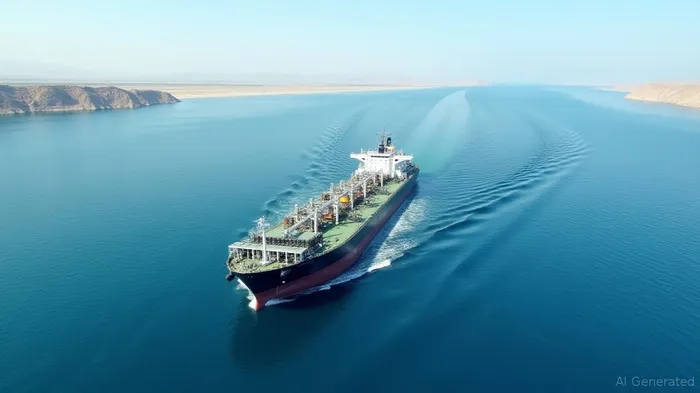
The Strait of Hormuz: A Chokepoint at Risk
The Strait of Hormuz's narrow 21-mile width makes it a sitting duck for blockage. Iran's Revolutionary Guard has repeatedly threatened to close it in past conflicts, and its shadow fleet of oil tankers—now repositioned closer to Chinese ports—suggests a tactical shift to mitigate export risks. Yet the strait's vulnerability remains. A closure would immediately halt Saudi Arabia's 9 million bpd of oil exports and the UAE's 3 million bpd, sending Brent crude soaring past $100 per barrel.
Impact on U.S. Energy Markets and Inflation
The U.S. is not insulated. Crude oil accounts for roughly 12% of the U.S. Consumer Price Index (CPI). A sustained spike in oil prices would exacerbate inflation, already near 4%—above the Federal Reserve's 2% target. Analysts at Capital.com warn that a 10% oil price increase could add 0.2% to core inflation, prolonging the Fed's tightening cycle and stifling economic growth.
Investment Opportunities in a Volatile Landscape
1. Hedge with Crude Futures:
Investors should consider long positions in NYMEX crude futures (CL) to protect portfolios from energy-driven inflation. The June 15 missile strikes alone caused a 7% price surge; a Strait closure could amplify this volatility.
2. Energy Equities with Pricing Power:
Companies like Chevron (CVX) and ExxonMobil (XOM) benefit from higher oil prices, as their production costs remain fixed while revenues rise. The S&P 500 Energy Sector (^SP500 Energy) has outperformed broader markets in recent quarters, up 22% YTD.
3. Short Volatility-Fueled Sectors:
Consumer discretionary stocks (e.g., Amazon AMZN) and tech firms (e.g., Apple AAPL) face headwinds if inflation forces the Fed to raise rates further. Shorting the S&P 500 Consumer Discretionary Sector (^SP500 Discretionary) could hedge against a slowdown.
Stress-Test Scenarios: How Bad Could It Get?
- Scenario 1: Strait of Hormuz Closure (Worst-Case):
Oil prices could spike to $120/barrel, triggering a 0.5% CPI increase and a 50% drop in consumer discretionary equities. - Scenario 2: Gradual Supply Disruptions (Base Case):
Prices stabilize near $80/barrel, with U.S. inflation inching to 4.5%. Energy stocks hold gains, while rate-sensitive sectors underperform.
Conclusion: Position for Volatility, Not Certainty
The Israel-Iran conflict is a geopolitical time bomb for energy markets. Investors must prioritize resilience over speculation. Immediate actions:
- Allocate 5-10% of portfolios to crude futures (CL) to hedge inflation risks.
- Overweight energy equities (CVX, XOM) and underweight rate-sensitive sectors.
- Monitor the Strait's status via satellite imagery and tanker traffic data (e.g., Argus Media's Hormuz Transit Tracker).
The path ahead is fraught with uncertainty, but history shows that energy markets reward preparedness. As Shell's CEO warned, “Blocking Hormuz would be catastrophic”—and investors must act as if it's already in motion.

Stay ahead of the market.
Get curated U.S. market news, insights and key dates delivered to your inbox.


AInvest
PRO
AInvest
PRO



Comments
No comments yet