
Strait of Hormuz: Geopolitical Crossroads for Energy Markets and Investment Opportunities
The Strait of Hormuz, a 21-mile-wide waterway between Iran and Oman, is the world's most vital artery for oil and gas. With an average of 20 million barrels per day (b/d) of crude and condensate transiting its narrow shipping lanes in 2024, it accounts for 20% of global oil consumption and 25% of seaborne oil trade. Yet, this lifeline is now caught in a geopolitical vice. Recent U.S. military strikes on Iranian nuclear facilities, coupled with Tehran's threats to block the strait, have reignited fears of a supply shock that could send oil prices soaring. For investors, the region's fragility presents both risks and opportunities. 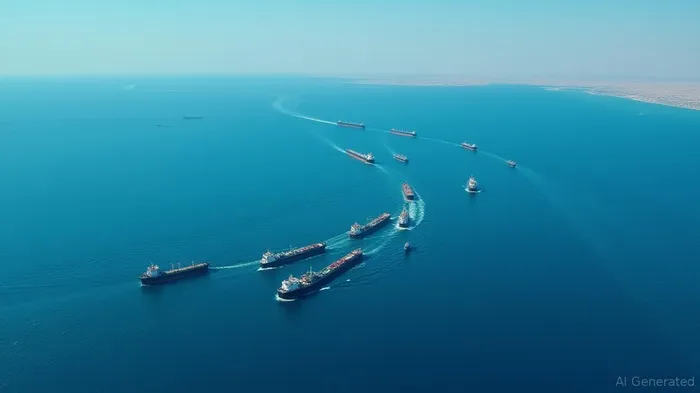
### The Strait's Vulnerability: A Ticking Time Bomb
The strait's critical role in global energy flows cannot be overstated. Over 80% of crude and LNG moving through it in 2024 was destined for Asian markets—China, India, Japan, and South Korea—where economies depend on it for industrial growth. A full closure of the strait, even for a short period, could disrupt 25% of global oil trade, far exceeding the shock of the 1979 Iranian revolution.
Recent events underscore the volatility. Following U.S. strikes on Iranian nuclear sites in June 2025, Brent crude prices jumped from $69 to $74/b within days (). Analysts warn that a sustained closure could push prices to $100+/b, though Iran's capacity to execute such a blockade is debated. The country relies on the strait for its own exports and faces U.S. military deterrence.
### Geopolitical Tensions = Market Volatility = Investment Triggers
The strait's chokepoint status creates a perpetual “risk premium” in oil markets. Even minor disruptions—such as Iran's GPS jamming of over 1,600 vessels in June 2025—can spook traders. For investors, this means:
- Short-term opportunities in energy commodities (e.g., oil futures) during geopolitical flare-ups.
- Long-term plays in sectors insulated from supply shocks or positioned to benefit from diversification efforts.
#### 1. Energy Infrastructure: Betting on Alternatives
The region's pipeline networks offer a partial bypass. Saudi Arabia's East-West pipeline (5 million b/d capacity) and the UAE's Fujairah terminal (1.8 million b/d) currently operate below maximum capacity (). While these routes can't fully replace Hormuz's throughput, they reduce immediate risks. Investors should watch for companies expanding infrastructure in the Red Sea or Gulf of Oman, such as Saudi Aramco or ADNOC, which may see valuation boosts if transit risks rise.
#### 2. LNG and Refined Products: The Shift to Value-Added Exports
Persian Gulf states are pivoting toward exporting refined petroleum (e.g., gasoline, diesel) and LNG instead of crude. This shift, driven by regional refining investments, has offset some crude export declines. Qatar's LNG exports—a dominant 20% of global LNG trade via Hormuz—also present opportunities. Investors might consider ETFs like the United States Natural Gas Fund (UNG) or equities in LNG exporters such as Cheniere Energy (LNG).
#### 3. Defense and Cybersecurity: Mitigating Supply Risks
As tensions escalate, demand grows for technologies that protect energy infrastructure. Cybersecurity firms like CrowdStrike (CRWD) and defense contractors such as Raytheon Technologies (RTX)—which supply maritime security systems—could see increased demand. The SPDR S&P Defense ETF (XARX) offers broad exposure to this sector.
### Portfolio Strategies: Hedging Against Hormuz Volatility
- Energy Equities: Overweight in ExxonMobil (XOM) and Chevron (CVX), which benefit from higher oil prices and diversified production.
- Commodities: Use futures (e.g., United States Oil Fund (USO)) for short-term exposure to price spikes.
- Geopolitical Plays: Allocate to defense stocks and cybersecurity firms for protection against supply chain disruptions.
- Diversification: Consider global energy ETFs like the Energy Select Sector SPDR Fund (XLE) to balance sector exposure.
### Conclusion: Navigating the Hormuz Crossroads
The Strait of Hormuz remains a geopolitical tinderbox, but its vulnerability also fuels investment opportunities. Investors should prioritize sectors that mitigate supply risks (pipelines, LNG) or profit from volatility (energy equities, defense). While a full closure is unlikely, the strait's centrality to global energy markets ensures it will remain a focal point for market instability—and strategic returns.
Stay vigilant, and position portfolios for both the storm and the calm.

Stay ahead of the market.
Get curated U.S. market news, insights and key dates delivered to your inbox.
AInvest
PRO
AInvest
PRO



Comments
No comments yet