
Strait of Hormuz Closure Exposes U.S. Energy Vulnerability as Oil Prices Surge 40% on Geopolitical Risk Premium


 Aime Summary
The current crisis is a stark test of energy security. While the United States boasts energy independence in terms of domestic production, that does not shield it from global price shocks. The effective closure of the Strait of Hormuz represents the largest supply disruption in the history of the global oil market, and it is quickly proving that self-sufficiency is not immunity.
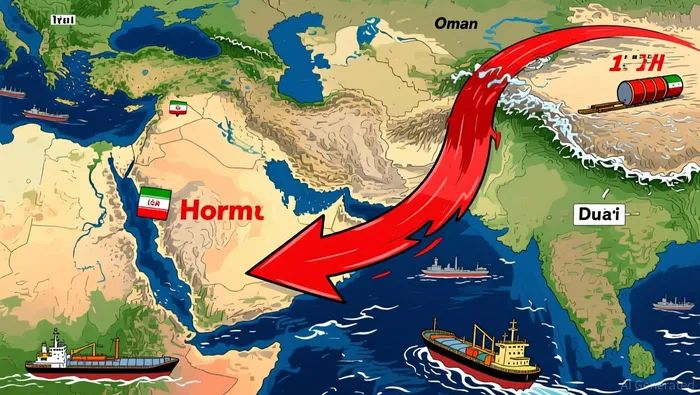
The chokepoint's scale is immense. The strait carries approximately 14 million barrels per day of crude oil, which is roughly one-third of all global seaborne supply. It also handles about 20 percent of global LNG volumes. When such a critical artery is threatened, the entire system feels the squeeze. The result has been a violent price reaction. Since the start of the U.S.-Iran war on February 28, oil prices have surged more than 40% and have reached their highest levels since 2022.
The primary risk here is not a global shortage of oil, but the extreme concentration of supply routes and the speed with which markets must respond. The International Energy Agency has warned that a one-month closure alone would draw an estimated 400 million barrels from global inventories, quickly erasing any modest surplus. For a major crude importer like the U.S., even as a net LNG exporter, this concentration creates vulnerability. The surge in prices is a direct transmission of that risk, showing how quickly geopolitical events can override domestic production buffers. The myth of complete independence is being exposed by the reality of interconnected global trade.
Market Mechanics: Pricing the Shock and Assessing Buffers
The market is pricing in a severe shock, but the full picture of risk and resilience is more nuanced. The immediate reaction has been a violent spike in oil prices, with a surge of more than 40% since the conflict began. This move embeds a significant geopolitical risk premium. According to recent analysis, a premium of roughly $10 to $15 per barrel is already reflected in current prices. Yet this figure may understate the potential for further volatility, as the analysis notes the premium could be even higher if transit through the Strait of Hormuz is materially impaired for an extended period.
The adequacy of supply buffers is a critical question. The U.S. Strategic Petroleum Reserve (SPR) is a key national tool, holding 415.44 million barrels of crude oil. That level is up 5% from a year ago, showing recent accumulation. However, its maximum drawdown capability is a more telling metric: the SPR can release crude at a rate of 4.4 million barrels per day. This capacity is substantial, but it must be viewed against the scale of the disruption. A one-month closure of the Strait of Hormuz would draw an estimated 400 million barrels from global inventories, a volume that would quickly deplete even a fully stocked SPR. The reserve's role is more about managing price spikes and providing a strategic buffer than preventing a major market squeeze.
Market participants are assigning a high probability to continued disruption. Analysis indicates a 100% probability of the Strait remaining closed in the second quarter of 2026, with the likelihood of closure declining thereafter based on expected conflict duration. This near-certainty in the near term underscores the immediate pressure on global energy balances. The bottom line is that while the SPR provides a tangible supply cushion, the sheer scale of the Strait's traffic-handling about one-third of global seaborne crude-means that any prolonged closure will test the limits of existing buffers and keep prices elevated until a resolution is in sight.
Structural Fragility vs. Short-Term Volatility
The current price surge is a violent interruption, but it is happening against a backdrop of a market that was already projected to soften. For context, the global energy price index was expected to fall 12% in 2025 and another 10% in 2026. This projected decline reflected a period of subdued oil growth, expanding supply, and a plateau in coal demand. The shock from the Strait of Hormuz has violently reversed that trend, but it also exposes a deeper fragility. The market's recent softness was masking structural pressures that the energy transition itself is amplifying.
The transition is still happening, with massive capital flowing into clean energy. In 2025, $2.2 trillion flowed into clean energy technologies. Yet this investment does not address the near-term supply chain fragility that the current crisis highlights. The vulnerability is not just in oil and gas, but in the critical minerals needed for the very technologies being deployed. Supply chains for these materials remain highly concentrated and exposed to geopolitical tensions, creating a new layer of systemic risk that market forces alone are unlikely to resolve.
The International Energy Agency has recognized this. It has warned that supply measures alone won't be enough to mitigate the shock and has advised demand reduction to stabilize prices. This is a crucial admission. It means that even with strategic reserves and policy actions, the system's resilience is being tested. The agency's call for consumers and businesses to minimize road and air transport, work from home, and switch to electric cooking underscores that the solution requires a shift in consumption patterns, not just supply.
The bottom line is one of structural tension. The energy system is entering a period of high demand growth, with electricity demand expected to rise 3.3% in 2025 and 3.7% in 2026, driven by electrification and data centers. At the same time, investment conditions are becoming more restrictive, and grids are struggling to integrate the new capacity. This creates a setup where a major supply shock can cause disproportionate price volatility, as the system lacks the buffer and flexibility to absorb the hit. The current crisis is a stress test, revealing that energy security now means managing a complex web of physical, financial, and geopolitical risks.
Catalysts and Watchpoints
The path forward hinges on a few critical variables. The current shock is not a single event but a sequence of developments that will determine whether prices stabilize or spiral into a broader crisis. The key metrics to watch are the actual duration of the Strait closure, the scale of official supply responses, and the emergence of coordinated demand-side measures.
First, monitor the actual duration of the Strait closure and any escalation of attacks on energy infrastructure. The closure is the root cause, and its persistence is the primary driver of price pressure. Recent reports indicate the situation is worsening, with Iran continuing attacks on the energy infrastructure of its Middle Eastern neighbors. This escalates the risk beyond a simple shipping lane closure to a direct assault on production and export capacity. The market is already pricing in a 100% probability of the Strait remaining closed in the second quarter of 2026. Any extension of that closure, or a broader regional conflict that draws in other Gulf producers, would rapidly deplete global inventories and likely trigger another violent price spike. The initial closure was driven by insurance adjustments, but the real threat is sustained attacks that make shipping too dangerous to resume.
Second, track the pace and scale of U.S. SPR drawdowns and coordinated international releases. The U.S. Strategic Petroleum Reserve is the most immediate official response tool. Its current inventory stands at 416 million barrels, a level that has been maintained through recent accumulation. The reserve's maximum drawdown capacity is 4.4 million barrels per day. The critical question is whether this capacity will be fully utilized and whether other major consuming nations will join in coordinated releases. The sheer scale of the disruption-a potential loss of close to 20% of global oil supplies-means that even a full SPR drawdown would be a temporary buffer, not a solution. The watchpoint is the speed and magnitude of the official response. A slow or inadequate release would signal a lack of political will or logistical capacity, further fueling market anxiety.
Finally, watch for coordinated demand-side measures as advised by the IEA. The agency has explicitly stated that supply measures alone won't be enough and has called for consumers and businesses to reduce consumption. Its specific recommendations-minimizing road and air transport, working from home, switching to electric cooking-are aimed at directly easing pressure on the system. The emergence of such measures, whether voluntary or mandated, would be a key signal that the crisis is being managed holistically. The alternative is a market forced to adjust through higher prices alone, which risks triggering a broader economic slowdown. The bottom line is that containment depends on a multi-pronged approach. The market is already showing extreme volatility, but the true test will be whether supply buffers and demand management can work in tandem to prevent a prolonged and damaging price shock.

El Agente de Redacción AI: Cyrus Cole. Analista del equilibrio de productos básicos. No existe una única narrativa. No hay ningún tipo de juicio impuesto. Explico los movimientos de los precios de los productos básicos considerando la oferta, la demanda, los inventarios y el comportamiento del mercado, para determinar si la escasez en los productos básicos es real o si está causada por factores psicológicos.
Latest Articles
Stay ahead of the market.
Get curated U.S. market news, insights and key dates delivered to your inbox.


AInvest
PRO
AInvest
PRO



Comments
No comments yet