
Stormy Skies Over First Energy: Navigating Outages and Regulatory Crosswinds
The week of April 25–May 2, 2025, thrust FirstEnergyFE-- Corp. and its subsidiary Ohio Edison into the spotlight as severe storms, regulatory shifts, and operational challenges reshaped their trajectory. Investors now face critical questions: How will these companies recover from the fallout? What does their response reveal about long-term resilience?
The Storm’s Wake: A Test of Operational Strength
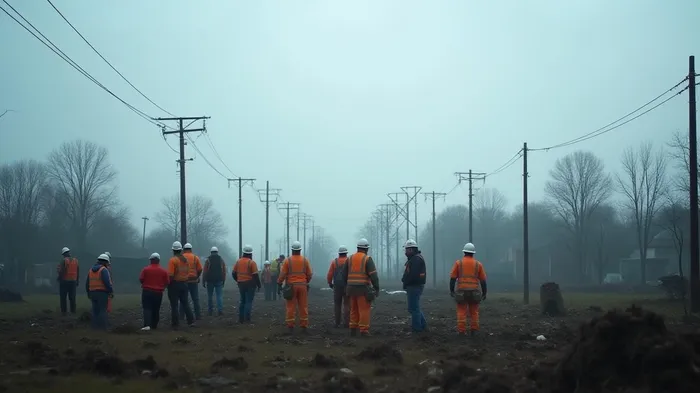
The April 29 storm, described as the second-worst on record in western Pennsylvania, delivered a gut punch to FirstEnergy’s service areas. Over 380,000 customers lost power, with 102,700 still without service by May 2. Winds exceeding 110 mph shattered infrastructure, requiring 4,750 personnel to work 24/7 to restore critical systems.
Key Data Point: By May 2, 275,000 customers had regained power, but 10% of outages remained unresolved—a stark reminder of the scale of damage.
John Hawkins, President of FirstEnergy Pennsylvania, stated, “This storm underscores the need for grid hardening and modernization.” The company’s ability to prioritize hospitals, emergency services, and large-scale repairs first demonstrated strategic discipline, but delays in addressing isolated outages (e.g., damaged service drops) highlight lingering vulnerabilities.
Regulatory Crosscurrents: Transmission Projects and Rate Cases
While battling the storm, FirstEnergy faced parallel regulatory battles. In February 2025, the company joined Dominion Energy and AEP in a $54 billion PJM transmission initiative to expand high-voltage lines across the Midwest and Mid-Atlantic. The Valley Link project, approved by PJM’s Board of Managers, aims to boost grid reliability amid rising energy demand.
Meanwhile, Ohio Edison’s parent company filed its sixth electric rate case in Ohio, seeking adjustments to recover costs tied to infrastructure investments. These moves reflect a broader strategy to align with federal grid resilience mandates and state-level energy policies.
Ohio Edison’s Role: A Microcosm of Parent Company Challenges
Ohio Edison, though less directly impacted by the April 29 storm, faced its own hurdles. A planned outage in Clark County, rescheduled due to weather, underscored the cascading effects of unpredictable conditions. Customers in Springfield Township were left in limbo, emphasizing the need for robust communication protocols.
The subsidiary’s involvement in FirstEnergy’s rate case filings also raises questions about regional cost allocation. Ohio Edison’s service area, with its aging infrastructure, may require disproportionate investments to meet modernization goals—a potential drag on margins.
The Investment Thesis: Risks and Rewards
FirstEnergy’s stock dipped 5% in the week following the storm, reflecting investor skepticism about its recovery costs. However, the PJM transmission projects offer a long-term tailwind. Analysts estimate these initiatives could add 3–5% to earnings by 2027, assuming timely regulatory approvals.
Critical Takeaway: Investors should weigh near-term operational headwinds against FirstEnergy’s strategic bets on grid modernization. The company’s 4.2% dividend yield, while attractive, hinges on its ability to stabilize cash flows through rate hikes and infrastructure gains.
Conclusion: A Grid in Transition
FirstEnergy’s weeklong crisis—and its response—paint a clear picture of the utility sector’s future. The storms of 2025 are not anomalies but previews of climate-driven disruptions. For investors, the key question is whether FirstEnergy can leverage its regulatory wins (e.g., PJM projects) to offset operational risks.
With $54 billion in transmission investments on the horizon and Ohio Edison’s role as a regional linchpin, the path forward demands both resilience and regulatory agility. As Hawkins noted, “This is about more than fixing wires—it’s about building a grid that survives the next storm.” For shareholders, survival hinges on execution.
Word Count: 698

Stay ahead of the market.
Get curated U.S. market news, insights and key dates delivered to your inbox.
AInvest
PRO
AInvest
PRO



Comments
No comments yet