
Stormy Skies, Bright Horizons: Investing in Grid Resilience Amid Wisconsin's Wind Power Challenges
The severe storms that struck Wisconsin in June 2024, leaving thousands without power, underscore a growing reality: renewable energy infrastructure is vulnerable to extreme weather, and grid resilience is no longer optional. While wind power now supplies 19% of the state's electricity, outages like those in Milwaukee and Vilas County reveal critical gaps in the grid's ability to handle sudden disruptions. For investors, this is a call to action—not to abandon renewables, but to double down on firms pioneering technologies that can stabilize the grid and turn intermittent wind power into reliable energy.
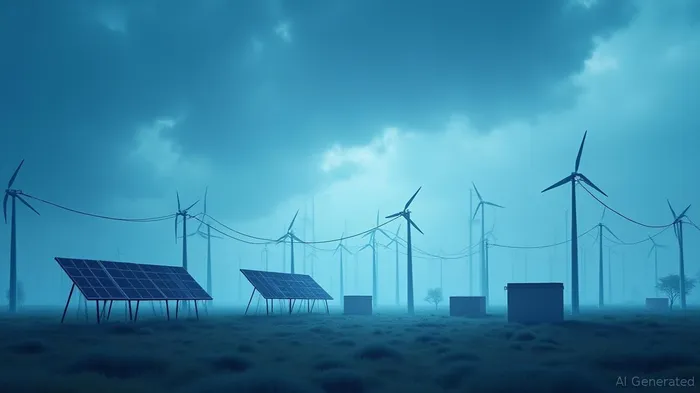
The Case for Grid Resilience: Wisconsin's Wake-Up Call
Wisconsin's June 2024 outages, which knocked out power for over 10,000 customers, were exacerbated by aging infrastructure and insufficient redundancy. The storms highlighted two vulnerabilities: first, wind farms' reliance on stable transmission lines, which are easily felled by downed trees or high winds; and second, the grid's lack of localized energy storage to bridge gaps during outages. The Grid Resilience Program, funded by the federal Infrastructure Act, aims to modernize the grid, but progress is hindered by regulatory uncertainty. President Trump's 2025 executive order, which halted federal permitting for wind projects and introduced stricter environmental reviews, has further complicated the path forward.
The Investment Opportunity: Tech to the Rescue
The good news? The same storms that exposed vulnerabilities also illuminate opportunities. Companies specializing in energy storage, smart grid software, and microgrid solutions are positioned to capitalize on Wisconsin's—and the nation's—need for grid hardening. Here's why:
Energy Storage is the Grid's Lifeline
Lithium-ion and flow battery manufacturers like Tesla (TSLA) and Catalyst (CSIQ) are critical players. Tesla's Powerpack systems, for example, can store excess wind energy during peak generation, releasing it during outages or low-wind periods. reflect investor confidence in its energy storage ambitions, but smaller firms like Ambri (AMBRI), which develops molten salt batteries, offer higher upside in this niche.Smart Grids: The Nervous System of Resilience
Firms like Gridco Systems and Landis+Gyr (LAND) are building software that monitors grid health in real time, rerouting power during outages and preventing cascading failures. Wisconsin's Badger Hollow Wind Farm project, while controversial, could become a proving ground for such technologies. A study by Shixiang Zhu et al. found that targeted infrastructure upgrades—like those these companies provide—can reduce outages by nearly 50%, a figure that justifies their valuations.Microgrids: Decentralizing for Stability
Microgrids, which allow communities to operate independently of the main grid, are a linchpin of resilience. AES Corporation (AES) and PowerSecure (POWR) have already deployed such systems in disaster-prone areas. Wisconsin's rural regions, where the Badger Hollow project faces local opposition, could benefit from microgrids that blend wind, solar, and storage, reducing reliance on centralized infrastructure.
Regulatory Tailwinds and Risks
The Grid Resilience Program's $8.5 million first round of funding—and its planned 2025 expansion—signals state-level commitment. However, federal policies remain a wildcard. While the 2025 executive order complicates permitting, it also accelerates demand for permitting software and environmental compliance tools, areas where Aptus Analytics and Enverus (ENVR) excel. Investors should favor firms with diversified revenue streams, as regulatory shifts could create unexpected winners.
Where to Invest Now
- Long-Term Plays:
- Tesla (TSLA): Dominates energy storage but faces competition.
- Ambri (AMBRI): High-risk, high-reward in advanced batteries.
AES (AES): Proven microgrid developer with a 20% annual revenue growth rate.
Short-Term Catalysts:
- Gridco Systems: Partnering with utilities on real-time grid monitoring.
- Enverus (ENVR): Helping navigate federal permitting hurdles.
The Bottom Line
Wisconsin's outages are a microcosm of a broader challenge: renewable energy's growth requires parallel investment in grid resilience. Firms that can stabilize the grid—through storage, smart tech, and microgrids—are not just mitigating risks but creating a multi-decade tailwind. For investors, this is a sector where patience pays: allocate 5–10% of a portfolio to diversified energy resilience stocks, with a focus on companies like AES and Tesla that are already scaling solutions. The storms may be here to stay, but the right investments can turn volatility into opportunity.

Stay ahead of the market.
Get curated U.S. market news, insights and key dates delivered to your inbox.


AInvest
PRO
AInvest
PRO



Comments
No comments yet