
Storming the Grid: Duke Energy's Outage Strategy and the Future of Utility Resilience
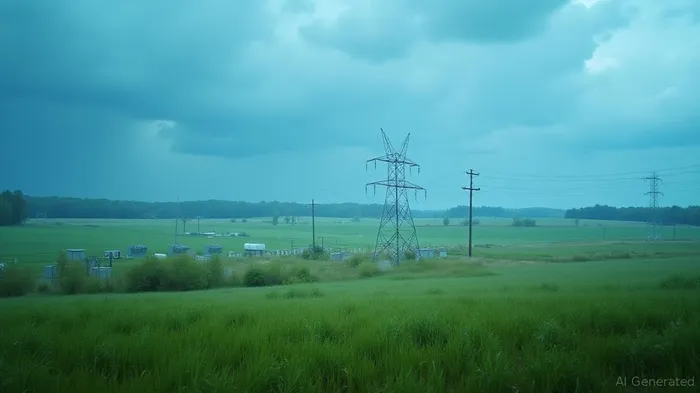
The utility sector is at a crossroads. As climate volatility reshapes the energy landscape, companies like Duke EnergyDUK-- (DUK) are confronting a stark reality: grid resilience is no longer optional. The planned outages Duke Energy has scheduled across North Carolina—ostensibly for infrastructure upgrades, storm preparation, and vegetation management—are not mere maintenance tasks. They are strategic moves to mitigate risks in an era where hurricanes, floods, and winter storms are intensifying. For investors, this raises critical questions: Are these outages a harbinger of systemic vulnerability, or a sign of proactive adaptation? And what does this mean for the investment thesis in regulated utilities?
Climate Pressures Demand Proactive Grid Reinforcement
Duke Energy's planned outages, such as the June 2024 Granite Falls project, are part of a broader strategy to fortify its grid against extreme weather. The utility has invested in “self-healing technology,” which automatically reroutes power during outages, reducing downtime by up to 75%. By 2024, this technology had already prevented 3.7 million customer outages. Yet, such upgrades require targeted planned outages to install underground lines, reinforce poles, and relocate equipment away from flood zones.
The data is clear: . While Duke's stock has lagged during periods of high weather-related outages, its long-term focus on grid hardening may position it to outperform as climate risks escalate. The Bay Hill grid modernization project, for instance—a five-year, multi-million-dollar effort to underground outage-prone lines—exemplifies this calculus. Short-term inconvenience today could mean long-term reliability tomorrow.
Regulatory Support: A Lifeline for Cost Recovery
Utilities operating in regulated markets like Duke Energy benefit from a unique advantage: state regulators often allow them to recover infrastructure costs through rate-base treatment. When Duke invests in grid upgrades, it can pass these expenses to customers via approved tariff hikes, shielding shareholders from direct financial risk.
Consider the aftermath of Hurricane Helene in 2024, which caused 1.7 million outages. Duke's post-storm investments in flood barriers and substation hardening were swiftly incorporated into its rate base, ensuring that shareholders could capitalize on these projects. This regulatory framework is critical. Without it, utilities might delay costly upgrades, leaving grids vulnerable. For investors, utilities with strong relationships with regulators—like Duke in North Carolina—offer a safer bet in an era of climate-driven uncertainty.
The Tariff Tightrope: Balancing Customer Costs and Investor Returns
Of course, rate hikes are politically contentious. Duke Energy's proposed tariffs for grid upgrades must navigate public and regulatory scrutiny. Yet the alternative—catastrophic outages—could prove far costlier. Duke's 2025 plan to expand self-healing technology to 75% of its service area, coupled with vegetation management programs, aims to reduce outage frequency while justifying moderate rate increases.
The math here is compelling. A 2024 study by the U.S. Energy Information Administration found that every $1 invested in grid hardening prevents $6 in outage-related economic losses. For Duke, this means that even if tariffs rise by 2–3% annually, the long-term reduction in weather-related liabilities could boost profitability.
ESG Compliance: A Competitive Moat or Compliance Burden?
Duke Energy's net-zero carbon goals by 2050 and methane neutrality by 2030 are not just PR gestures. They're strategic moves to align with ESG mandates and attract institutional capital. Investors like BlackRockBLK-- and CalPERS increasingly demand climate resilience plans, and utilities without them face stranded asset risks.
Duke's proactive outage strategy is ESG gold. By demonstrating tangible progress in grid hardening—a physical climate adaptation—it can attract ESG funds while satisfying regulators. However, execution is key. If outages spike due to poor project management, investor confidence could crater.
Investment Implications: Defending Against Climate Volatility
The case for Duke Energy as a defensive utility stock hinges on two pillars: rate-base visibility and regulatory tailwinds. Utilities like Duke, which can secure cost recovery for climate adaptation projects, are better positioned to weather storms—literal and financial.
For income investors, Duke's 3.5% dividend yield (as of June 2025) offers stability, though it trails peers like NextEraNEE-- (4.1%). However, Duke's focus on grid modernization may reduce future earnings volatility. Meanwhile, long-term investors should prioritize utilities with:
1. Proven regulatory alignment (e.g., state commissions supportive of hardening costs).
2. Diversified revenue streams (e.g., Duke's renewable partnerships).
3. Transparent ESG metrics (e.g., outage reduction data linked to tech investments).
Conclusion: The Grid's New Reality
Duke Energy's planned outages are not a sign of weakness but a costly admission of climate reality. Utilities that treat grid hardening as a capital priority—and secure rate-base treatment for it—will thrive as weather volatility intensifies. For investors, Duke represents a “buy the dip” opportunity in regulated utilities. While short-term rate hikes may pressure valuations, the long-term defensive profile of a climate-resilient grid could make Duke a cornerstone holding in any energy portfolio.
In the end, the utilities that survive the coming era of climate turbulence will be those that turn planned outages into strategic victories—not just today, but for decades to come.
Andrew Ross Sorkin writes from New York, where he focuses on the intersection of finance, regulation, and climate adaptation.

Delivering real-time insights and analysis on emerging financial trends and market movements.
Latest Articles
Stay ahead of the market.
Get curated U.S. market news, insights and key dates delivered to your inbox.




Comments
No comments yet