
Storm-Proofing the Grid: Why Renewable Energy Infrastructure Resilience is the Next Big Investment Play
The world's energy systems are under siege. Weather-related power outages—driven by hurricanes, wildfires, heatwaves, and winter storms—are escalating in frequency and severity, costing economies billions and exposing critical vulnerabilities. From Texas's 2021 winter blackout to Europe's 2024 “Dunkelflaute” price spikes, the message is clear: centralized grids are failing to keep pace with climate volatility. Enter the era of decentralized renewable energy infrastructure, a $1 trillion+ opportunity to rebuild grids that can withstand the storms of the future.
The Outage Crisis: A Catalyst for Change
Weather-related outages have surged globally. In the U.S., such events doubled between 2014–2023 compared to 2000–2009, with Texas alone experiencing 210 major outages since 2000. Europe's 2024 winter saw record power price spikes during low-wind, cold spellsCOLD--, while Asia's monsoons and typhoons routinely cripple grids in India and Southeast Asia. The economic toll is staggering: a single 1% dip in utility sector efficiency could cost the U.S. $11.6 billion annually in GDP losses.
The Solution: Decentralization Meets Renewables
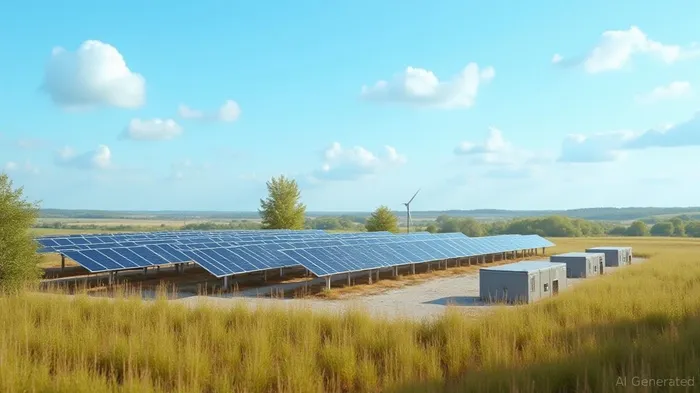
The answer lies in decentralized energy systems—microgrids, rooftop solar, and community-scale wind paired with battery storage. These solutions bypass vulnerable centralized grids, reducing outage risks while cutting carbon emissions. Key trends driving this shift include:
1. Grid Hardening Costs: Aging infrastructure upgrades are prohibitively expensive. The U.S. needs $1.5 trillion by 2030 to modernize its grid, per the DOE.
2. Renewables' Scalability: Solar and wind costs have plummeted 90% and 70%, respectively, since 2010.
3. Storage Innovation: Lithium-ion battery prices have fallen 87% since 2010, enabling cost-effective backup systems.
Investment Plays: Where to Deploy Capital
The decentralized resilience boom is ripe for strategic investments:
1. Solar and Wind Developers
Companies like NextEra Energy (NEE) and Pattern Energy (PEGI) are pioneers in utility-scale renewables. Their projects form the backbone of resilient grids, offering stable cash flows from long-term PPAs.
2. Energy Storage Solutions
Firms like Tesla (TSLA) and Fluence (FLNC) dominate battery storage. Tesla's Powerwall and Megapack systems are critical for household and industrial backup, while Fluence's software optimizes grid-edge storage.
3. Microgrid Operators
Wärtsilä (WRTAF) and Schneider Electric (SBGL) specialize in designing microgrids for remote communities and critical infrastructure. Their projects in disaster-prone areas (e.g., Puerto Rico) offer high returns on reliability-driven demand.
4. Smart Grid Tech
Invest in Sensus (a Xylem brand) and Landis+Gyr for advanced metering and grid monitoring. These technologies enable real-time outage detection and demand management, reducing downtime.
5. ETFs for Broad Exposure
The Invesco Solar ETF (TAN) and iShares Global Clean Energy ETF (ICLN) offer diversified exposure to the sector.
Risks and Regulatory Tailwinds
While risks exist—high upfront costs, regulatory hurdles, and tech adoption lags—the tailwinds are strong:
- Policy Pushes: The EU's Renewable Energy Directive (2030 target: 42.5% renewables) and the U.S. Inflation Reduction Act (IRA) provide subsidies and mandates.
- Corporate Demand: Companies like Microsoft and Amazon are pledging 24/7 carbon-free energy, accelerating decentralized solutions.
Conclusion: The Grid of Tomorrow, Built Today
Weather-driven outages are no longer edge cases—they're the new normal. Decentralized renewables are not just an environmental play but a necessity to protect economies and livelihoods. Investors who back this transition will profit as grids evolve from fragile relics into climate-resilient networks.
Actionable Takeaway: Allocate 5–10% of your portfolio to resilience-focused companies. Prioritize firms with strong project pipelines in high-risk regions (e.g., wildfire-prone California or storm-battered Southeast Asia). The storm is here—the time to build the grid that withstands it is now.

Delivering real-time insights and analysis on emerging financial trends and market movements.
Latest Articles
Stay ahead of the market.
Get curated U.S. market news, insights and key dates delivered to your inbox.


AInvest
PRO
AInvest
PRO



Comments
No comments yet