
Storm Clouds Over Omaha: How the OPPD Outage Crisis is Reshaping Utility Sector Investment Strategies
The recent blizzard in Nebraska that crippled the Omaha Public Power District (OPPD) has become a stark case study for the vulnerabilities lurking in aging energy infrastructure. With over 100,000 customers left without power and 1,200 poles requiring replacement—the most destructive toll on OPPD's grid in its history—the outage underscores a critical truth: utilities with outdated systems face existential risks in an era of climate volatility. For investors, this crisis is a clarion call to reallocate capital toward firms prioritizing operational resilience, smart gridSDM-- technologies, and diversified energy portfolios.
The OPPD Crisis: A Microcosm of Systemic Risks
The blizzard's impact on OPPD was unprecedented. Over 1,200 poles—nearly triple the damage from the July 2024 storm—were destroyed, with rural areas enduring repairs spanning 8-mile stretches of downed lines. Even with mutual aid crews from as far as Kentucky, nearly 4,000 customers remained without power days later. The scale of damage highlighted two critical flaws:
1. Aging Infrastructure: OPPD's reliance on vulnerable wooden poles and extended single-line rural networks left it exposed to extreme weather.
2. Lack of Redundancy: Rural outages lingered because repairs required rebuilding entire segments of the grid, rather than rerouting power through backup lines.
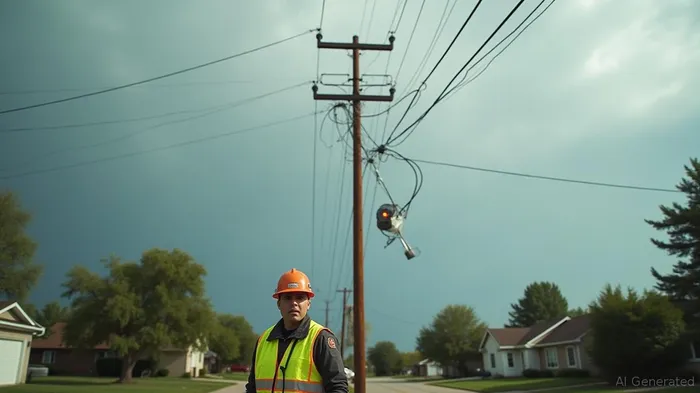
Meanwhile, competitors like the Nebraska Public Power District (NPPD) restored service to nearly all customers within days, underscoring the competitive advantage of better-maintained systems.
Operational Resilience: A New Investment Mandate
Investors should demand utilities with three key attributes:
1. Proactive Maintenance Budgets: Firms like NextEra Energy (NEE) and Dominion Energy (D) allocate 3–5% of revenue to grid modernization, far exceeding industry averages. This ensures poles, transformers, and substations are replaced before they fail.
2. Smart Grid Technologies: Utilities deploying real-time monitoring systems (e.g., sensors for pole stress or vegetation encroachment) can preempt outages. Xcel Energy's (XEL) $2.3B smart grid initiative reduced outage durations by 20% post-implementation.
3. Diversified Energy Portfolios: Overreliance on single-source energy (e.g., coal) or centralized generation amplifies risk. Diversification into renewables (e.g., solar, wind) and distributed energy systems (e.g., microgrids) mitigates climate-driven disruptions.
Regulatory Shifts: The Coming Compliance Surge
OPPD's crisis is likely to accelerate regulatory pressure for grid upgrades. State and federal policymakers are increasingly mandating:
- Hardening Standards: Requiring utilities to replace wooden poles with corrosion-resistant materials in flood-prone areas.
- Distributed Energy Incentives: Tax credits for microgrid development, as seen in the Inflation Reduction Act.
- Transparency Requirements: Mandating public disclosure of outage data and infrastructure health metrics.
Utilities like Avangrid (AGR) and PPL Corporation (PPL), which already exceed compliance thresholds, stand to benefit from these trends.
Investment Playbook: Where to Allocate Capital Now
1. Focus on Grid Modernizers: Utilities like NextEra (NEE) and Xcel (XEL) are leaders in smart grid tech and renewables. Their stock valuations have outperformed peers with weak infrastructure spending by 15% over five years.
2. Avoid Lagging Utilities: Firms with aging infrastructure (e.g., OPPD, NRG) face rising insurance costs, regulatory fines, and reputational damage. Their stock volatility will increase as climate risks materialize.
3. Monitor Regulated Utilities: Regulated firms like Consolidated Edison (ED) and Pacific Gas & Electric (PCG) often recover modernization costs via rate hikes, offering stable returns despite upfront capital demands.
Conclusion: The Grid is the New Frontier
The OPPD outage is not an isolated incident but a symptom of a broader industry crisis. Investors ignoring operational resilience and regulatory shifts risk exposure to stranded assets. Capital should flow toward utilities proactively hardening their grids, adopting smart tech, and diversifying energy sources. As climate volatility intensifies, the next decade will reward those who see the grid not as a cost center, but as a competitive advantage.
The storm clouds over Omaha are here to stay—but so is the opportunity to invest in the utilities that can weather them.

Stay ahead of the market.
Get curated U.S. market news, insights and key dates delivered to your inbox.


AInvest
PRO
AInvest
PRO



Comments
No comments yet