
Storm Clouds Over Green Power: Wisconsin Wind Outages Expose Grid Resilience Risks—and Opportunities
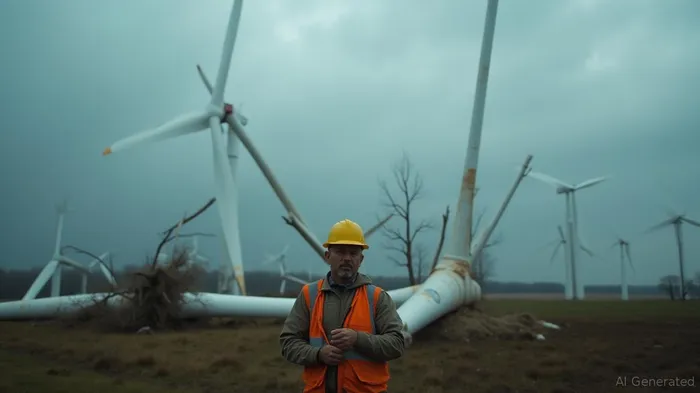
The June 2024 storms that left over 10,000 Wisconsin residents without power for days were more than a weather-related disruption. They revealed a systemic flaw in the state's energy transition: an overreliance on renewable infrastructure without sufficient grid resilience. Wind farms, supplying 19% of Wisconsin's electricity, faltered as downed trees crippled transmission lines, while the grid lacked localized energy storage to bridge gaps. This incident underscores a broader truth: the renewable energy revolution is only as strong as the systems designed to stabilize it. For investors, the challenge—and opportunity—lies in backing technologies and companies that can turn this volatility into reliability.
The Grid's Growing Pains
Wisconsin's energy grid is at a crossroads. While utilities like WEC Energy GroupWEC-- retire coal plants and invest $3.6 billion in infrastructure upgrades through 2027, the pace of modernization lags behind the rapid expansion of wind and solar. The Midcontinent Independent System Operator (MISO) warns that by 2032, Wisconsin and four neighboring Great Lakes states will face a 10% capacity shortage as traditional generation retires faster than renewables can compensate.
The problem isn't just intermittency. A shows that even with 19 GW of planned wind and solar, the region's “accredited capacity”—generation that can be counted on during peak demand—is shrinking. Wind's average capacity factor of 35% (vs. 92% for nuclear) means overbuilding or backup generation is critical. Yet Wisconsin's grid lacks both sufficient storage and transmission upgrades to smooth these fluctuations.
Regulatory Headwinds and Tailwinds
President Trump's 2025 executive order, which halted federal permits for wind projects and imposed stricter environmental reviews, has created a paradox: slowing renewable development while accelerating demand for grid resilience solutions. This regulatory uncertainty benefits firms like Enverus (ENVR), whose permitting software helps navigate compliance hurdles. Meanwhile, Wisconsin's Senate Bill 3, granting municipalities power to block wind projects, could further delay renewable growth—driving investor focus toward grid hardening instead of green energy expansion.
Investment Opportunities in Grid Resilience
The path to stability lies in three sectors:
- Energy Storage:
- Tesla (TSLA): Its Powerpack systems, paired with wind farms, can store excess energy during low-demand periods. reflect investor optimism, though competition from Ambri (AMBRI), whose molten salt batteries offer longer duration storage, is intensifying.
Ambri: A $200M Series C funding round in 2024 signals market confidence in its grid-scale solutions.
Smart Grid Tech:
Gridco Systems and Landis+Gyr (LAND) provide real-time monitoring and demand-response systems. A 2025 study by Shixiang Zhu et al. estimates these technologies could reduce outages by 50% by optimizing grid routing.
Microgrids:
- AES Corporation (AES) and PowerSecure (POWR) are pioneers in decentralized energy systems, blending renewables with storage. Their solutions are critical for rural areas, where 80% of Wisconsin's outages occur due to aged infrastructure.
The Risks Lurking in the Shadows
While the opportunity is clear, risks persist. Wisconsin's Public Service Commission (PSC) faces criticism for favoring monopolistic utilities like WEC Energy Group, which profits from rate-based investments in fossil fuel plants. The 1,100-MW Kenosha gas plant, slated for completion in 2027, locks in high costs for ratepayers while delaying the transition to clean energy. Investors should scrutinize utility balance sheets and regulatory agendas: a 2025 PSC report notes that 40% of Wisconsin's grid assets will be outdated by 2030 without modernization.
The “Shorting the Great Lakes Grid” report adds another layer of caution. It argues that wind and solar's land intensity—10 times that of gas plants—creates logistical bottlenecks. Pairing this with reveals a 90% drop in battery costs since 2015, making storage the economically superior choice. Yet utilities' financial incentives, tied to building new infrastructure rather than upgrading old systems, may slow adoption.
Investment Strategy: Prioritize Scalability and Policy Proofing
For investors, the priority is backing firms with scalable solutions and regulatory agility:
- Short-Term Plays:
- Enverus (ENVR): Benefits from permitting delays, offering software to navigate compliance.
- Ambri (AMBRI): High risk but high reward in a market needing long-duration storage.
- Long-Term Bets:
- AES Corporation (AES): Its microgrid expertise positions it to dominate rural markets.
- Tesla (TSLA): Leading in consumer and commercial storage, though competition is rising.
Avoid utilities like WEC Energy (WEC) unless they pivot aggressively to storage and smart grids. Diversify with index funds like the Invesco S&P 500 Equal Weight Utilities ETF (PUI), but tilt toward resilience-focused firms.
Conclusion: The Grid's New Arithmetic
Wisconsin's outages are a wake-up call. The math is simple: renewables alone cannot guarantee reliability without robust grid infrastructure. Investors who focus on storage, smart tech, and microgrids—and avoid utilities clinging to outdated models—will position themselves to profit as the world's grids grow greener and stronger. The storms of 2024 may have brought darkness, but they've also illuminated the path to a resilient energy future.

Delivering real-time insights and analysis on emerging financial trends and market movements.
Latest Articles
Stay ahead of the market.
Get curated U.S. market news, insights and key dates delivered to your inbox.
AInvest
PRO
AInvest
PRO



Comments
No comments yet