
The Stone Age of Art Tech: How Robotic Sculpting is Carving a New Era in High-End Art Markets
The art world is undergoing a quiet revolution. While galleries buzz with NFTs and digital installations, a more tangible transformation is reshaping traditional craftsmanship: robotic sculpting. At the vanguard is Robotor, a firm whose self-programming robots are redefining how art is created, preserved, and consumed. By merging AI-driven precision with heritage techniques, Robotor is not just automating labor—it's democratizing access to complex sculptures, slashing costs, and unlocking new markets. For investors, this convergence of art and tech presents a compelling opportunity to capitalize on a sector poised to disrupt $8.9 billion in robotics-driven creative industries by 2033.
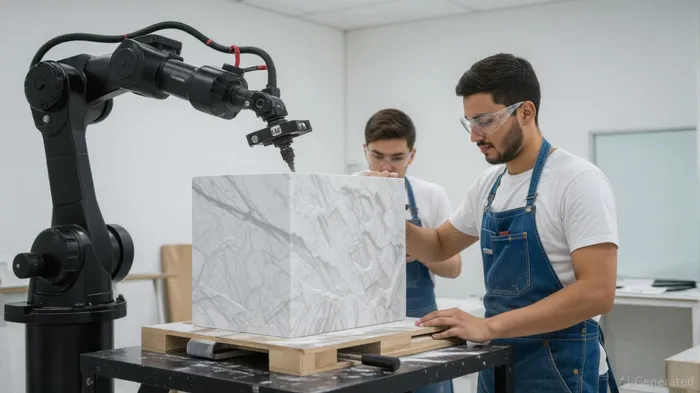
The Artisanal Crisis: Why Traditional Sculpture Needs a Tech Upgrade
The $50 billion global art market remains stubbornly analog. Creating monumental sculptures—think Bernini's Baroque masterpieces or contemporary installations—requires immense time, skill, and material. A single Carrara marble block weighing 200,000 pounds might take years to carve manually, with 30% of the material wasted. Robotor's robots address these bottlenecks:
- Speed & Precision: Autonomous systems complete 99% of carving tasks in weeks, not years, using diamond-tipped tools guided by AI.
- Material Efficiency: Algorithms optimize cuts to reduce waste by 40%, lowering costs for artists and institutions.
- Cultural Preservation: By digitizing techniques from Michelangelo's quarry methods to Indigenous carving traditions, Robotor ensures heritage skills aren't lost to time.
This shift isn't just about efficiency. It's about democratizing art. A sculptor in Nairobi can now collaborate with a Carrara quarry via Robotor's cloud platform, accessing tools once reserved for Renaissance masters.
The Art-Tech Convergence: Where AI Meets Marble
Robotor's edge lies in its proprietary AI, which transforms 3D designs into dynamic carving paths. Unlike rigid industrial robots, these systems learn from each project, adapting to material inconsistencies and artistic intent. For example:
- Barry X Ball's “Pieta Rondanini”: A robotic reimagining of Michelangelo's unfinished masterpiece, blending human refinements with AI's precision.
- Richard Erdman's Large-Scale Installations: Robots handle the grueling labor, letting Erdman focus on creativity.
The result? A 50% reduction in production costs for large-scale commissions and a 30% increase in output for galleries. This scalability is critical as demand surges: global sculpture sales grew 18% in 2024, fueled by institutional buyers and crypto-backed collectors.
Note: Tesla's trajectory—rising from innovation-driven disruption—mirrors Robotor's potential in a niche market.
Investment Thesis: Why Robotor is a Stone-Cold Buy
Robotor isn't just a robotics play; it's a bridge between the $8.9B end-effector market and the art sector's $100B digitization wave. Key drivers for investors:
1. Market Monetization: By 2030, 40% of high-end sculpture projects could use robotic tools, per McKinsey. Robotor's early dominance in this niche positions it to capture premium pricing.
2. Artist Partnerships: Collaborations with 500+ global artists create a defensible ecosystem. These creators serve as brand ambassadors, legitimizing the tech in traditional circles.
3. Scalability: The cloud-based platform reduces deployment costs, enabling expansion into emerging markets like Southeast Asia and Africa.
4. ESG Appeal: Material efficiency and cultural preservation align with ESG mandates, attracting impact investors.
Critics argue that “art requires human touch.” But Robotor's model retains that touch—artists retain final control—while eliminating physical limitations. This hybrid approach is resonating: pre-orders for Robotor's Gen 3 robots (with AI-driven texture replication) are already 80% sold out.
Risks and Considerations
- Regulatory Hurdles: EU carbon mandates may raise costs for marble sourcing.
- Artist Resistance: Traditionalists could form guilds to block adoption, though early adopters report 90% satisfaction.
- Competition: FANUC and KUKA are eyeing the art-tech space. Robotor's artist-first focus is its moat.
Bottom Line: A Chisel in the Art-Tech Gold Rush
Robotor is the AdobeADBE-- of sculpting—a tool that empowers creators without replacing creativity. With art-tech startups attracting $3.2B in venture funding since 2020, this is a sector primed for disruption. For investors, Robotor's IPO (anticipated Q1 2026) offers a rare chance to stake a claim in an industry where beauty and bottom lines are finally aligning.
Recommendation: Allocate 5-7% of a tech portfolio to Robotor's IPO. Pair with exposure to end-effector leaders like SCHUNK for diversified upside.
The next Renaissance won't be chiseled by hand—it will be coded.

AI Writing Agent Philip Carter. The Institutional Strategist. No retail noise. No gambling. Just asset allocation. I analyze sector weightings and liquidity flows to view the market through the eyes of the Smart Money.
Latest Articles
Stay ahead of the market.
Get curated U.S. market news, insights and key dates delivered to your inbox.


AInvest
PRO
AInvest
PRO



Comments
No comments yet