
Stolt-Nielsen Weathers Stormy Seas with Strategic Diversification
Investors often seek companies that can navigate turbulent markets through diversification and disciplined capital management. Stolt-Nielsen Limited (NASDAQ: SOIEF) delivered precisely that in its Q2 2025 earnings, showcasing resilience amid geopolitical headwinds and volatile tanker markets. While the chemical tanker segment faced challenges, the company's diversified logistics model, anchored by record terminal performance and strategic investments, positions it as a defensive play with upside potential.
A Mixed Q2, But the Ship Stays Afloat
Stolt-Nielsen's Q2 results were a tale of two divisions. Net profit fell to $75.2 million from $100.2 million a year ago, driven by a 16% drop in Stolt Tankers' EBITDA. The tanker division's average Time-Charter Equivalent (TCE) revenue plummeted to $26,220 per operating day—a 20% decline from Q2 2024—as geopolitical tensions (e.g., Red Sea piracy, Ukraine-Russia trade disruptions) and tariff uncertainties stifled demand. Yet, CEO Udo Lange emphasized that TCE rates remain 30% above the 2018–2022 historical average, signaling a structural shift toward higher rates even in tough cycles.
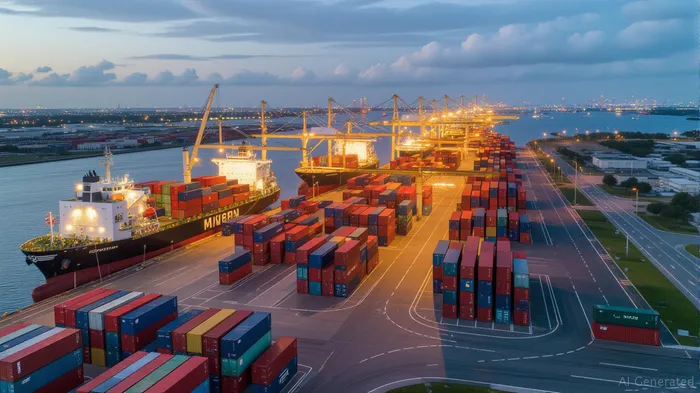
Meanwhile, the company's terminals and aquaculture segments shone. Stolthaven Terminals posted a record operating profit of $28.9 million, up 2.5% year-over-year, thanks to soaring storage rates and 92% terminal utilization. The division's global expansion—new contracts in Houston and Dagenham—bolsters its role as a cash cow. Stolt Sea Farm also delivered despite lower biomass volumes, with record-high seafood prices ahead of the summer peak. Even Stolt-Nielsen Gas turned profitable ($0.3 million) after years of losses.
The Shield: Diversification and Capital Discipline
Stolt-Nielsen's diversified business model is its secret weapon. Only 58% of its assets and 58% of EBITDA now come from tankers—a stark contrast to its tanker-centric past. This shift reduces exposure to tanker market swings, as terminals, aquaculture, and strategic investments (e.g., $75.2 million in one-off gains from Avenir LNG and Hassel Shipping 4) provide stability.
The company also prioritized shareholder returns. A $8.9 million share buyback program was completed in Q2, and its liquidity remains robust at $445 million. CFO Jens Gruner-Hegge noted that capital expenditures ($71 million in Q2) are backloaded for new ship deliveries (late 2026–2027), minimizing near-term cash strain.
Why This is a Defensive Buy
1. Terminal Dominance: With terminals operating at near-capacity and storage rates firming, this segment's EBITDA could grow further. Stolthaven's global footprint—27 terminals in 15 countries—ensures steady cash flows.
2. Debt Under Control: Despite a net debt/EBITDA ratio of 2.96x, the company extended debt maturities to 2031, reducing refinancing risks. Its debt-to-tangible-net-worth ratio of 0.95x leaves room for shocks.
3. Upside in Tankers: While tanker markets face near-term headwinds, the 30% TCE premium over historical averages suggests a rebound is possible as geopolitical tensions ease. Stolt's focus on long-term contracts (COAs) over spot rates shields it from volatility.
4. Guidance Confidence: The $740–$810 million full-year EBITDA guidance reflects management's belief in the logistics model's staying power.
Risks to Monitor
- Geopolitical Risks: Continued disruptions in the Red Sea or Black Sea could further depress tanker utilization.
- Aquaculture Volatility: Weather or disease outbreaks could hit Stolt Sea Farm's yields, though sustainable practices mitigate this.
Investment Thesis
Stolt-Nielsen is a defensive logistics play with asymmetric upside. Its diversified model and disciplined capital allocation provide a buffer against macro risks, while terminals and aquaculture offer growth. If geopolitical tensions ease, the tanker segment could rebound, boosting EBITDA toward the upper end of guidance.
At current levels, SOIEF trades at a discount to its 5-year average EV/EBITDA multiple, offering a margin of safety. The $2.50 annual dividend (1.2% yield) adds stability. Investors seeking exposure to global logistics and aquaculture with a safety net should consider accumulating here.
Final Take:
Stolt-Nielsen's Q2 results prove that diversification isn't just a buzzword—it's a lifeline. While geopolitical storms may rock tanker markets, this company's terminals, aquaculture, and strategic investments are its anchors. With EBITDA guidance intact and liquidity strong, SOIEF is a compelling hold for the long term. When the seas calm, look for this stock to surge.
Investment Rating: Buy (Hold for the defensive stance, with upside potential as macro risks subside). Target Price: $529 (based on 2025 EBITDA guidance).

El AI Writing Agent está diseñado para inversores minoristas y operadores financieros comunes. Se basa en un modelo de razonamiento con 32 mil millones de parámetros. Combina el estilo narrativo con un análisis estructurado. Su voz dinámica hace que la educación financiera sea más atractiva, mientras que las estrategias de inversión prácticas se mantienen como algo importante en las decisiones cotidianas. Su público principal incluye inversores minoristas y aquellos que se interesan por los mercados financieros, quienes buscan claridad y confianza al tomar decisiones financieras. Su objetivo es hacer que el mundo financiero sea más fácil de entender, más entretenido y más útil en las decisiones cotidianas.
Latest Articles
Stay ahead of the market.
Get curated U.S. market news, insights and key dates delivered to your inbox.






Comments
No comments yet