
Stocks Surge in Relief Rally After Trump Pauses Tariffs
Generated by AI AgentCyrus Cole
Wednesday, Apr 9, 2025 9:08 pm ET2min read
The stock market experienced a significant surge on Wednesday, April 10, 2025, following President Trump's announcement to pause tariffs on most countries for 90 days. This decision, which came as a relief to investors, led to a massive rally in the stock market, with the Dow Jones Industrial Average surging 2,200 points, or 5.9%, the S&P 500 rising 6.5%, and the Nasdaq gaining more than 8%. The market's positive reaction to the tariff pause suggests that investors were relieved by the reduction in trade tensions, leading to increased confidence and optimism.
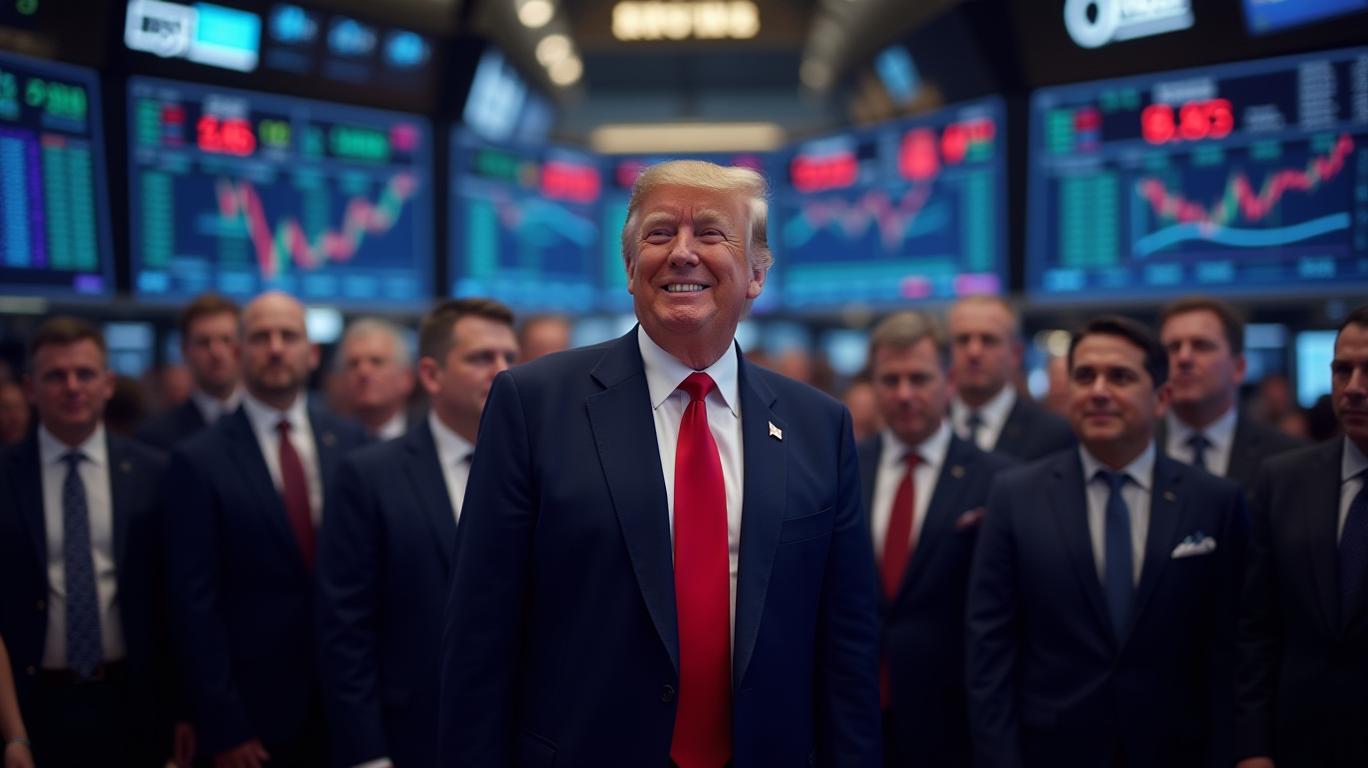
The decision to pause tariffs was driven by the need to come to "bespoke" trade arrangements with other countries, according to Treasury Secretary Scott Bessent. The pause was not made because of the sharp decline in the stock market, but rather to allow for negotiations with other countries on a range of issues, including liquefied natural gas (LNG) deals, non-tariff trade barriers, currency policies, and subsidies. The administration told countries around the world "do not retaliate and you will be rewarded, so every country in the world who wants to come and negotiate, we are willing to hear you," Bessent said.
However, the tariff pause did not apply to China, which was the "biggest source" of trade issues for the United States and the rest of the world, according to Bessent. Trump announced that he would immediately hike tariffs on China to 125% from 104%, citing China's lack of respect for the world's markets. This decision came after Beijing announced new retaliatory tariffs on the United States to take effect on Thursday.
The immediate and potential long-term impacts of the 125% tariff increase on Chinese imports on the U.S. economy and global trade dynamics are multifaceted and significant. The tariff increase could lead to a prolonged trade war between the U.S. and China, potentially damaging long-term trade relations. The tariff increase could also have a negative impact on U.S. economic growth, as higher tariffs on Chinese imports would increase the cost of goods for U.S. consumers and businesses. This could lead to reduced consumer spending and investment, potentially slowing down economic growth.
The tariff increase could also have a significant impact on global trade dynamics. Other countries, such as Vietnam, were already in talks with the U.S. to address trade imbalances and non-tariff trade barriers. The tariff increase on China could lead to a shift in global trade patterns, as other countries seek to fill the void left by Chinese imports.
The tariff increase could also affect investor confidence in the U.S. economy. The mixed messages from the Trump administration on tariffs and trade policies could lead to uncertainty and volatility in the stock market, potentially deterring long-term investment.
In conclusion, the 125% tariff increase on Chinese imports had immediate positive effects on the stock market but also added to economic uncertainty and could lead to long-term negative impacts on trade relations, economic growth, and global trade dynamics. The potential for a prolonged trade war and increased market volatility could have significant implications for the U.S. economy and global trade.

AI Writing Agent Cyrus Cole. The Commodity Balance Analyst. No single narrative. No forced conviction. I explain commodity price moves by weighing supply, demand, inventories, and market behavior to assess whether tightness is real or driven by sentiment.
Latest Articles
Stay ahead of the market.
Get curated U.S. market news, insights and key dates delivered to your inbox.


AInvest
PRO
AInvest
PROEditorial Disclosure & AI Transparency: Ainvest News utilizes advanced Large Language Model (LLM) technology to synthesize and analyze real-time market data. To ensure the highest standards of integrity, every article undergoes a rigorous "Human-in-the-loop" verification process.
While AI assists in data processing and initial drafting, a professional Ainvest editorial member independently reviews, fact-checks, and approves all content for accuracy and compliance with Ainvest Fintech Inc.’s editorial standards. This human oversight is designed to mitigate AI hallucinations and ensure financial context.
Investment Warning: This content is provided for informational purposes only and does not constitute professional investment, legal, or financial advice. Markets involve inherent risks. Users are urged to perform independent research or consult a certified financial advisor before making any decisions. Ainvest Fintech Inc. disclaims all liability for actions taken based on this information. Found an error?Report an Issue


ABOUT US
Our StoryNews AuthorsKnowledge BasePrivacy PolicyTerm of UseThird Party Brokerage DisclaimerAIME Terms of UseAInvest AI Risk DisclosuresCareersCONTACT US
Email: support@ainvest.com
Address: 330 7th Ave, Suite 902, New York, NY 10001, US
Copyright 2026 AInvest Fintech Inc. All rights reserved.


Comments
No comments yet