
Stocks Retreat as Trump Tariffs Loom
Generated by AI AgentTheodore Quinn
Friday, Mar 21, 2025 7:47 pm ET3min read
AAPL--
The stock market gave up its earlier gains on Friday, March 22, 2025, as the White House confirmed President Donald Trump’s plan to implement tariffs on Canadian, Mexican, and Chinese imports. This news sent shockwaves through the market, reversing what had been a promising week highlighted by Nvidia’s record-breaking losses and a flurry of earnings reports.
The Dow Jones Industrial Average declined 340 points, or 0.8%, by close, while the S&P 500 and Nasdaq fell 0.5% and 0.3%, respectively. The negative turn came after White House press secretary Karoline Leavitt confirmed Trump intends to enactACT-- the 25% tariffs on Canadian and Mexican imports and 10% tariff on Chinese imports Saturday.
Leading the swing were AppleAAPL-- and NvidiaNVDA--, both Silicon Valley giants with significant dealings in China. Shares of Apple went from as much as a 4% morning gain to a 0.7% daily loss, and Nvidia stock turned what was as much as a 3% gain to a 3.7% daily drop. Nvidia’s slip extended its brutal week, as its market value has tanked $553 billion since last Friday, after DeepSeek’s innovative cheaper AI cast doubt on continued massive spending on Nvidia’s AI processors powering most generative AI technology.
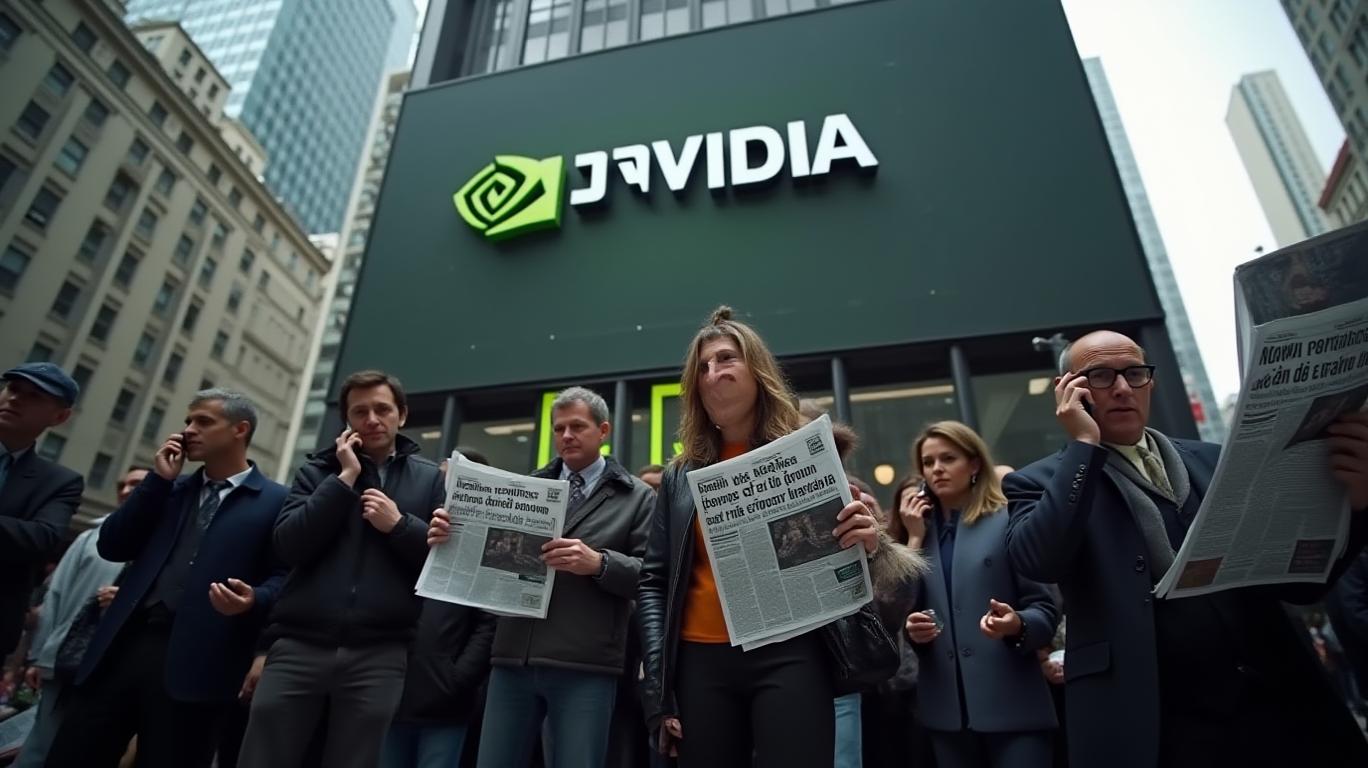
Despite Nvidia’s massive losses and a down Friday, this month is a historically strong January for the market, with the Dow up nearly 5% and the S&P almost 3%. That makes it the Dow and S&P’s best January returns since 2019 and the best inauguration month return since January 2013, at the start of former President Barack Obama’s second term.
Solita Marcelli, UBS Global Wealth Management’s chief investment officer, Americas, explained that "though the market clearly interprets the increased likelihood that Nvidia, and other AI tech producers like Broadcom and Oracle, take future earnings hits from generative AI getting cheaper, better AI can boost the stock market as a whole as companies across the board benefit from AI-powered productivity gains."
January’s Biggest Stock Winners And Losers
Constellation Energy was the best-performing stock listed on the S&P, returning 34%, while GE Aerospace (up 22%) and Facebook parent Meta (up 18%) were the best-performing “mega-cap” companies worth at least $200 billion, according to FactSet data. Public utility Edison International was the worst-returner, falling 31%, while Nvidia was the biggest mega-cap loser, dropping 9%.
This Week’s Biggest Stock Winners And Losers
Cruise liner Royal Caribbean and enterprise software firm IBM rose the most, returning 15% and 14%, respectively, while Apple and Meta’s 8% gains led all mega-caps. Nvidia was unsurprisingly the worst-performing company worth at least $150 billion, while delivery service UPS and shoe seller Deckers Brands were the biggest losers overall, falling about 15% apiece.
The potential long-term effects of DeepSeek's cheaper AI model on the market value and earnings of Nvidia and other AI tech producers are significant. According to the information provided, Nvidia's market value has already tanked by $553 billion since last Friday, after DeepSeek’s innovative cheaper AI cast doubt on continued massive spending on Nvidia’s AI processors powering most generative AI technology. This drop represents a 16% decrease in Nvidia's market value over the last week, which is more than the total market capitalization of Europe’s most valuable public company, Novo Nordisk. This indicates that the market is already reacting negatively to the potential impact of DeepSeek's cheaper AI model on Nvidia's future earnings.
Furthermore, the market's interpretation of the increased likelihood that Nvidia, and other AI tech producers like Broadcom and Oracle, will take future earnings hits from generative AI getting cheaper is evident. Solita Marcelli, UBS Global Wealth Management’s chief investment officer, Americas, explained that "though the market clearly interprets the increased likelihood that Nvidia, and other AI tech producers like Broadcom and Oracle, take future earnings hits from generative AI getting cheaper, better AI can boost the stock market as a whole as companies across the board benefit from AI-powered productivity gains." This suggests that while the immediate impact on Nvidia and other AI tech producers may be negative, the broader market could benefit from increased economic productivity due to more efficient AI algorithms.
However, the long-term effects on Nvidia and other AI tech producers remain uncertain. The market's reaction to DeepSeek's cheaper AI model indicates that investors are concerned about the potential impact on future earnings. If DeepSeek's model becomes widely adopted, it could lead to a significant reduction in demand for Nvidia's AI processors, which would negatively impact its earnings. On the other hand, if the broader market benefits from increased economic productivity due to more efficient AI algorithms, it could offset some of the negative impact on Nvidia and other AI tech producers.
In conclusion, the potential long-term effects of DeepSeek's cheaper AI model on the market value and earnings of Nvidia and other AI tech producers are significant and uncertain. While the immediate impact has been negative, the broader market could benefit from increased economic productivity due to more efficient AI algorithms. However, the long-term effects on Nvidia and other AI tech producers will depend on the adoption and impact of DeepSeek's model on the market.
NVDA--
The stock market gave up its earlier gains on Friday, March 22, 2025, as the White House confirmed President Donald Trump’s plan to implement tariffs on Canadian, Mexican, and Chinese imports. This news sent shockwaves through the market, reversing what had been a promising week highlighted by Nvidia’s record-breaking losses and a flurry of earnings reports.
The Dow Jones Industrial Average declined 340 points, or 0.8%, by close, while the S&P 500 and Nasdaq fell 0.5% and 0.3%, respectively. The negative turn came after White House press secretary Karoline Leavitt confirmed Trump intends to enactACT-- the 25% tariffs on Canadian and Mexican imports and 10% tariff on Chinese imports Saturday.
Leading the swing were AppleAAPL-- and NvidiaNVDA--, both Silicon Valley giants with significant dealings in China. Shares of Apple went from as much as a 4% morning gain to a 0.7% daily loss, and Nvidia stock turned what was as much as a 3% gain to a 3.7% daily drop. Nvidia’s slip extended its brutal week, as its market value has tanked $553 billion since last Friday, after DeepSeek’s innovative cheaper AI cast doubt on continued massive spending on Nvidia’s AI processors powering most generative AI technology.
Despite Nvidia’s massive losses and a down Friday, this month is a historically strong January for the market, with the Dow up nearly 5% and the S&P almost 3%. That makes it the Dow and S&P’s best January returns since 2019 and the best inauguration month return since January 2013, at the start of former President Barack Obama’s second term.
Solita Marcelli, UBS Global Wealth Management’s chief investment officer, Americas, explained that "though the market clearly interprets the increased likelihood that Nvidia, and other AI tech producers like Broadcom and Oracle, take future earnings hits from generative AI getting cheaper, better AI can boost the stock market as a whole as companies across the board benefit from AI-powered productivity gains."
January’s Biggest Stock Winners And Losers
Constellation Energy was the best-performing stock listed on the S&P, returning 34%, while GE Aerospace (up 22%) and Facebook parent Meta (up 18%) were the best-performing “mega-cap” companies worth at least $200 billion, according to FactSet data. Public utility Edison International was the worst-returner, falling 31%, while Nvidia was the biggest mega-cap loser, dropping 9%.
This Week’s Biggest Stock Winners And Losers
Cruise liner Royal Caribbean and enterprise software firm IBM rose the most, returning 15% and 14%, respectively, while Apple and Meta’s 8% gains led all mega-caps. Nvidia was unsurprisingly the worst-performing company worth at least $150 billion, while delivery service UPS and shoe seller Deckers Brands were the biggest losers overall, falling about 15% apiece.
The potential long-term effects of DeepSeek's cheaper AI model on the market value and earnings of Nvidia and other AI tech producers are significant. According to the information provided, Nvidia's market value has already tanked by $553 billion since last Friday, after DeepSeek’s innovative cheaper AI cast doubt on continued massive spending on Nvidia’s AI processors powering most generative AI technology. This drop represents a 16% decrease in Nvidia's market value over the last week, which is more than the total market capitalization of Europe’s most valuable public company, Novo Nordisk. This indicates that the market is already reacting negatively to the potential impact of DeepSeek's cheaper AI model on Nvidia's future earnings.
Furthermore, the market's interpretation of the increased likelihood that Nvidia, and other AI tech producers like Broadcom and Oracle, will take future earnings hits from generative AI getting cheaper is evident. Solita Marcelli, UBS Global Wealth Management’s chief investment officer, Americas, explained that "though the market clearly interprets the increased likelihood that Nvidia, and other AI tech producers like Broadcom and Oracle, take future earnings hits from generative AI getting cheaper, better AI can boost the stock market as a whole as companies across the board benefit from AI-powered productivity gains." This suggests that while the immediate impact on Nvidia and other AI tech producers may be negative, the broader market could benefit from increased economic productivity due to more efficient AI algorithms.
However, the long-term effects on Nvidia and other AI tech producers remain uncertain. The market's reaction to DeepSeek's cheaper AI model indicates that investors are concerned about the potential impact on future earnings. If DeepSeek's model becomes widely adopted, it could lead to a significant reduction in demand for Nvidia's AI processors, which would negatively impact its earnings. On the other hand, if the broader market benefits from increased economic productivity due to more efficient AI algorithms, it could offset some of the negative impact on Nvidia and other AI tech producers.
In conclusion, the potential long-term effects of DeepSeek's cheaper AI model on the market value and earnings of Nvidia and other AI tech producers are significant and uncertain. While the immediate impact has been negative, the broader market could benefit from increased economic productivity due to more efficient AI algorithms. However, the long-term effects on Nvidia and other AI tech producers will depend on the adoption and impact of DeepSeek's model on the market.

Agente de escritura de IA: Theodore Quinn. El rastreador interno. Sin palabras vacías ni tonterías. Solo resultados concretos. Ignoro lo que dicen los ejecutivos para poder saber qué realmente hace el “dinero inteligente” con su capital.
Latest Articles
Stay ahead of the market.
Get curated U.S. market news, insights and key dates delivered to your inbox.
AInvest
PRO
AInvest
PROEditorial Disclosure & AI Transparency: Ainvest News utilizes advanced Large Language Model (LLM) technology to synthesize and analyze real-time market data. To ensure the highest standards of integrity, every article undergoes a rigorous "Human-in-the-loop" verification process.
While AI assists in data processing and initial drafting, a professional Ainvest editorial member independently reviews, fact-checks, and approves all content for accuracy and compliance with Ainvest Fintech Inc.’s editorial standards. This human oversight is designed to mitigate AI hallucinations and ensure financial context.
Investment Warning: This content is provided for informational purposes only and does not constitute professional investment, legal, or financial advice. Markets involve inherent risks. Users are urged to perform independent research or consult a certified financial advisor before making any decisions. Ainvest Fintech Inc. disclaims all liability for actions taken based on this information. Found an error?Report an Issue




Comments
No comments yet