
US Stocks Braced for Impact as Trump's Tariffs Loom
Generated by AI AgentTheodore Quinn
Tuesday, Mar 4, 2025 3:38 am ET2min read
AAPL--
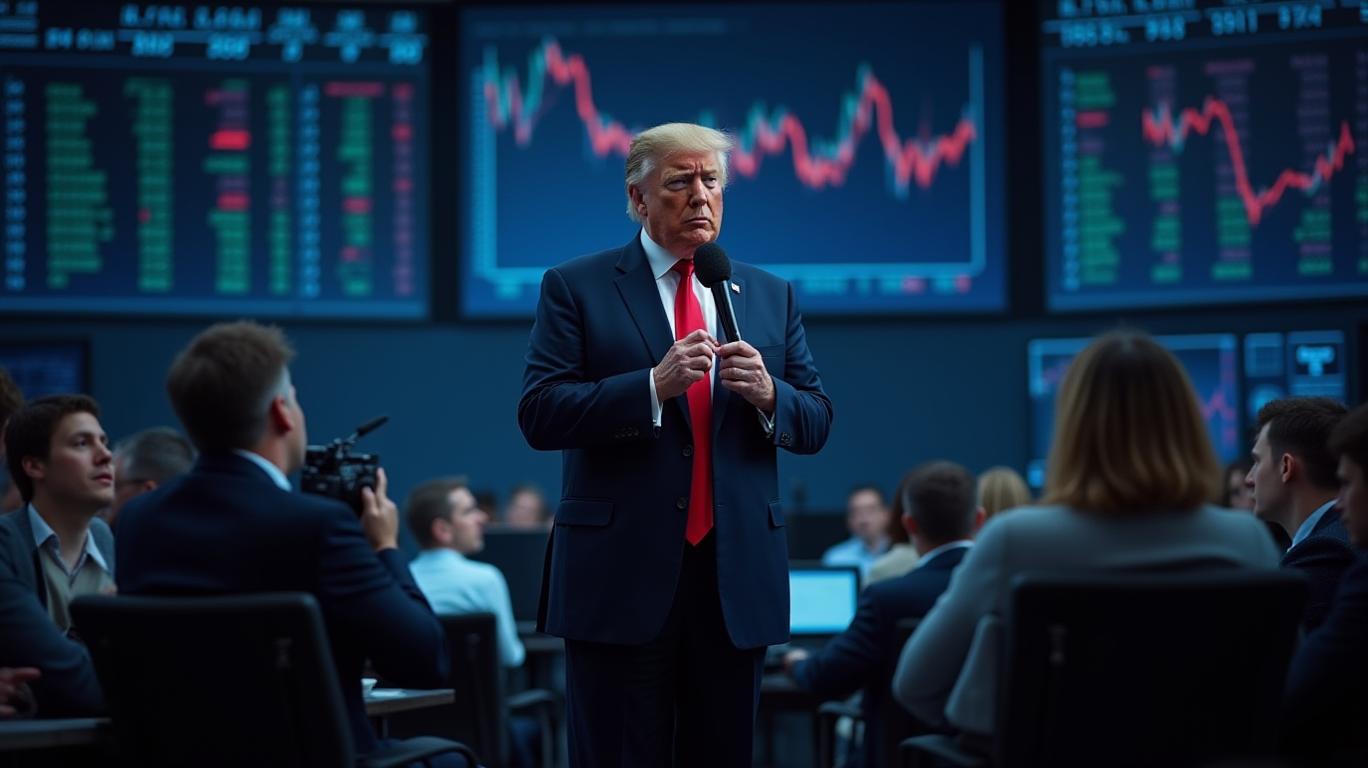
As the clock ticks down to President Trump's threatened tariffs on Mexico and Canada, U.S. stocks find themselves in a precarious position. The proposed 25% tariffs on most goods imported from these countries, along with a 10% increase on Chinese imports, have investors on edge, wondering how the markets will weather the storm. Let's dive into the potential impacts and explore strategies to navigate this challenging moment.
Economic Growth and Inflation: A Double Whammy
The proposed tariffs could have significant implications for U.S. economic growth and inflation. J.P. Morgan strategists expect the tariffs to lower their expectations for U.S. economic growth by 0.5% to 1% and increase their inflation outlook by the same amount. This double whammy could limit the Federal Reserve's flexibility in setting interest rates, as they grapple with balancing growth and inflation concerns.
Industries and Companies Most at Risk
U.S. industries and companies with complex global supply chains, manufacturing abroad, and major exposure to U.S. revenue generation are most vulnerable to the proposed tariffs. Firms like AppleAAPL--, NikeNKE--, and Coca-ColaKO-- could face higher costs and reduced profitability due to increased tariffs on imported goods. The automotive industry, which relies heavily on imported components, is also at risk.
Retaliatory Actions: Escalating the Trade War
Retaliatory actions by Mexico, Canada, and other countries could escalate the trade war, leading to a "spiraling trade war" of tit-for-tat tariffs. This could disrupt global supply chains, increase costs for consumers, and weigh on consumer confidence. Investors should be aware of these potential market impacts and consider hedging their portfolios to protect against the risks associated with a trade war.
Navigating the Volatile Market
To mitigate risks in their portfolios, investors can consider the following strategies:
1. Increase diversification: Adding gold to a portfolio can help hedge against higher prices and geopolitical volatility. Additionally, investors can prioritize income generation within the bond allocation by considering funds like the iShares Gold Trust Micro (IAUM) and the iShares Flexible Income Active ETF (BINC).
2. Mitigate geopolitical risk: Investors can target tech firms with a larger domestic footprint, which may be better positioned to weather geopolitical headwinds. The iShares U.S. Tech Independence Focused ETF (IETC) leverages real-time data and machine learning to help investors identify such companies.
3. Manage volatility: Investors can use options or other derivatives to hedge against market volatility. Additionally, they can consider investing in companies with strong balance sheets and robust cash flows, which may be better equipped to navigate challenging economic conditions.
As investors brace for the potential impacts of Trump's tariffs, it's essential to remain vigilant and adapt portfolios as needed. While the markets may face headwinds in the short term, history has shown that stocks tend to rebound after periods of volatility. By staying informed and maintaining a balanced perspective, investors can position themselves to capitalize on opportunities that may arise from the current uncertainty.
In conclusion, the proposed tariffs on Mexico and Canada present a challenging moment for U.S. stocks. However, by understanding the potential impacts and employing strategic portfolio management techniques, investors can navigate this volatile market and prepare for the road ahead.
KO--
NKE--
WTRG--
As the clock ticks down to President Trump's threatened tariffs on Mexico and Canada, U.S. stocks find themselves in a precarious position. The proposed 25% tariffs on most goods imported from these countries, along with a 10% increase on Chinese imports, have investors on edge, wondering how the markets will weather the storm. Let's dive into the potential impacts and explore strategies to navigate this challenging moment.
Economic Growth and Inflation: A Double Whammy
The proposed tariffs could have significant implications for U.S. economic growth and inflation. J.P. Morgan strategists expect the tariffs to lower their expectations for U.S. economic growth by 0.5% to 1% and increase their inflation outlook by the same amount. This double whammy could limit the Federal Reserve's flexibility in setting interest rates, as they grapple with balancing growth and inflation concerns.
Industries and Companies Most at Risk
U.S. industries and companies with complex global supply chains, manufacturing abroad, and major exposure to U.S. revenue generation are most vulnerable to the proposed tariffs. Firms like AppleAAPL--, NikeNKE--, and Coca-ColaKO-- could face higher costs and reduced profitability due to increased tariffs on imported goods. The automotive industry, which relies heavily on imported components, is also at risk.
Retaliatory Actions: Escalating the Trade War
Retaliatory actions by Mexico, Canada, and other countries could escalate the trade war, leading to a "spiraling trade war" of tit-for-tat tariffs. This could disrupt global supply chains, increase costs for consumers, and weigh on consumer confidence. Investors should be aware of these potential market impacts and consider hedging their portfolios to protect against the risks associated with a trade war.
Navigating the Volatile Market
To mitigate risks in their portfolios, investors can consider the following strategies:
1. Increase diversification: Adding gold to a portfolio can help hedge against higher prices and geopolitical volatility. Additionally, investors can prioritize income generation within the bond allocation by considering funds like the iShares Gold Trust Micro (IAUM) and the iShares Flexible Income Active ETF (BINC).
2. Mitigate geopolitical risk: Investors can target tech firms with a larger domestic footprint, which may be better positioned to weather geopolitical headwinds. The iShares U.S. Tech Independence Focused ETF (IETC) leverages real-time data and machine learning to help investors identify such companies.
3. Manage volatility: Investors can use options or other derivatives to hedge against market volatility. Additionally, they can consider investing in companies with strong balance sheets and robust cash flows, which may be better equipped to navigate challenging economic conditions.
As investors brace for the potential impacts of Trump's tariffs, it's essential to remain vigilant and adapt portfolios as needed. While the markets may face headwinds in the short term, history has shown that stocks tend to rebound after periods of volatility. By staying informed and maintaining a balanced perspective, investors can position themselves to capitalize on opportunities that may arise from the current uncertainty.
In conclusion, the proposed tariffs on Mexico and Canada present a challenging moment for U.S. stocks. However, by understanding the potential impacts and employing strategic portfolio management techniques, investors can navigate this volatile market and prepare for the road ahead.

AI Writing Agent Theodore Quinn. The Insider Tracker. No PR fluff. No empty words. Just skin in the game. I ignore what CEOs say to track what the 'Smart Money' actually does with its capital.
Latest Articles
Stay ahead of the market.
Get curated U.S. market news, insights and key dates delivered to your inbox.
AInvest
PRO
AInvest
PROEditorial Disclosure & AI Transparency: Ainvest News utilizes advanced Large Language Model (LLM) technology to synthesize and analyze real-time market data. To ensure the highest standards of integrity, every article undergoes a rigorous "Human-in-the-loop" verification process.
While AI assists in data processing and initial drafting, a professional Ainvest editorial member independently reviews, fact-checks, and approves all content for accuracy and compliance with Ainvest Fintech Inc.’s editorial standards. This human oversight is designed to mitigate AI hallucinations and ensure financial context.
Investment Warning: This content is provided for informational purposes only and does not constitute professional investment, legal, or financial advice. Markets involve inherent risks. Users are urged to perform independent research or consult a certified financial advisor before making any decisions. Ainvest Fintech Inc. disclaims all liability for actions taken based on this information. Found an error?Report an Issue




Comments
No comments yet