
U.S. Stock Market Volatility Sparks Fears of 1929-Style Collapse
In April, the U.S. stock market exhibited characteristics reminiscent of an unstable emerging market. This observation was not made by frustrated domestic investors but by former U.S. Treasury Secretary Lawrence Summers, who tweeted on April 9 that the developments over the past 24 hours suggested a potential severe financial crisis triggered by U.S. tariff policies. He noted that global financial markets were treating the U.S. as a problematic emerging market.
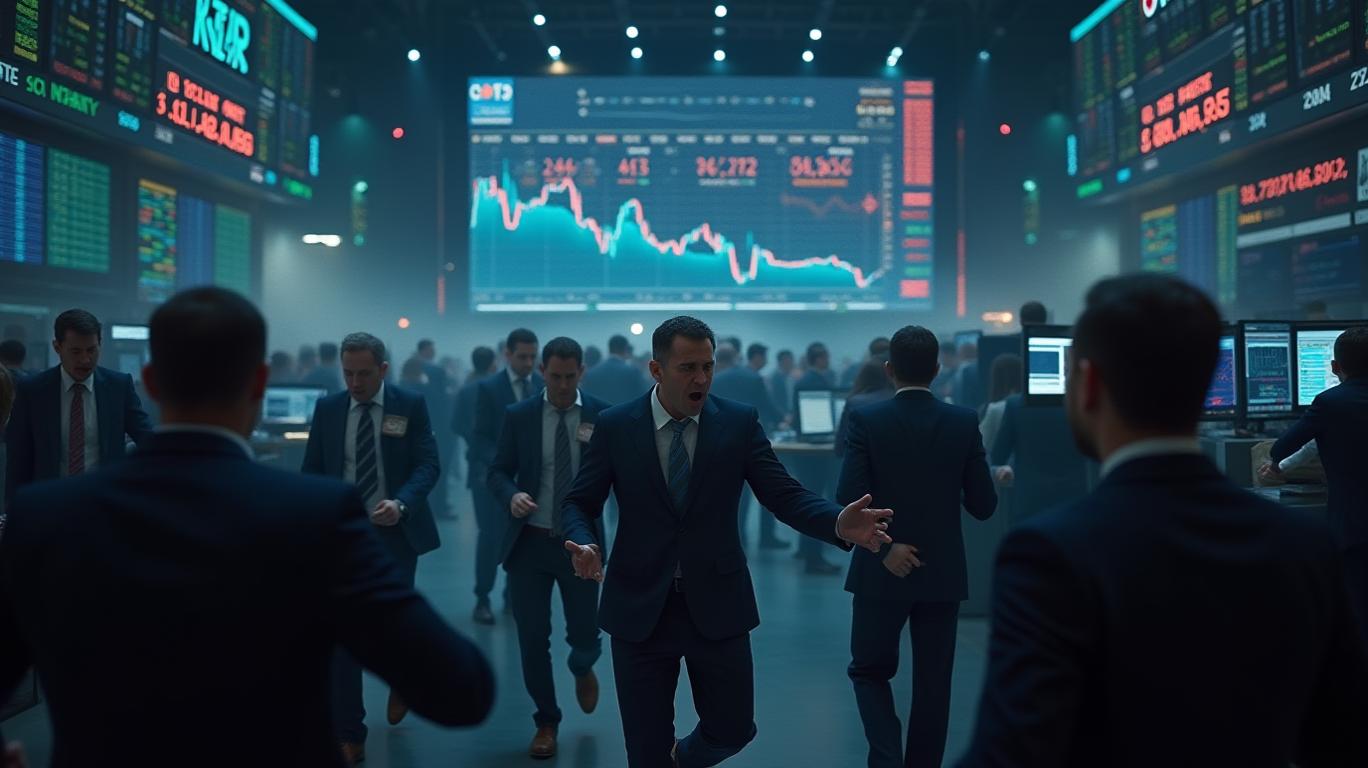
Since April 2, when President Trump announced tariffs on all trading partners, the market has experienced unprecedented volatility. The announcement was followed by a temporary suspension of most tariffs on April 9, and the lack of clarity on exemptions and the fluctuating expectations of negotiations have added to the uncertainty. This has led to significant fluctuations in stocks, bonds, and currencies, with the U.S. assets being at the center of the storm.
Despite the temporary easing of tensions after April 9, the market remains on edge. Investment banks, which had previously warned of a potential recession, are now attempting to return to their usual analytical frameworks and make new predictions about the U.S. and other economies. However, the World Trade Organization (WTO), which turned 30 this year, has not taken any direct action. In February, China had formally requested dispute resolution through the WTOWTO--, but the organization's dispute resolution system has been paralyzed, and the U.S. announced an indefinite suspension of financial contributions to the WTO in March, further limiting its ability to resolve global trade disputes.
The WTO's weak role in this tariff storm reflects broader concerns on Wall Street about the long-term implications of these policies. While investment banks struggle to navigate the unpredictable statements from the White House, three prominent investors who have been through the 2008 financial crisis and are now facing another potential crisis in 2025 are expressing deep concerns about a larger collapse.
The issues go beyond tariffs. Optimists view the recent market shocks as a repeat of the March 2020 events, expecting a recovery within a few months. Pessimists, however, see this as a harbinger of a much larger economic downturn. Ray Dalio, founder of BridgewaterBWB-- Associates, warned in an April 7 article that the current situation is not just about tariffs but a collapse of the global monetary, political, and geopolitical orders—a rare event in one's lifetime but a recurring theme in history. He compared the current period to the 1930s, a time of significant economic turmoil.
Mark Spitznagel, known for his "black swan" strategies, echoed Dalio's concerns, predicting an 80% market collapse. Spitznagel, a disciple of Nassim Nicholas Taleb, the author of "The Black Swan" and "Antifragile," has a history of profiting from market crashes. In 2008, while many institutions suffered, Spitznagel's Universa Investments recorded a 100% return by betting against the market. In 2020, during the COVID-19 pandemic, while Bridgewater suffered significant losses, Spitznagel's firm achieved a 41-fold return in the first quarter.
Spitznagel's concerns extend beyond tariffs to the U.S. debt, which he believes will make it difficult for the Federal Reserve to prevent a recession. He predicts a collapse similar to the 1929 Great Depression, with an 80% drop in the market. Howard Marks, founder of Oaktree Capital, has also expressed uncertainty, titling his latest investment memo "Nobody Knows." Marks has a history of accurately predicting market crashes and has used his insights to make profitable investments during past crises.
In conclusion, the global trade system is facing significant challenges in April, with financial markets struggling to price in the uncertainty. While some are drawing parallels to the 1929 Great Depression, the current generation of investors has not experienced such a severe downturn. The actions of prominent investors like Warren Buffett, who has been cautious in his recent investments, reflect the prevailing uncertainty. Buffett, who has a history of making bold moves during market crashes, has not shown any signs of re-entering the market aggressively this time. His recent investments in Japan and his calls for responsible use of tax revenues highlight his cautious approach in the current environment.

Stay ahead of the market.
Get curated U.S. market news, insights and key dates delivered to your inbox.


AInvest
PRO
AInvest
PRO



Comments
No comments yet