
Stock Market Volatility Soars: VIX Index Surges Amid Geopolitical Uncertainty
 Aime Summary
The Cboe Volatility Index (VIX) has surged to 27 as geopolitical tensions, inflation, and trade policy changes drive a 'Risk-Off' sentiment in global markets. U.S. stocks entered correction territory as the Nasdaq fell over 10% from its high, with elevated oil prices and inflation concerns amplifying investor anxiety. Analysts warn that the current volatility reflects a shift from the 'Goldilocks' environment of recent years, with central banks maintaining a cautious stance and rate cuts unlikely in 2026.
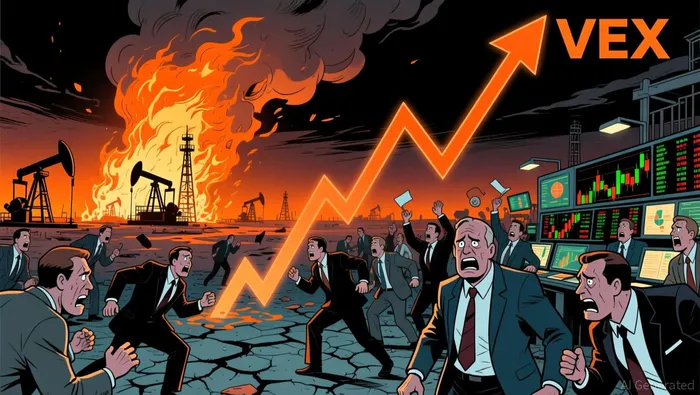
The stock market is in the throes of a high-volatility environment triggered by the ongoing U.S.-Israel war in the Middle East. With oil prices soaring to nearly $115 per barrel and central banks adopting a hawkish stance, investors are grappling with a new normal of uncertainty. The CBOE Volatility Index (VIX) has surged to 27, its highest level in over a year, signaling a sharp increase in investor fear. This surge is driven by a "triple threat": geopolitical tensions in the Middle East, rising inflation, and new trade policy changes like a 10% global tariff on imports. The Nasdaq has confirmed a correction as it fell more than 10% from its high, reflecting broad market unease about the global economic outlook.
Why Is the VIX Index So Important for Stock Investors?
The VIX, often dubbed the "fear index," measures implied volatility for the S&P 500 and is a barometer of investor sentiment. A rising VIX typically signals increased uncertainty and a "Risk-Off" sentiment, where investors pull back from equities and rotate into safer assets or volatility-linked products. Currently, the VIX is at 27, indicating heightened market anxiety. This surge is not just a technical anomaly—it reflects real-world risks like the closure of the Strait of Hormuz and the possibility of prolonged conflict. Analysts note that this level of volatility is unusual and suggests that investors are pricing in a higher degree of uncertainty than realized market movements alone would imply.
The divergence between implied volatility and realized volatility is a key sign that the market is bracing for further turbulence. Implied volatility (what investors are expecting) is now above 23%, while realized volatility (actual market swings) remains below 14%. This gap suggests that market participants are hedging aggressively, buying put options and volatility-linked instruments to protect against further downside. For retail investors, this means a market that is more sensitive to negative surprises and less forgiving of high-flying stocks. The VIX's movement is not just a signal—it's a call to action.
How Can Investors Navigate a High-Volatility Environment?
Investors must adapt to a new reality where volatility is no longer an occasional event but a baseline condition. Historically, periods of high VIX levels have often coincided with buying opportunities for the S&P 500 over a three-month horizon, though this trend does not always hold. For now, a disciplined approach to risk management is critical. This means avoiding panic selling, reviewing portfolio allocations for risk balance, and considering defensive positions in sectors like utilities, healthcare, and energy.
Some investors are turning to volatility-linked assets to hedge their portfolios. Others are seeking out companies with strong fundamentals and low debt that can weather market stress. For example, Longyan Zhuoyue New Energy is a Chinese renewable energy company that has demonstrated impressive earnings growth and a solid balance sheet. Investors are also rotating into cash or Treasury bonds as a way to preserve capital during periods of uncertainty. Ultimately, in a high-volatility environment, patience and a long-term perspective are essential.
What to Watch Next
The next critical developments will likely be centered around geopolitical outcomes, particularly in the Middle East. Investors should monitor statements from the U.S. administration, particularly from President Donald Trump, as well as the response from Iran to any diplomatic overtures. Additionally, the evolution of oil prices and the success of global energy markets in finding alternative shipping routes will be key. Central bank policy decisions, especially from the U.S. Federal Reserve, will also play a major role in shaping the market's trajectory. Investors who can stay informed and remain flexible will be better positioned to navigate the ongoing turbulence.

Stay ahead of the market.
Get curated U.S. market news, insights and key dates delivered to your inbox.


AInvest
PRO
AInvest
PRO



Comments
No comments yet