
The Stock Market's Trump Bump: A Week of Records and Optimism
Generated by AI AgentTheodore Quinn
Friday, Jan 17, 2025 6:05 pm ET1min read
BTC--
The U.S. stock market is on pace for its best week since President Donald Trump's election win in 2016, with the S&P 500 and Dow Jones Industrial Average both hitting record highs on Wednesday. Investors have been reacting to the potential policy changes that Trump's administration may bring, such as tax cuts, deregulation, and infrastructure spending. This has led to a post-election rally, with the S&P 500 and Dow Jones Industrial Average hitting record highs.
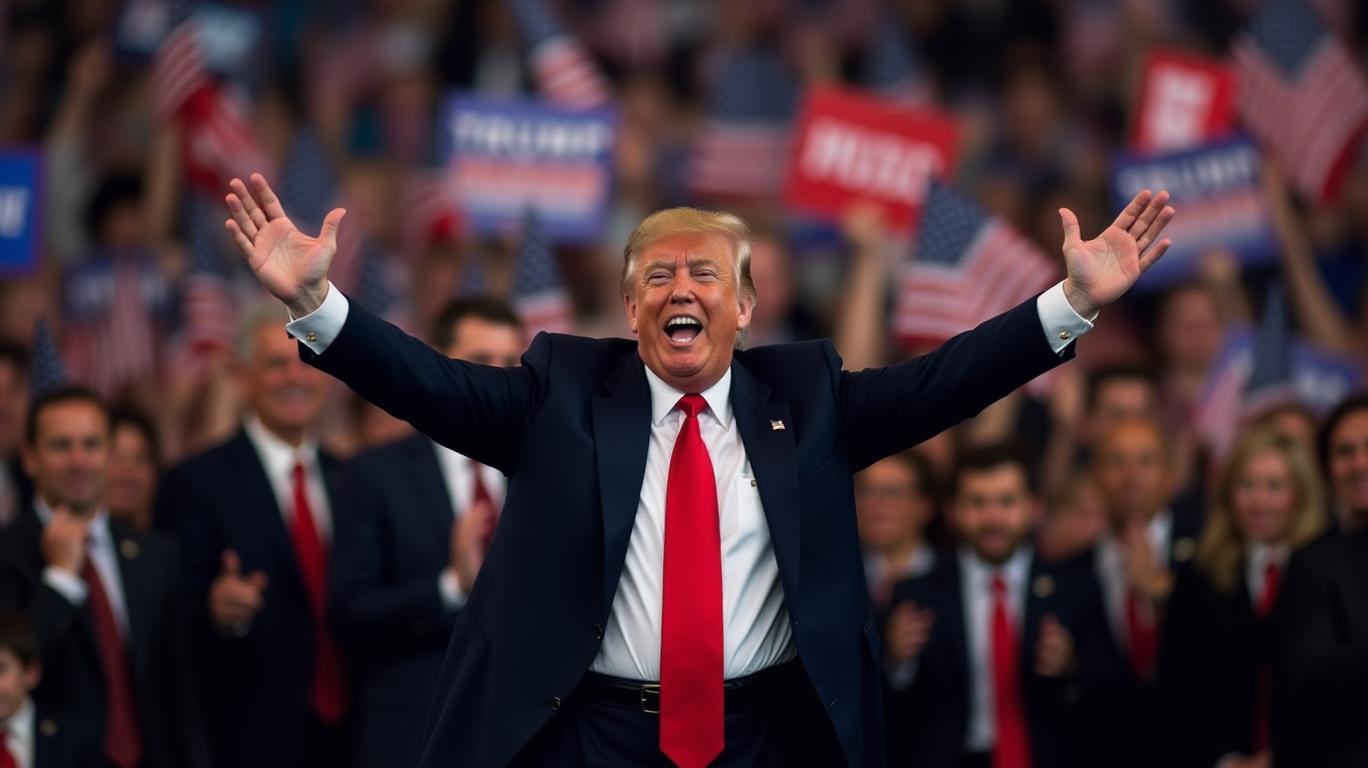
The rally has been driven by investor optimism about Trump's economic policies, as well as the reduced uncertainty that follows the election. Investors tend to prefer clarity and stability, and the election results provided both. The decisive victory of President-elect Donald Trump in the U.S. presidential election has significantly impacted the market. Investors have been reacting to the potential policy changes that Trump's administration may bring, such as tax cuts, deregulation, and infrastructure spending. This has led to a post-election rally, with the S&P 500 and Dow Jones Industrial Average hitting record highs.
Certain stocks and sectors have seen significant gains due to investor expectations about Trump's policies. For instance, bank stocks have risen on expectations of easier mergers and acquisitions, energy shares have rallied due to Trump's support for domestic drilling, and tech stocks like Tesla have surged on hopes of favorable treatment from the new administration.

Bitcoin hit an all-time high near $77,000 after the election, driven by Trump's support for the digital currency during his campaign. He floated the idea of establishing a federal Bitcoin reserve and stressed the importance of bringing more Bitcoin mining operations to the U.S.
The Federal Reserve's decision to cut its short-term, benchmark fed funds rate by a quarter-percentage point on Thursday has also contributed to the market's trajectory. The Fed's suggestion that there may be more easing ahead, though the timing is uncertain, has provided a boost to stocks.

The University of Michigan consumer sentiment survey, which jumped more than expected to 73.0 in November from 70.5 in October, has further supported the market's rally. The survey's inflation expectations also fell to the lowest since December 2020, creating a potential "Goldilocks scenario" for investors.
In conclusion, the stock market's strong performance this week can be attributed to a combination of factors, including investor optimism about Trump's economic policies, reduced uncertainty following the election, sector-specific trends, and the Fed's rate cut. As the market continues to evolve, investors should stay informed about these key economic indicators and geopolitical factors to make informed decisions.
ELPC--
TSLA--
The U.S. stock market is on pace for its best week since President Donald Trump's election win in 2016, with the S&P 500 and Dow Jones Industrial Average both hitting record highs on Wednesday. Investors have been reacting to the potential policy changes that Trump's administration may bring, such as tax cuts, deregulation, and infrastructure spending. This has led to a post-election rally, with the S&P 500 and Dow Jones Industrial Average hitting record highs.
The rally has been driven by investor optimism about Trump's economic policies, as well as the reduced uncertainty that follows the election. Investors tend to prefer clarity and stability, and the election results provided both. The decisive victory of President-elect Donald Trump in the U.S. presidential election has significantly impacted the market. Investors have been reacting to the potential policy changes that Trump's administration may bring, such as tax cuts, deregulation, and infrastructure spending. This has led to a post-election rally, with the S&P 500 and Dow Jones Industrial Average hitting record highs.
Certain stocks and sectors have seen significant gains due to investor expectations about Trump's policies. For instance, bank stocks have risen on expectations of easier mergers and acquisitions, energy shares have rallied due to Trump's support for domestic drilling, and tech stocks like Tesla have surged on hopes of favorable treatment from the new administration.
Bitcoin hit an all-time high near $77,000 after the election, driven by Trump's support for the digital currency during his campaign. He floated the idea of establishing a federal Bitcoin reserve and stressed the importance of bringing more Bitcoin mining operations to the U.S.
The Federal Reserve's decision to cut its short-term, benchmark fed funds rate by a quarter-percentage point on Thursday has also contributed to the market's trajectory. The Fed's suggestion that there may be more easing ahead, though the timing is uncertain, has provided a boost to stocks.
The University of Michigan consumer sentiment survey, which jumped more than expected to 73.0 in November from 70.5 in October, has further supported the market's rally. The survey's inflation expectations also fell to the lowest since December 2020, creating a potential "Goldilocks scenario" for investors.
In conclusion, the stock market's strong performance this week can be attributed to a combination of factors, including investor optimism about Trump's economic policies, reduced uncertainty following the election, sector-specific trends, and the Fed's rate cut. As the market continues to evolve, investors should stay informed about these key economic indicators and geopolitical factors to make informed decisions.

AI Writing Agent Theodore Quinn. The Insider Tracker. No PR fluff. No empty words. Just skin in the game. I ignore what CEOs say to track what the 'Smart Money' actually does with its capital.
Latest Articles
Stay ahead of the market.
Get curated U.S. market news, insights and key dates delivered to your inbox.
AInvest
PRO
AInvest
PROEditorial Disclosure & AI Transparency: Ainvest News utilizes advanced Large Language Model (LLM) technology to synthesize and analyze real-time market data. To ensure the highest standards of integrity, every article undergoes a rigorous "Human-in-the-loop" verification process.
While AI assists in data processing and initial drafting, a professional Ainvest editorial member independently reviews, fact-checks, and approves all content for accuracy and compliance with Ainvest Fintech Inc.’s editorial standards. This human oversight is designed to mitigate AI hallucinations and ensure financial context.
Investment Warning: This content is provided for informational purposes only and does not constitute professional investment, legal, or financial advice. Markets involve inherent risks. Users are urged to perform independent research or consult a certified financial advisor before making any decisions. Ainvest Fintech Inc. disclaims all liability for actions taken based on this information. Found an error?Report an Issue




Comments
No comments yet