
Stock Market Reaction to President Trump's Tariff Deadline and Big Beautiful Bill Signing
ByAinvest
Monday, Jul 7, 2025 6:08 pm ET2min read
TSLA--
The Big Beautiful Bill Act included tax cuts for consumers and businesses, but the market's reaction was overshadowed by Trump's renewed tough talk on tariffs. The President threatened 25% tariffs on Japan and South Korea, and warned of a possible 10% tariff on countries aligning themselves with the BRIC nations. This renewed uncertainty sent stocks lower, despite the passage of the bill providing clarity and extra money in pockets that could flow to risk assets [1].
Trump's latest threat aligns with his pattern of issuing ultimatums to break impasses. The top tier of his new tariff range, if formalized, would be higher than any of the levies initially outlined during his "Liberation Day" rollout in early April. Trump's latest threat comes as the 90-day window for inking trade deals opened by Trump on April 9 closes on July 9. The President plans to extend the deadline to August 1, but the compressed timeline may mean more tough talk in the coming weeks that could move markets [2].
Elon Musk's announcement of a new political party, the America Party, adds to the uncertainty. Musk hinted that the party would focus on swaying votes in the House and Senate. While Musk's core supporters are likely to back him, broader investor sentiment is wary of Musk's political involvement, which could reignite concerns about the fate of the Tesla brand. Tesla's stock price slumped 7% in early trading Monday after Musk's announcement [3].
The renewed tariff talk and Musk's political move come at a precarious time for the market. Stocks' valuation has gotten a little over its skis, with the S&P 500's forward price-to-earnings ratio at 22.2. Additionally, some measures of investor sentiment are flashing overbought, with the relative strength index (14) exceeding 70 for both the S&P 500 and Nasdaq Composite on July 3 [1].
In conclusion, the market's reaction to Trump's tariff talk and Musk's political move highlights the ongoing uncertainty and volatility in the stock market. Investors should closely watch the situation as it unfolds.
References:
[1] https://www.thestreet.com/markets/stock-market-slides-after-tariff-surprise
[2] https://financialpost.com/news/economy/trump-to-start-notifying-countries-tariffs-up-to-70-percent
[3] https://www.cbsnews.com/news/tesla-stock-price-down-america-party-elon-musk/?ftag=YHF4eb9d17
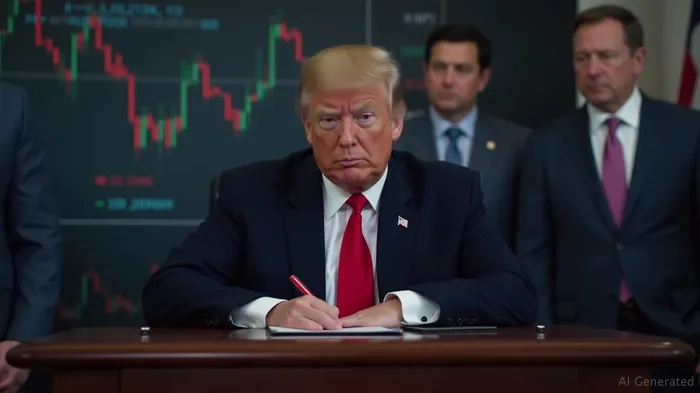
President Trump signed his Big Beautiful Bill, but markets retreated as he raised questions about tariffs and trade. Equity futures pointed to a bearish open after Trump posted about Wednesday's tariff deadline. The S&P 500 fell 0.8% to 6,229, the Nasdaq Composite shed 0.9% to 20,412, and the Dow Jones Industrial Average was down 0.9% at 44,406. Tesla (TSLA) was among the biggest losers, sliding 6.8% after CEO Elon Musk announced plans to form a political party in protest of Trump's new legislation.
President Trump's Big Beautiful Bill, signed on July 4, was initially seen as a positive for the economy and consumers, but markets retreated on July 7 as the President raised questions about tariffs and trade. Equity futures pointed to a bearish open, with the S&P 500 falling 0.8% to 6,229, the Nasdaq Composite shedding 0.9% to 20,412, and the Dow Jones Industrial Average down 0.9% at 44,406. Tesla (TSLA) was among the biggest losers, sliding 6.8% after CEO Elon Musk announced plans to form a political party in protest of Trump's new legislation.The Big Beautiful Bill Act included tax cuts for consumers and businesses, but the market's reaction was overshadowed by Trump's renewed tough talk on tariffs. The President threatened 25% tariffs on Japan and South Korea, and warned of a possible 10% tariff on countries aligning themselves with the BRIC nations. This renewed uncertainty sent stocks lower, despite the passage of the bill providing clarity and extra money in pockets that could flow to risk assets [1].
Trump's latest threat aligns with his pattern of issuing ultimatums to break impasses. The top tier of his new tariff range, if formalized, would be higher than any of the levies initially outlined during his "Liberation Day" rollout in early April. Trump's latest threat comes as the 90-day window for inking trade deals opened by Trump on April 9 closes on July 9. The President plans to extend the deadline to August 1, but the compressed timeline may mean more tough talk in the coming weeks that could move markets [2].
Elon Musk's announcement of a new political party, the America Party, adds to the uncertainty. Musk hinted that the party would focus on swaying votes in the House and Senate. While Musk's core supporters are likely to back him, broader investor sentiment is wary of Musk's political involvement, which could reignite concerns about the fate of the Tesla brand. Tesla's stock price slumped 7% in early trading Monday after Musk's announcement [3].
The renewed tariff talk and Musk's political move come at a precarious time for the market. Stocks' valuation has gotten a little over its skis, with the S&P 500's forward price-to-earnings ratio at 22.2. Additionally, some measures of investor sentiment are flashing overbought, with the relative strength index (14) exceeding 70 for both the S&P 500 and Nasdaq Composite on July 3 [1].
In conclusion, the market's reaction to Trump's tariff talk and Musk's political move highlights the ongoing uncertainty and volatility in the stock market. Investors should closely watch the situation as it unfolds.
References:
[1] https://www.thestreet.com/markets/stock-market-slides-after-tariff-surprise
[2] https://financialpost.com/news/economy/trump-to-start-notifying-countries-tariffs-up-to-70-percent
[3] https://www.cbsnews.com/news/tesla-stock-price-down-america-party-elon-musk/?ftag=YHF4eb9d17
Stay ahead of the market.
Get curated U.S. market news, insights and key dates delivered to your inbox.
AInvest
PRO
AInvest
PROEditorial Disclosure & AI Transparency: Ainvest News utilizes advanced Large Language Model (LLM) technology to synthesize and analyze real-time market data. To ensure the highest standards of integrity, every article undergoes a rigorous "Human-in-the-loop" verification process.
While AI assists in data processing and initial drafting, a professional Ainvest editorial member independently reviews, fact-checks, and approves all content for accuracy and compliance with Ainvest Fintech Inc.’s editorial standards. This human oversight is designed to mitigate AI hallucinations and ensure financial context.
Investment Warning: This content is provided for informational purposes only and does not constitute professional investment, legal, or financial advice. Markets involve inherent risks. Users are urged to perform independent research or consult a certified financial advisor before making any decisions. Ainvest Fintech Inc. disclaims all liability for actions taken based on this information. Found an error?Report an Issue


ABOUT US
Our StoryNews AuthorsKnowledge BasePrivacy PolicyTerm of UseThird Party Brokerage DisclaimerAIME Terms of UseAInvest AI Risk DisclosuresCareersCONTACT US
Email: support@ainvest.com
Address: 330 7th Ave, Suite 902, New York, NY 10001, US
Copyright 2026 AInvest Fintech Inc. All rights reserved.


Comments
No comments yet