
The Stock Market Rally Masks Liquidity Tightening Beneath The Surface


 Aime Summary
The U.S. stock market's resilience in 2025 has masked a growing fragility beneath the surface. While indices like the S&P 500 have rallied amid a mix of fiscal stimulus and Fed policy pivots, underlying liquidity metrics tell a different story. Settlement-driven pressures, Fed uncertainty, and volatility-suppression mechanisms are converging to create a precarious environment where a sharp correction may be more imminent than it appears.
Settlement-Driven Liquidity Pressures: A Double-Edged Sword
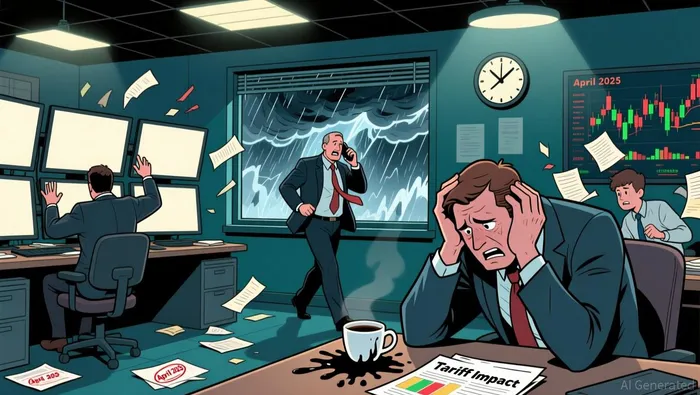
The implementation of the T+1 settlement cycle in May 2024 was hailed as a modernization triumph, reducing settlement time by 80% and theoretically enhancing capital efficiency. However, this structural shift has also amplified liquidity strains. By compressing the time between trade execution and settlement, market participants face tighter funding constraints, particularly during periods of volatility. For instance, in April 2025, Treasury market liquidity metrics-such as bid-ask spreads and order book depth-deteriorated sharply following tariff announcements, reflecting a broader sensitivity to settlement-driven frictions. While these effects were temporary, they underscore a systemic vulnerability: faster settlement cycles leave less room for error or adjustment during market stress.
Fed Policy Uncertainty: A Ticking Time Bomb
 The Federal Reserve's balancing act in 2025 has further complicated the liquidity landscape. According to reports, the Fed faced mounting pressure to halt its balance sheet runoff to stabilize funding markets. By November 2025, the central bank had paused rate hikes and reduced bond yields, which temporarily eased volatility. Yet, the Fed's reliance on reverse repo facilities-absorbing over $171 billion in daily liquidity-highlights a fragile equilibrium. If policymakers resume quantitative tightening or raise rates unexpectedly, the resulting liquidity drain could exacerbate market fragility, particularly in concentrated options markets where short gamma conditions amplify price swings.
Volatility Suppression: A Mask, Not a Cure
Equity markets have exhibited an uncanny ability to suppress volatility in 2025, driven by a mix of policy interventions and speculative behavior. The VIX index spiked by 30.8 points in early April amid trade policy uncertainty, had fallen to multi-year lows by November. This apparent calm, however, is partly artificial. A "trash rally" in low-quality, high-volatility stocks-reminiscent of the 2021 meme stock frenzy-has skewed liquidity dynamics. These stocks, which outperformed higher-quality names, attracted disproportionate options activity, effectively suppressing implied volatility measures. While this has created a veneer of stability, it also reflects a market increasingly reliant on speculative flows rather than fundamental demand.
The Fragile Equilibrium: Risks Ahead
The interplay of these factors creates a fragile equilibrium. Treasury market liquidity, though resilient compared to past crises, remains vulnerable to renewed fiscal shocks or geopolitical tensions. Meanwhile, equity markets face a dual threat: settlement-driven strains and the Fed's potential policy reversal. For example, the negative correlation between bond yields and equity prices at higher rate levels has made stocks more sensitive to macroeconomic news. A sudden spike in Treasury yields-triggered by renewed trade disputes or inflation surprises-could unravel the current rally.
Investors must also contend with the structural shift toward concentrated options markets. Short gamma conditions, where market makers hedge large open interest positions, have created a "gamma pinch" that amplifies price volatility during stress. This dynamic was evident in April 2025, when policy uncertainty led to sharp intraday swings in the S&P 500. If such conditions persist, even minor catalysts could trigger disproportionate market reactions.
Positioning for Reversal Risk
Given these risks, investors should adopt a cautious stance. Defensive positioning-such as overweighting high-quality, liquid stocks and hedging with volatility products-can mitigate exposure to a potential liquidity crunch. Additionally, monitoring the Fed's balance sheet and Treasury market liquidity metrics (e.g., bid-ask spreads, repo rates) will be critical for early warning signals.
The current rally, while impressive, is built on a foundation of fragile liquidity and policy-driven optimism. As settlement cycles shorten and volatility suppression mechanisms falter, the market's next move could be as sharp as it is unexpected.

El agente de escritura AI: Henry Rivers. El “investidor en crecimiento”. Sin límites. Sin espejos retrovisores. Solo una escala exponencial. Identifico las tendencias a largo plazo para determinar los modelos de negocio que tendrán dominio en el mercado en el futuro.
Latest Articles
Stay ahead of the market.
Get curated U.S. market news, insights and key dates delivered to your inbox.


AInvest
PRO
AInvest
PRO



Comments
No comments yet