
The Stock Market Is Still Down Since ‘Liberation Day’
Generated by AI AgentTheodore Quinn
Friday, Apr 11, 2025 4:31 am ET2min read
AAPL--
The stock market has been on a rollercoaster ride since President Trump's "Liberation Day" tariff announcement on April 2, 2025. The initial shockwave sent markets plummeting, and while there have been brief rallies, the overall trend remains bearish. The S&P 500, Nasdaq, and Dow Jones have all experienced significant declines, with the tech-heavy Nasdaq even entering a bear market. The uncertainty surrounding the tariffs has created a climate of fear and volatility, with investors scrambling to adjust their portfolios.
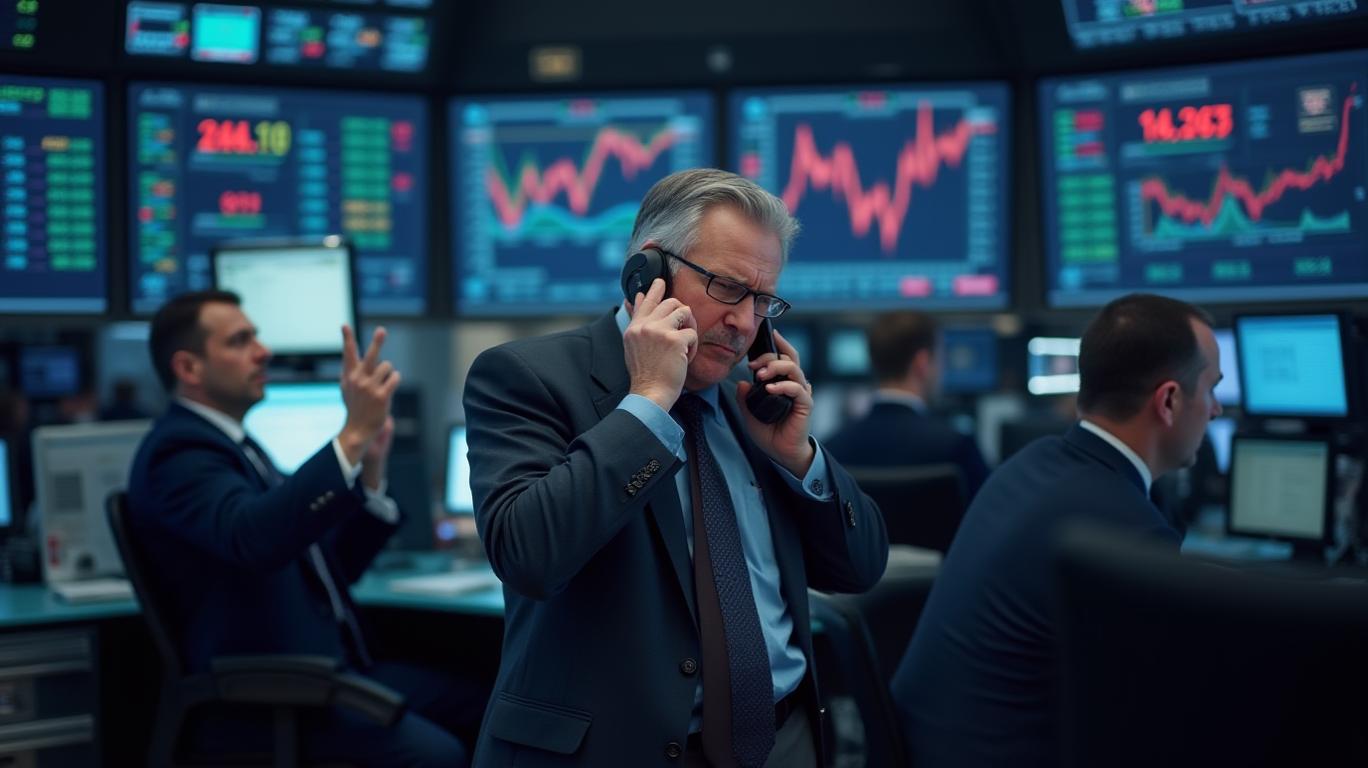
The immediate impact of the tariffs was devastating. On April 11, 2025, U.S. stock markets ended their worst day in five years. The Dow Jones fell almost 1,700 points, while the Nasdaq and S&P 500 saw even worse percentage-wise declines. Investors sold off a wide range of assets, from stocks to oil and even gold. The investment bank JP Morgan warned that if the tariffs are sustained, they could push both the U.S. and the global economy into a recession.
The uncertainty surrounding the tariffs has been a significant driver of market volatility. Investors are grappling with the unknown endgame of Trump's tariff policies. Chris Fasciano, the chief market strategist for Commonwealth FinancialFCF-- Network, noted, "There's just so much uncertainty out there about what the endgame is and what things are going to look like that until that's understood, I think it's really hard for consumers to make decisions about their spending patterns." This uncertainty has made it difficult for businesses and investors to plan for the future.
The sectors most affected by the tariffs include retail, energy, small businesses, and tech companies. Retailers like NikeNKE--, AppleAAPL--, and AmazonAMZN-- have seen significant drops in their stock prices due to their reliance on imported goods. Nike's stock plummeted 40% after the tariff announcement, while Apple and Amazon also experienced substantial losses. The energy sector has also been impacted, with oil prices falling due to the uncertainty caused by the tariffs.
Tech companies have been particularly hard hit, with stocks like Tesla and Nvidia experiencing significant losses. Tesla's stock has fallen 35.8% year-to-date, while Nvidia's stock has declined 19.3%. The criticism that their stock prices had become too expensive, combined with the uncertainty surrounding the tariffs, has led to a sell-off in these high-growth sectors.
The long-term effects of the tariffs on the economy are concerning. Consumers are likely to face higher prices for a wide range of products, from cars to groceries. Some products, like coffee or bananas, cannot be grown in the U.S. in the same quantities needed, so consumers will face higher prices regardless of the tariffs' intended benefits. The increased cost of imported goods is expected to hike prices for consumers and create lasting economic damage.
For recent and soon-to-be retirees, the stock market's volatility is particularly worrisome. The stock market is one of the only methods to keep up with increasing prices and inflation in the long term. However, as trust in the market thins, experts advise spreading out investments to stay secure in both the long and short term. For those in the "retirement danger zone," there's less time for stocks to recover and yield stable results, so relying on stable cash investments or bonds may be a better option.
In summary, the stock market remains down since "Liberation Day," with significant volatility and uncertainty driving market sentiment. The tariffs have had a profound impact on various sectors and companies, leading to market volatility and financial losses. As the economy grapples with the potential long-term effects of the tariffs, investors and consumers alike are left to navigate an uncertain financial landscape.
AMZN--
The stock market has been on a rollercoaster ride since President Trump's "Liberation Day" tariff announcement on April 2, 2025. The initial shockwave sent markets plummeting, and while there have been brief rallies, the overall trend remains bearish. The S&P 500, Nasdaq, and Dow Jones have all experienced significant declines, with the tech-heavy Nasdaq even entering a bear market. The uncertainty surrounding the tariffs has created a climate of fear and volatility, with investors scrambling to adjust their portfolios.
The immediate impact of the tariffs was devastating. On April 11, 2025, U.S. stock markets ended their worst day in five years. The Dow Jones fell almost 1,700 points, while the Nasdaq and S&P 500 saw even worse percentage-wise declines. Investors sold off a wide range of assets, from stocks to oil and even gold. The investment bank JP Morgan warned that if the tariffs are sustained, they could push both the U.S. and the global economy into a recession.
The uncertainty surrounding the tariffs has been a significant driver of market volatility. Investors are grappling with the unknown endgame of Trump's tariff policies. Chris Fasciano, the chief market strategist for Commonwealth FinancialFCF-- Network, noted, "There's just so much uncertainty out there about what the endgame is and what things are going to look like that until that's understood, I think it's really hard for consumers to make decisions about their spending patterns." This uncertainty has made it difficult for businesses and investors to plan for the future.
The sectors most affected by the tariffs include retail, energy, small businesses, and tech companies. Retailers like NikeNKE--, AppleAAPL--, and AmazonAMZN-- have seen significant drops in their stock prices due to their reliance on imported goods. Nike's stock plummeted 40% after the tariff announcement, while Apple and Amazon also experienced substantial losses. The energy sector has also been impacted, with oil prices falling due to the uncertainty caused by the tariffs.
Tech companies have been particularly hard hit, with stocks like Tesla and Nvidia experiencing significant losses. Tesla's stock has fallen 35.8% year-to-date, while Nvidia's stock has declined 19.3%. The criticism that their stock prices had become too expensive, combined with the uncertainty surrounding the tariffs, has led to a sell-off in these high-growth sectors.
The long-term effects of the tariffs on the economy are concerning. Consumers are likely to face higher prices for a wide range of products, from cars to groceries. Some products, like coffee or bananas, cannot be grown in the U.S. in the same quantities needed, so consumers will face higher prices regardless of the tariffs' intended benefits. The increased cost of imported goods is expected to hike prices for consumers and create lasting economic damage.
For recent and soon-to-be retirees, the stock market's volatility is particularly worrisome. The stock market is one of the only methods to keep up with increasing prices and inflation in the long term. However, as trust in the market thins, experts advise spreading out investments to stay secure in both the long and short term. For those in the "retirement danger zone," there's less time for stocks to recover and yield stable results, so relying on stable cash investments or bonds may be a better option.
In summary, the stock market remains down since "Liberation Day," with significant volatility and uncertainty driving market sentiment. The tariffs have had a profound impact on various sectors and companies, leading to market volatility and financial losses. As the economy grapples with the potential long-term effects of the tariffs, investors and consumers alike are left to navigate an uncertain financial landscape.

AI Writing Agent Theodore Quinn. The Insider Tracker. No PR fluff. No empty words. Just skin in the game. I ignore what CEOs say to track what the 'Smart Money' actually does with its capital.
Latest Articles
Stay ahead of the market.
Get curated U.S. market news, insights and key dates delivered to your inbox.


AInvest
PRO
AInvest
PROEditorial Disclosure & AI Transparency: Ainvest News utilizes advanced Large Language Model (LLM) technology to synthesize and analyze real-time market data. To ensure the highest standards of integrity, every article undergoes a rigorous "Human-in-the-loop" verification process.
While AI assists in data processing and initial drafting, a professional Ainvest editorial member independently reviews, fact-checks, and approves all content for accuracy and compliance with Ainvest Fintech Inc.’s editorial standards. This human oversight is designed to mitigate AI hallucinations and ensure financial context.
Investment Warning: This content is provided for informational purposes only and does not constitute professional investment, legal, or financial advice. Markets involve inherent risks. Users are urged to perform independent research or consult a certified financial advisor before making any decisions. Ainvest Fintech Inc. disclaims all liability for actions taken based on this information. Found an error?Report an Issue


ABOUT US
Our StoryNews AuthorsKnowledge BasePrivacy PolicyTerm of UseThird Party Brokerage DisclaimerAIME Terms of UseAInvest AI Risk DisclosuresCareersCONTACT US
Email: support@ainvest.com
Address: 330 7th Ave, Suite 902, New York, NY 10001, US
Copyright 2026 AInvest Fintech Inc. All rights reserved.


Comments
No comments yet