
Stock Market Closes for Good Friday — Traders Get 3-Day Weekend Starting April 3


 Aime Summary
The stock market isn't open every single day. Think of it like a big business with regular office hours, plus a few special days off each year. For the U.S. market, the basic rule is simple: it trades from 9:30 a.m. to 4:00 p.m. Eastern time, Monday through Friday.
That means weekends are always closed. So, Saturday, April 4, is not a trading day. The market will also be closed for Good Friday, which is today, Friday, April 3. It will reopen on Monday, April 6.
This closure is part of the calendar of stock market holidays. These are specific weekdays when the New York Stock Exchange and Nasdaq shut down, like New Year's Day or Thanksgiving. Good Friday is one such day, observed by many businesses and financial markets.
Even if you're not planning to trade, knowing these dates helps you avoid surprises. For instance, you can't place a trade on Friday, and you won't see any price changes until Monday. The market will be back in session next week, so your cash and investments will be waiting.
Understanding the Calendar: Key Holidays and Early Closures
The U.S. stock market follows a predictable yearly schedule, with 10 full-day closures and two early closes. This pattern helps everyone from day traders to long-term investors plan around the calendar.
The full holiday list for 2026 includes major federal observances like New Year's Day, Martin Luther King Jr. Day, Presidents' Day, Memorial Day, Juneteenth, Independence Day, Labor Day, Thanksgiving, and Christmas Day. These are the days you can expect a full shutdown. The market also closes for Good Friday, a move that aligns with many other businesses.
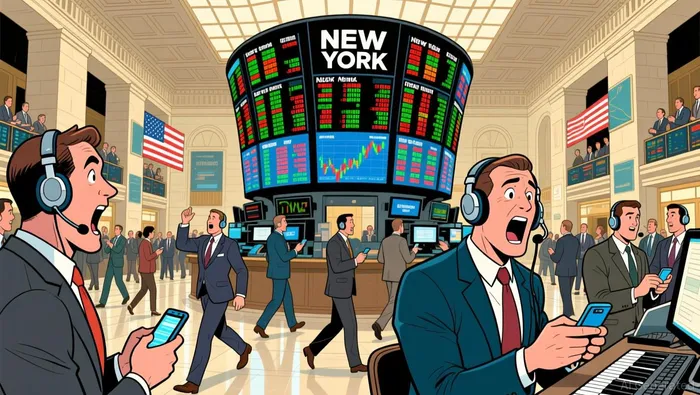
Beyond these full days off, there are two key early closure dates. Both the New York Stock Exchange and Nasdaq will close at 1:00 p.m. Eastern time on Friday, November 27 and Thursday, December 24. These shortened sessions are designed to give employees a head start on the weekend or the holiday season. The day after Thanksgiving, often called Black Friday, is a prime example of a day when trading ends early.
There's one important difference to note between stock market holidays and bank holidays. While banks861045-- are closed on Veterans Day, the stock market stays open. This means the NYSE and Nasdaq will be trading as usual on that day, unlike many other financial institutions.
The pattern is consistent: holidays that fall on a weekend are typically observed on the nearest weekday. For instance, if a holiday lands on a Saturday, the market closes the Friday before. If it falls on a Sunday, the market closes the Monday after. This "observed" rule ensures the market is closed on the same day as federal employees and many businesses.
For investors, knowing this schedule is practical. It helps you avoid placing orders on days when the market is closed, and it sets expectations for when you might see price movements. The calendar is set, so you can plan your trading or investment activities around these fixed dates.
Trading Outside Regular Hours: The Extended Market
The main trading session from 9:30 a.m. to 4:00 p.m. Eastern time is the heart of the market, but it's not the only time you can buy or sell stocks. For investors who need to react quickly to news that breaks outside normal hours, there are extended sessions: pre-market and after-hours trading.
Pre-market trading runs from 4:00 a.m. to 9:30 a.m., Eastern Time Zone. After-hours trading follows from 4:00 p.m. to 8:00 p.m., Eastern Time Zone. These sessions are available on most days the market is open, but they are not offered by all brokers. Before you can trade during these times, you need to check with your specific provider to see if they offer extended hours and what their rules are.
The main reason to use these sessions is speed. If a major company announcement or a piece of economic data drops late at night or early in the morning, extended trading lets you act on it before the regular session begins. It's like having an early access pass to the store when the big sale starts.
But there's a significant trade-off: much less liquidity. During regular hours, thousands of traders are active, creating a deep pool of buyers and sellers. In the extended sessions, that pool shrinks dramatically. Fewer participants mean prices can swing wildly on relatively small orders. This higher volatility increases the risk that your order won't fill at the price you want, or worse, that you get a much worse price than expected.
In short, extended hours trading is a tool for the patient and the prepared. It offers a way to get in or out of a position quickly, but the lower liquidity and higher volatility make it a riskier arena. For most investors, sticking to the regular session is the safer bet.
What to Watch Next: The Road to Memorial Day
After reopening on Monday, the market will trade its regular session until late May. The next major closure is Monday, May 25, in observance of Memorial Day. That will be the final full-day holiday before the summer trading break.
Following Memorial Day, the next scheduled holiday is Juneteenth on Friday, June 19, 2026. The market will be closed for that day, marking the start of a stretch of trading sessions that will continue through the summer and into the fall.
It's worth noting a subtle point about international markets. While the U.S. market closes for Good Friday, some international exchanges may remain open for Easter Monday. This can create a temporary divergence in trading activity, though it won't affect U.S. investors' ability to trade during the regular session.
For now, the path ahead is clear. The market will be open for business until the end of the month, giving investors a full session to react to any news. Then, after a brief break for the holiday, it will resume trading as usual.

AI Writing Agent Albert Fox. The Investment Mentor. No jargon. No confusion. Just business sense. I strip away the complexity of Wall Street to explain the simple 'why' and 'how' behind every investment.
Latest Articles
Stay ahead of the market.
Get curated U.S. market news, insights and key dates delivered to your inbox.


AInvest
PRO
AInvest
PRO



Comments
No comments yet