
AT&T Stock: Why The Fiber Pivot Is Driving Growth
 Aime Summary
- AT&T is executing a massive infrastructure pivot, targeting 60 million fiber locations by 2030 while retiring legacy copper to cut $6 billion in costs.
- Convergence rates have reached 45%, significantly reducing churn and improving household economics for the telecom giant.
- Management projects double-digit EPS growth through 2028, driven by AI-driven enterprise demand and disciplined capital allocation.
- The company plans to return over $45 billion to shareholders between 2026 and 2028, aiming to reduce leverage to a 2.5x net debt-to-EBITDA ratio.
AT&T is fundamentally reshaping its future, trading its legacy identity as a copper-wired incumbent for the agility of a modern fiber-first network. By aggressively expanding its fiber footprint and retiring outdated infrastructure, the company is unlocking billions in operational savings while positioning itself at the center of the AI and cloud connectivity boom. This strategic overhaul is designed to drive sustained profitability and deliver substantial value to investors over the coming years.
How Does AT&T's Convergence Strategy Improve Profits?
The core of AT&T’s current growth engine is a fiber-led convergence strategy that goes far beyond simple service bundling. At the Goldman Sachs Communacopia + Technology Conference, Chairman and CEO John Stankey emphasized that the company’s goal is to integrate high-performing fiber broadband with its robust wireless network to create a seamless, sticky customer experience. This approach aims to improve household economics, lower churn, and increase customer lifetime value by offering a superior connectivity experience that is difficult for competitors to replicate.
The results of this strategy are already visible in the company's recent performance metrics. AT&T reported a convergence rate of 45%, an increase of five percentage points over the past two years when excluding recently acquired Lumen assets. This high convergence rate is a critical metric for investors, as customers who subscribe to both fiber and wireless services are significantly less likely to churn and contribute more to the company's bottom line. To drive this growth, AT&T has launched initiatives like "Build-A-Plan" to penetrate value-oriented segments and simplify device connectivity across satellite, wireless, and fixed networks.
Furthermore, the company is leveraging artificial intelligence internally to optimize pricing, predict churn, and improve operational efficiency in customer service and engineering. These AI-driven efficiencies are yielding high satisfaction rates and contributing to the cost savings that support the company’s broader financial goals. By focusing on the integrated value of the household rather than single-service discounts, AT&T is building a more resilient and profitable customer base that can withstand competitive pressures in the telecommunications sector.
What Is AT&T Doing With Its Copper Network And AI Investments?
A critical component of AT&T’s transformation is the systematic retirement of its legacy copper infrastructure. Stankey described the installed copper base as the "fifth largest copper mine in the US," noting that dismantling it is essential to simplifying the business model and improving operational agility. The company aims to eliminate approximately $6 billion in legacy costs associated with central offices, leases, and mainframes. The proceeds from monetizing the recovered copper will help fund the transition to a more efficient, fiber-centric network.
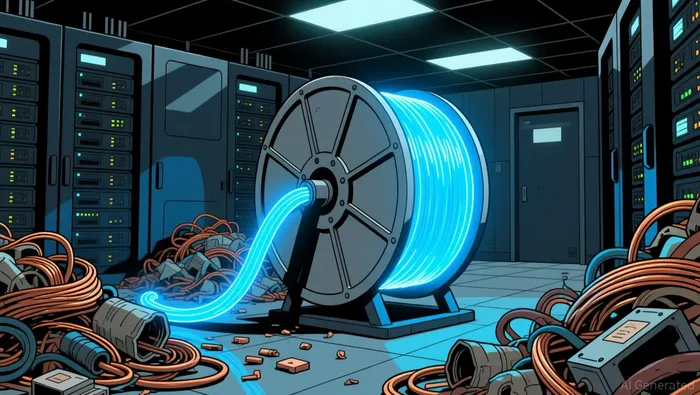
Simultaneously, AT&T is aggressively expanding its fiber footprint to meet the surging demand for bandwidth driven by artificial intelligence. The company is targeting 60 million fiber locations by 2030, a significant increase from the 30 million locations it serves today. In the enterprise segment, AT&T is positioning its fiber backbone as critical infrastructure for the next wave of AI workloads, with demand for 400G-and-higher connectivity between businesses, data centers, and cloud platforms.
Executives at the Citi Global TMT Conference highlighted that AI is increasingly important to AT&T’s advanced connectivity strategy. Enterprise customers scaling AI workloads are requesting greater capacity, reliability, and security, prompting AT&T to invest heavily in metropolitan aggregation points and network intelligence capabilities. While the company is re-entering the data-center interconnect (DCI) market, management clarified that DCI supports connecting end-users to cloud infrastructure, rather than becoming the mainstay of the company’s revenue model.
What Are AT&T's Financial Outlook And Shareholder Returns?
AT&T’s strategic pivot is underpinned by a robust financial outlook and a clear plan for shareholder returns. The company expects to achieve double-digit earnings-per-share compound annual growth through 2028, supported by mid- to high-single-digit growth in advanced connectivity EBITDA. This growth is driven by the record quarter of over 1 million advanced connectivity subscriber additions, marking a significant inflection point in the company's trajectory.
Capital allocation remains a top priority, with AT&T planning to return over $45 billion to shareholders between 2026 and 2028 through dividends and share repurchases. This includes approximately $10 billion in buybacks in 2026 alone, signaling management’s confidence in the company’s cash flow generation. The company aims to maintain its dividend while selectively repurchasing shares when undervalued, balancing growth investments with a disciplined approach to debt reduction.
AT&T is also targeting a net debt-to-adjusted EBITDA ratio of roughly 2.5x within approximately three years. This leverage reduction plan is designed to improve the company’s credit profile and provide financial flexibility for future investments. For the second half of 2026, capital investment is expected to be more ratable compared to the fiber deployment ramp seen in 2025, with free cash flow expected to stabilize in the third quarter before strong growth in the fourth.
What Should Investors Watch For In The Coming Months?
As AT&T executes its multi-year transformation, investors should monitor several key indicators that will validate the company’s strategic thesis. The primary focus will be on the sustainability of the 45% convergence rate and whether the company can continue to drive net additions in its advanced connectivity business. The successful retirement of copper infrastructure and the realization of the $6 billion in cost savings will also be critical metrics to track, as they directly impact the company’s margin expansion and free cash flow generation.
Additionally, the enterprise segment’s ability to capitalize on AI-driven demand for 400G+ connectivity will be a major growth driver. Investors should watch for updates on AT&T’s 400G deployment in metropolitan markets and its progress in securing long-term contracts with enterprises scaling AI workloads. While the company views satellite connectivity as a niche complement for the remaining 2% of coverage gaps, any developments in its joint ventures with T-Mobile and Verizon could provide additional insights into its long-term network strategy.
Finally, the company’s progress toward its 2.5x leverage target and its execution of the $45 billion shareholder return plan will be closely scrutinized. Any deviations from these targets could signal underlying challenges in the company’s cost structure or revenue growth trajectory. By focusing on these key metrics, investors can gain a clearer picture of AT&T’s ability to deliver on its promise of double-digit EPS growth and sustained profitability in the coming years.

Stay ahead of the market.
Get curated U.S. market news, insights and key dates delivered to your inbox.


AInvest
PRO
AInvest
PRO




Comments
No comments yet