
U.S. Stimulus Payment Rumors and Market Reactions in November 2025: Investor Preparedness in a Climate of Uncertain Fiscal Policy and Inflationary Pressures


 Aime Summary
The IRS Inflation Relief Program: A Targeted but Limited Response
The Internal Revenue Service (IRS) has confirmed the distribution of $1,390 inflation stimulus payments to eligible Americans in November 2025, with the aim of mitigating the impact of rising living costs. Single filers earning under $75,000 and joint filers with incomes below $150,000 qualify for the payments, which are automatically issued to Social Security, SSI, and SSDI recipients, as reported by the Economic Times (see link). The program, funded through existing fiscal mechanisms, represents a measured response to inflationary pressures but lacks the scale of previous pandemic-era stimulus efforts.
While this initiative provides immediate relief to lower-income households, its limited scope has left many investors skeptical about its macroeconomic impact. According to a report by the Economic Times, the payments are unlikely to significantly alter inflation trajectories, which remain elevated at 2.9% as of November 2025, as noted in the Boyce Wealth outlook (see link).
Trump's Tariff Dividend: A Politicized Proposal with Economic Risks
President Donald Trump has repeatedly championed a $2,000 "tariff dividend" for middle- and lower-income Americans, funded by revenues from tariffs, as reported by the Commercial Appeal (see link). This proposal, which excludes high-income earners, has gained traction in conservative circles but faces substantial hurdles. Treasury Secretary Scott Bessent has clarified that no formal discussions have occurred, emphasizing the need for a fully operational government before such measures can be implemented, as noted by Yahoo Finance (see link).
Economic analyses highlight the proposal's feasibility challenges. The Committee for a Responsible Federal Budget estimates that a $2,000 dividend would cost approximately $600 billion-far exceeding projected 2025 tariff revenues, as reported in the Seattle Times (see link). Critics argue that the plan could exacerbate inflation and increase federal debt, particularly as the government grapples with near-$2 trillion annual deficits, as noted in the Seattle Times (see link).
Market Volatility and Investor Sentiment: Navigating Uncertainty
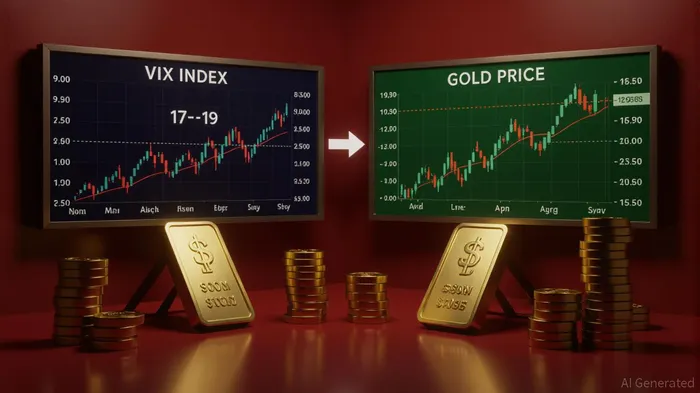
The interplay of these fiscal proposals has contributed to a climate of moderate uncertainty, reflected in the VIX index, which has oscillated between 17 and 19 in November 2025, as reported by Wral Markets (see link). This "Fear Index" suggests a cautious market, where investors hedge against potential downturns without entering panic mode.
Investor strategies have shifted toward diversification, with a focus on resilient sectors such as artificial intelligence and energy, as noted in the Boyce Wealth outlook (see link). The U.S. Department of Energy's $782 million loan to Montana Renewables underscores the sector's growth potential. Meanwhile, cryptocurrencies have seen mixed signals: BitcoinBTC-- briefly surged above $106,000, but ETF outflows totaling $1.72 billion reflect institutional caution, as reported by CryptoNews (see link).
Geopolitical Shocks and Energy Market Disruptions
The November 2025 sanctions on Lukoil, enforced by the U.S. and UK, have further complicated the investment landscape. With a compliance deadline of November 21, the sanctions have triggered fuel shortages in Finland and operational disruptions in Iraq, as reported by Discovery Alert (see link). These developments highlight the fragility of global energy markets and the need for investors to prioritize geopolitical risk management.
Preparing for Fiscal Uncertainty: Key Strategies
- Sector Diversification: Investors are advised to allocate capital to sectors with strong growth fundamentals, such as AI and renewable energy, while maintaining exposure to defensive assets like utilities, as noted in the Boyce Wealth outlook (see link).
- Inflation Hedging: Gold and Treasury Inflation-Protected Securities (TIPS) remain critical tools for mitigating inflationary risks, as noted in the Wral Markets article (see link).
- Geopolitical Vigilance: Energy investors must monitor regulatory shifts and supply chain disruptions, particularly in regions with high geopolitical exposure, as noted in the Discovery Alert report (see link).
- Avoiding Scams: Amid rumors of stimulus payments, investors should verify claims through official sources like irs.gov to avoid falling victim to fraud, as reported by the Economic Times (see link).
Conclusion
The November 2025 fiscal landscape is a mosaic of policy experiments, market volatility, and geopolitical shocks. While the IRS's inflation relief program offers targeted support, Trump's tariff dividend remains a speculative proposition with uncertain economic consequences. Investors must remain agile, leveraging diversification and hedging strategies to navigate a climate where fiscal policy and inflationary pressures are in constant flux.

Delivering real-time insights and analysis on emerging financial trends and market movements.
Latest Articles
Stay ahead of the market.
Get curated U.S. market news, insights and key dates delivered to your inbox.


AInvest
PRO
AInvest
PRO



Comments
No comments yet