
Stimulus Checks and Consumer Spending: Navigating 2025's Economic Crossroads
The U.S. economy in mid-2025 faces a precarious balance between tepid growth and persistent inflation, with trade wars and fiscal constraints complicating recovery. While federal stimulus checks have stalled, the legacy of past measures and emerging state-level initiatives continue to shape consumer behavior and investment opportunities. For investors, the path forward demands a nuanced understanding of where spending is—and isn't—flowing.
The Fragile 2025 Economy
The U.S. economy is growing at a meager 1.4% in 2025, hamstrung by high tariffs (50% on Chinese goods, 20% on EU imports) and mortgage rates near 7%, which are stifling housing starts. Consumer spending mirrors this sluggishness, expanding just 1.4% year-over-year, with durable goods like cars and appliances contracting by -0.7%. Unemployment is projected to rise to 4.6% by 2026, as federal job cuts and restrictive immigration policies bite.
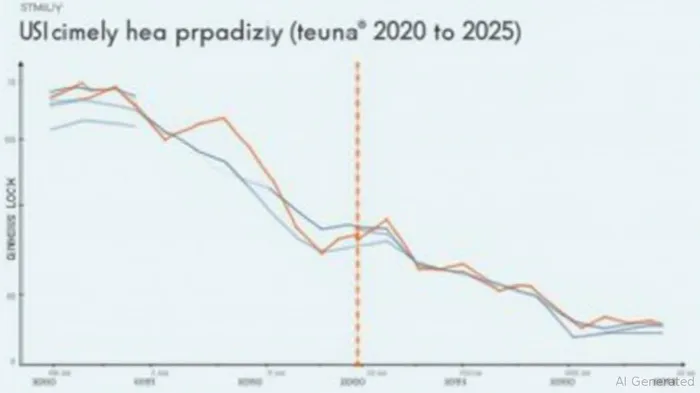
Lessons from Past Stimulus: A Mixed Legacy
The $814 billion in pandemic-era stimulus checks (2020–2021) provided a short-lived boost, with only 40% of funds spent on goods and services. Liquidity-constrained households prioritized debt repayment (30%) and savings (30%), while unemployed recipients reported no significant behavioral changes. This underscores a critical truth: stimulus checks are a blunt tool. Their effectiveness depends on timing, targeting, and the broader economic context.
2025's Stimulus Standoff: Federal Stagnation, State-Level Action
Federal stimulus efforts in 2025 have collapsed into political gridlock. The proposed “DOGE Dividend”—a $5,000 per household payment tied to $2 trillion in savings from the Department of Government Efficiency—was stillborn. With only $175 billion in savings achieved by June 2025 and Republican opposition prioritizing debt reduction, the plan was excluded from Trump's July 2025 mega-bill. Instead, state-level measures are filling the void.
New York's 2025 inflation refund checks ($150–$400 per household) exemplify this trend. These payments, distributed in late 2025 to residents who filed 2024 tax returns, are expected to drive spending on essentials like groceries and auto repairs. Such localized measures may benefit regional retailers and consumer staples companies but lack the national scale of federal programs.
Risks: Inflation, Debt, and the Fed's Dilemma
The absence of a federal stimulus has not insulated the economy from inflationary pressures. Core PCE inflation remains elevated at 2.8%, with shelter costs stubbornly resilient. A hypothetical $2,000 stimulus check—proposed but unapproved—could push inflation to 3.1% by year-end, delaying Federal Reserve rate cuts. Meanwhile, the federal deficit at 6.4% of GDP and a national debt exceeding $30 trillion constrain policymakers' options.
Investment Opportunities: Navigating the Crossroads
In this environment, investors must distinguish between sectors poised to thrive and those at risk.
Winners: Services, Tech, and Inflation Hedges
- Services Sector: Restaurants, travel, and healthcare—reliant on recurring revenue—are less vulnerable to trade tariffs and consumer caution.
- Technology and Software: AI and cloud computing investments are growing at 3.7% annually, insulated from macroeconomic headwinds. Microsoft's Azure and Amazon's AWS remain cornerstones of this trend.
- Inflation-Protected Assets: Treasury Inflation-Protected Securities (TIPS) and commodities like gold offer ballast against rising prices.
Losers: Autos, Housing, and Tariff-Exposed Sectors
- Housing and Auto Manufacturing: High mortgage rates (7%) and tariffs are squeezing automakers (Ford, Tesla) and home improvement retailers (Home Depot, Lowe's).
- Import-Dependent Retailers: Companies reliant on Chinese or EU goods face margin pressures as tariffs erode competitiveness.
State-Level Plays: New York and Beyond
Investors should monitor state initiatives like New York's refund program, which could benefit regional retailers (e.g., regional grocery chains) and consumer staples firms. Procter & Gamble and Coca-ColaKO--, with pricing power and diversified portfolios, are safer bets than cyclical discretionary stocks.
Conclusion: Pragmatic Investing in a Fragile Landscape
The U.S. economy in 2025 is a mosaic of stagnation and opportunity. Federal stimulus checks remain a political mirage, but state-level measures and structural trends in technology and services offer footholds for investors. Prioritize defensive sectors, inflation hedges, and companies with pricing power while avoiding exposure to tariff-sensitive industries. The path forward demands patience—and a sharp focus on fundamentals, not fiscal fantasy.
In this crossroads, the wise investor looks beyond the noise of stimulus speculation to the enduring drivers of value.

Stay ahead of the market.
Get curated U.S. market news, insights and key dates delivered to your inbox.






Comments
No comments yet