
STERIS: Leading Infection Prevention and Sterilization Solutions in the Healthcare Industry
ByAinvest
Tuesday, Aug 5, 2025 9:44 am ET2min read
AHR--
The supply-side dynamics of the market reveal a gradual increase in production capacity aligned with stringent FDA and European MDR compliance requirements. In 2024, manufacturers ramped up output by approximately 5%, responding to heightened demand from North American healthcare providers focused on reducing hospital-acquired infections (HAIs) [1]. Pricing trends have remained relatively stable due to balanced raw material costs and competitive market forces [1].
On the demand side, the expanding use cases across gastroenterology, pulmonology, and urology have diversified the Automated Endoscope Reprocessors market share. For example, in 2025, endoscopy units in Asia Pacific reported a 7% year-over-year increase in automated reprocessor installations, driven by rising gastrointestinal disease prevalence and government initiatives for infection control [1].
Micro-indicators such as the increased integration of IoT-enabled monitoring within reprocessors have contributed to enhanced market growth strategies. Early 2024 data indicated that facilities employing IoT-based automated reprocessors observed a 15% reduction in turnaround time for endoscope reprocessing, boosting operational efficiency and business growth [1].
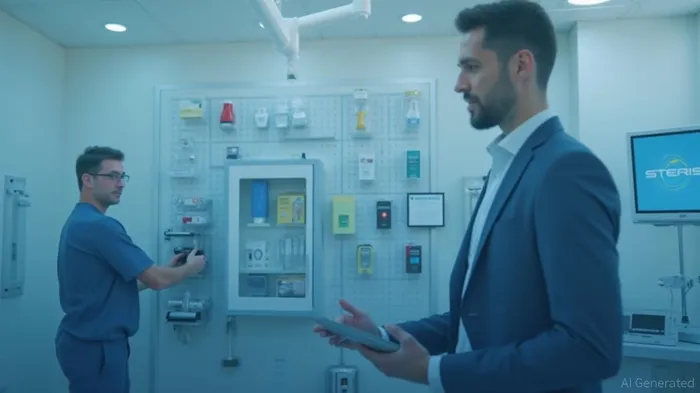
Steris, a leading player in the healthcare industry, operates in the infection prevention, sterilization, and surgical infrastructure sectors. The company generates 71% of its revenue from the Healthcare segment, delivering critical solutions to hospitals, surgical centers, and GI clinics. Steris provides a range of products and services, including sterilization solutions, surgical equipment, and repair services, competing with companies like 3M, Baxter, and Stryker [2].
The global infection control market is projected to reach $417.9 billion by 2032, driven by stricter regulations, rising surgical volumes, and a heightened focus on healthcare-associated infections. This growth presents significant opportunities for Steris and other players in the market [2].
Recent years have seen a notable shift towards automation combined with enhanced data analytics capabilities within the Automated Endoscope Reprocessors market. The integration of AI-driven diagnostics for cycle optimization is a key emerging trend, improving sterilization efficacy and reducing equipment downtime. Additionally, sustainability trends have influenced market companies to develop eco-friendly disinfectants and energy-efficient models, responding to increasing regulatory pressure and environmental concerns [1].
The rise of outpatient settings adopting automated reprocessors, propelled by cost containment and infection control priorities, marks a significant market shift toward decentralized healthcare delivery. These evolving industry trends highlight a movement towards smart, sustainable, and scalable reprocessing solutions [1].
The immersion-based reprocessing segment presents high-impact growth opportunities due to its superior sterilization efficacy and suitability for complex endoscopes. With hospitals continually upgrading infection control protocols, demand for this segment is expected to rise significantly. Ambulatory surgical centers represent another promising segment, where automation reduces turnaround times and improves patient throughput, driving market revenue [1].
Regionally, Asia Pacific offers substantial market growth potential, propelled by increasing healthcare infrastructure investments and rising awareness about infection prevention. For example, China's healthcare expenditure rose by over 8% in 2024, fueling increased deployment of automated endoscope reprocessors in tier-1 and tier-2 cities, creating lucrative business growth opportunities [1].
The competitive landscape is characterized by innovation-driven strategies and regional expansion, with challenges including high equipment costs and regulatory compliance complexities that market players continuously address via advanced product development [1].
References:
[1] https://www.openpr.com/news/4132217/automated-endoscope-reprocessors-market-size-to-2025-emerging
[2] https://www.coherentmarketinsights.com/insight/request-sample/4046
BAX--
MMM--
STE--
SYK--
Steris operates in the healthcare industry, focusing on infection prevention, sterilization, and surgical infrastructure. The global infection control market is projected to reach $417.9 billion by 2032, driven by stricter regulations, rising surgical volumes, and a heightened focus on healthcare-associated infections. Steris generates 71% of its revenue from the Healthcare segment, delivering critical solutions to hospitals, surgical centers, and GI clinics. The company provides a range of products and services, including sterilization solutions, surgical equipment, and repair services, competing with companies like 3M, Baxter, and Stryker.
The Automated Endoscope Reprocessors Market is witnessing a pivotal transformation driven by rapid advancements in healthcare sterilization technologies and increasing regulatory emphasis on infection control standards. The growing adoption of minimally invasive procedures worldwide has significantly escalated the demand for automated reprocessing systems, thereby influencing the overall market dynamics. The Global Automated Endoscope Reprocessors Market size is estimated to be valued at USD 1.2 billion in 2025 and is expected to reach USD 1.3 billion by 2032, exhibiting a compound annual growth rate (CAGR) of 0.075% from 2025 to 2032 [1].The supply-side dynamics of the market reveal a gradual increase in production capacity aligned with stringent FDA and European MDR compliance requirements. In 2024, manufacturers ramped up output by approximately 5%, responding to heightened demand from North American healthcare providers focused on reducing hospital-acquired infections (HAIs) [1]. Pricing trends have remained relatively stable due to balanced raw material costs and competitive market forces [1].
On the demand side, the expanding use cases across gastroenterology, pulmonology, and urology have diversified the Automated Endoscope Reprocessors market share. For example, in 2025, endoscopy units in Asia Pacific reported a 7% year-over-year increase in automated reprocessor installations, driven by rising gastrointestinal disease prevalence and government initiatives for infection control [1].
Micro-indicators such as the increased integration of IoT-enabled monitoring within reprocessors have contributed to enhanced market growth strategies. Early 2024 data indicated that facilities employing IoT-based automated reprocessors observed a 15% reduction in turnaround time for endoscope reprocessing, boosting operational efficiency and business growth [1].
Steris, a leading player in the healthcare industry, operates in the infection prevention, sterilization, and surgical infrastructure sectors. The company generates 71% of its revenue from the Healthcare segment, delivering critical solutions to hospitals, surgical centers, and GI clinics. Steris provides a range of products and services, including sterilization solutions, surgical equipment, and repair services, competing with companies like 3M, Baxter, and Stryker [2].
The global infection control market is projected to reach $417.9 billion by 2032, driven by stricter regulations, rising surgical volumes, and a heightened focus on healthcare-associated infections. This growth presents significant opportunities for Steris and other players in the market [2].
Recent years have seen a notable shift towards automation combined with enhanced data analytics capabilities within the Automated Endoscope Reprocessors market. The integration of AI-driven diagnostics for cycle optimization is a key emerging trend, improving sterilization efficacy and reducing equipment downtime. Additionally, sustainability trends have influenced market companies to develop eco-friendly disinfectants and energy-efficient models, responding to increasing regulatory pressure and environmental concerns [1].
The rise of outpatient settings adopting automated reprocessors, propelled by cost containment and infection control priorities, marks a significant market shift toward decentralized healthcare delivery. These evolving industry trends highlight a movement towards smart, sustainable, and scalable reprocessing solutions [1].
The immersion-based reprocessing segment presents high-impact growth opportunities due to its superior sterilization efficacy and suitability for complex endoscopes. With hospitals continually upgrading infection control protocols, demand for this segment is expected to rise significantly. Ambulatory surgical centers represent another promising segment, where automation reduces turnaround times and improves patient throughput, driving market revenue [1].
Regionally, Asia Pacific offers substantial market growth potential, propelled by increasing healthcare infrastructure investments and rising awareness about infection prevention. For example, China's healthcare expenditure rose by over 8% in 2024, fueling increased deployment of automated endoscope reprocessors in tier-1 and tier-2 cities, creating lucrative business growth opportunities [1].
The competitive landscape is characterized by innovation-driven strategies and regional expansion, with challenges including high equipment costs and regulatory compliance complexities that market players continuously address via advanced product development [1].
References:
[1] https://www.openpr.com/news/4132217/automated-endoscope-reprocessors-market-size-to-2025-emerging
[2] https://www.coherentmarketinsights.com/insight/request-sample/4046
Stay ahead of the market.
Get curated U.S. market news, insights and key dates delivered to your inbox.
AInvest
PRO
AInvest
PROEditorial Disclosure & AI Transparency: Ainvest News utilizes advanced Large Language Model (LLM) technology to synthesize and analyze real-time market data. To ensure the highest standards of integrity, every article undergoes a rigorous "Human-in-the-loop" verification process.
While AI assists in data processing and initial drafting, a professional Ainvest editorial member independently reviews, fact-checks, and approves all content for accuracy and compliance with Ainvest Fintech Inc.’s editorial standards. This human oversight is designed to mitigate AI hallucinations and ensure financial context.
Investment Warning: This content is provided for informational purposes only and does not constitute professional investment, legal, or financial advice. Markets involve inherent risks. Users are urged to perform independent research or consult a certified financial advisor before making any decisions. Ainvest Fintech Inc. disclaims all liability for actions taken based on this information. Found an error?Report an Issue


ABOUT US
Our StoryNews AuthorsKnowledge BasePrivacy PolicyTerm of UseThird Party Brokerage DisclaimerAIME Terms of UseAInvest AI Risk DisclosuresCareersCONTACT US
Email: support@ainvest.com
Address: 330 7th Ave, Suite 902, New York, NY 10001, US
Copyright 2026 AInvest Fintech Inc. All rights reserved.


Comments
No comments yet