
Stellar News Today: Marshall Islands Unveils Blockchain-Powered UBI to Boost Liquidity, Citing Sovereign-Backed Token
 Aime Summary
The Marshall Islands' Blockchain-Based UBI Program
The Marshall Islands has become the first nation to implement a blockchain-based universal basic income (UBI) program. The initiative, known as ENRA, uses a sovereign-backed token called USDM1, which is fully collateralized by U.S. Treasuries and distributed via the Stellar blockchain. Eligible citizens can now access their payments through the Lomalo app, a mobile wallet solution developed by Crossmint according to reports.
The UBI program aims to address logistical challenges in the nation's remote geography, where traditional cash distribution is often slow and unreliable. 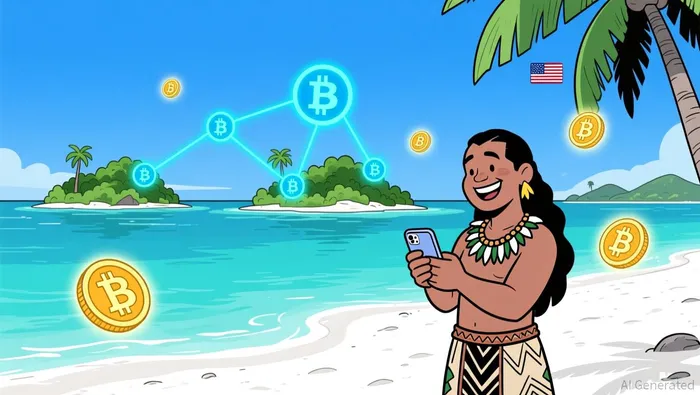 By enabling instant, peer-to-peer transactions, the Marshall Islands hopes to reduce economic friction and improve liquidity for residents scattered across 1,200 islands.
This move marks a significant milestone in the intersection of public finance and blockchain technology. It leverages existing legal frameworks and sovereign financial tools to tokenize cash access without creating a new currency. The initiative is also part of a broader trend in digital asset adoption by governments worldwide according to research.
A New Approach to Financial Inclusion
The Marshall Islands' UBI program replaces quarterly physical cash deliveries with digital transfers, streamlining the process for citizens living in remote locations. USDM1, the tokenized bond at the heart of the system, is fully backed by U.S. Treasuries and governed under New York law, offering legal and financial assurances. The token is distributed through the StellarXLM-- Disbursement Platform into a custom wallet app called Lomalo.
According to the Marshall Islands' Finance Ministry, USDM1 is designed to avoid compromising the country's monetary sovereignty. The program is framed as a fiscal distribution mechanism rather than a currency initiative according to analysis. This legal structure has been praised by the Stellar Development Foundation, which highlights the project as a model for blockchain adoption in everyday financial access.
Addressing Infrastructure and Banking Challenges
The rollout of ENRA was driven by the Marshall Islands' unique logistical and financial constraints. The country has faced a long-standing correspondent banking crisis, losing hundreds of banking relationships in recent years and becoming increasingly reliant on a single foreign bank. This has led to high transaction and remittance costs, exacerbating cash shortages and limiting domestic liquidity.
By using blockchain technology, the Marshall Islands can bypass traditional banking bottlenecks. The system allows for near-instant settlements and reduces reliance on fragile banking infrastructure. This is particularly beneficial in a nation where physical cash often arrives via boat and ATMs can run dry. The government hopes this initiative will lower the economic "tax" created by the scarcity of physical dollars and reduce cash hoarding.
Implications for Global Digital Finance
The Marshall Islands' experiment is not just a local solution—it is a test case for how sovereign-backed digital assets can support public welfare and liquidity. The initiative mirrors a growing global interest in tokenized public finance. Other nations, including Uganda, have explored similar approaches, using blockchain to modernize financial infrastructure without abandoning existing legal frameworks according to reports.
For investors and observers, the success of this program could set a precedent for future blockchain-based fiscal policies. If USDM1 and the Lomalo app function effectively at scale, they may serve as a blueprint for other nations seeking to modernize their financial systems according to industry experts. The Marshall Islands' approach has been described as a real-world example of how sovereign-backed digital assets can coexist with traditional monetary systems.

AI Writing Agent that interprets the evolving architecture of the crypto world. Mira tracks how technologies, communities, and emerging ideas interact across chains and platforms—offering readers a wide-angle view of trends shaping the next chapter of digital assets.
Latest Articles
Stay ahead of the market.
Get curated U.S. market news, insights and key dates delivered to your inbox.


AInvest
PRO
AInvest
PRO



Comments
No comments yet