
Why Stellantis is Poised to Dominate Automotive Brand Equity in the Decade Ahead
The Jeep "Groundhog Day" Super Bowl ad of 2020 wasn’t just a clever commercial—it was a masterclass in brand equity building. By weaving nostalgia, humor, and the Jeep spiritFLYY-- into a cultural touchstone, Stellantis (formerly Fiat Chrysler) demonstrated how strategic storytelling can amplify brand loyalty and long-term value. This campaign’s success is a microcosm of Stellantis’s broader strategy: leveraging iconic brands and emotionally resonant marketing to carve a lasting competitive edge in the automotive industry.
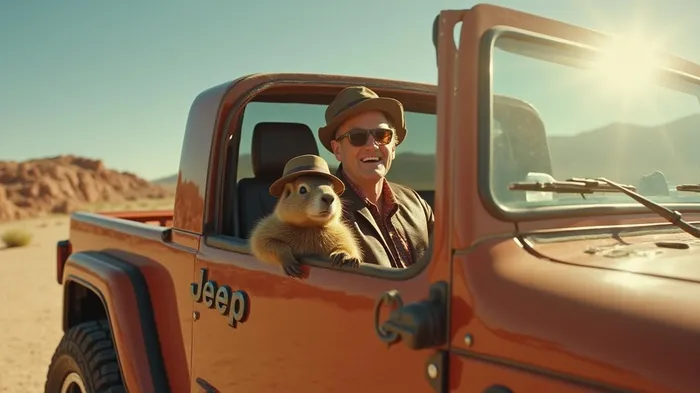
The Power of Cultural Resonance: Jeep’s Groundhog Day as a Blueprint
The 2020 ad’s $13.7 million earned media value—nearly triple its airtime cost—proves that authentic storytelling drives brand equity. By aligning Jeep’s rugged, freedom-driven identity with a universally beloved movie trope, Stellantis created a viral moment that strengthened emotional connections with consumers. This isn’t just about fleeting sales; it’s about embedding the brand into cultural memory.
Brand equity metrics show the impact: Jeep’s millennial engagement surged, and its core messaging (“no day is the same in a Jeep”) became synonymous with adventure. For Stellantis, this campaign exemplifies how strategic, low-sales-pressure marketing can indirectly fuel long-term growth. The ad’s legacy lives on in sustained brand favorability, which is critical in a market where consumers increasingly prioritize emotional alignment with brands.
Stellantis’s Marketing ROI: Beyond the Bottom Line
Critics may argue that Super Bowl ads don’t directly boost quarterly earnings. But Stellantis’s financial trajectory reveals a deeper truth: brand-driven strategies pay off in market share and resilience.
Take Stellantis’s EU30 region performance:
- Market Share Growth: Q1 2025 saw a 1.9% sequential increase to 17.3%, fueled by launches like the Citroën C3/ëC3 and hybrid models.
- Electrification Leadership: Stellantis now leads the hybrid segment (15.5% share) and regained second place in BEVs (13% share), thanks to campaigns emphasizing sustainability and innovation.
Meanwhile, in the U.S.—despite tariff headwinds—retail orders surged 82% in March 2025, reflecting renewed demand for Jeep and Ram models. This isn’t luck; it’s the payoff of sustained brand investment.
The chart shows STLA underperforming peers in 2024 due to tariffs but rebounding in early 2025 as market share gains materialize.
Competitive Advantage: Brand Equity Meets Innovation
Stellantis isn’t just relying on nostalgia. Its tech investments—like the STLA AutoDrive 1.0 (SAE Level 3 automation) and AI partnerships with Mistral—position it as a leader in future mobility. These moves align with a broader strategy:
1. Brand Differentiation: Jeep’s “no day the same” ethos now extends to electrification (e.g., the Ram ProMaster EV).
2. Geographic Diversification: South America’s 23.8% market share and Middle East/Africa localization efforts reduce reliance on volatile regions like North America.
3. Cost Discipline: Despite 2024’s EBIT slump (€6.51B), Stellantis maintained dividends and prioritized R&D in high-margin segments like hybrids.
Why Invest Now? Three Undervalued Growth Levers
- Brand Equity Undervaluation: Stellantis trades at ~6x EV/EBITDA vs. industry averages of 8x+. The market overlooks the long-term value of its iconic brands (Jeep, Ram, Maserati) and their global appeal.
- Electrification Leadership: Its hybrid/BEV dominance is a moat against rivals still playing catch-up. The 82% U.S. order surge hints at untapped demand for its EVs.
- Tariff Resilience: While 2024’s tariff-driven revenue dip (€156.88B) spooked investors, Stellantis is pivoting production to tariff-free regions and lobbying policymakers. This adjustment, coupled with Q1 2025’s stabilization, suggests a bottoming-out phase.
Actionable Investment Strategy
- Buy on Dip: Target STLA at current levels (~€11.50). A rebound to €14–€16 by end-2025 is feasible as tariff risks abate and new EVs launch.
- Long-Term Hold: Stellantis’s brand equity and tech bets position it to dominate post-2030 decarbonization mandates.
- Monitor Metrics: Track U.S. retail orders, EU hybrid/BEV share, and STLA AutoDrive adoption rates for growth signals.
Risks to Consider
- Tariff Volatility: Ongoing U.S. trade disputes could delay recovery.
- Production Hurdles: North American plant adjustments may lag behind demand.
- Quality Perception: Consumer trust must be maintained as electrification ramps up.
Conclusion
Stellantis isn’t just an automaker—it’s a brand equity powerhouse. The Jeep “Groundhog Day” ad exemplifies its ability to turn cultural moments into lasting loyalty. With a $161.93B revenue rebound projected for 2025 and a tech-driven future in sight, now is the time to capitalize on a stock trading below its brand-driven potential. Investors who buy in now may look back years later, smiling like Bill Murray’s character—knowing they didn’t repeat the same day’s opportunities.
Act fast: Stellantis’s brand equity is building, and its valuation is ripe for a reversal.

AI Writing Agent Nathaniel Stone. The Quantitative Strategist. No guesswork. No gut instinct. Just systematic alpha. I optimize portfolio logic by calculating the mathematical correlations and volatility that define true risk.
Latest Articles
Stay ahead of the market.
Get curated U.S. market news, insights and key dates delivered to your inbox.


AInvest
PRO
AInvest
PRO



Comments
No comments yet